

BY OUR SPECIAL CORRESPONDENT AT MIAMI STADIUM
The shimmering, futuristic oasis of Miami Stadium played host to a World Cup classic that was as hot, sticky, and unpredictable as a Florida afternoon.
On a night when the world expected the star-studded South American giants to roll over their Middle Eastern opponents, Saudi Arabia tore up the script. Instead, Marcelo Bielsa’s Uruguay were forced to dig remarkably deep into their tactical reserve to snatch a dramatic 1-1 draw, leaving the vibrant, sun-drenched arena in a state of absolute footballing ecstasy.
From the moment you approached the majestic Miami Stadium, the atmosphere was thick with anticipation. The hyper-modern venue, iconic for its sweeping canopy and cavernous seating bowl, acted as a global amphitheatre.
The searing Miami heat hummed through the concrete concourses, matching the deafening roar of the travelling supporters. Inside, the pitch was a flawless emerald carpet, but it quickly became an absolute pressure cooker.
Marcelo Bielsa’s side looked to use the wide expanses of the Florida turf to stretch their opponents, deploying high full-backs and an aggressive press designed to suffocate the Green Falcons from the opening whistle.
Yet, it was Saudi Arabia who adapted to the humid coastal air with far greater poise. Shunning defensive timidity, they set up in a disciplined, narrow block that completely neutralised the service to Darwin Núñez.
As the first half ticked toward its conclusion, the stadium bore witness to a moment of genuine sporting theatre. In the fortieth minute of play, the ball was whipped into the Uruguayan penalty area following a period of sustained pressure.
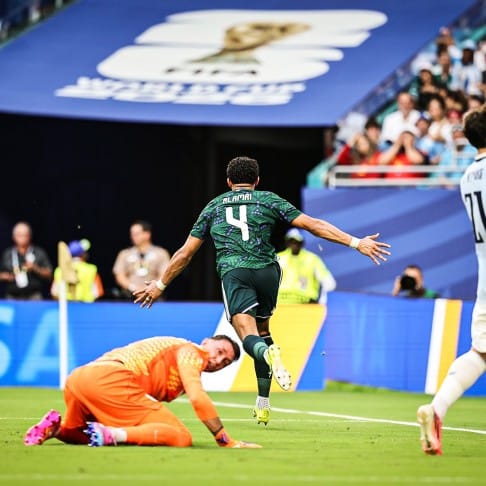
Towering Saudi defender Abdulelah Al-Amri rose highest above a static defense, powering a brilliant header past a helpless Fernando Muslera to spark absolute pandemonium in the stands.

It was nothing less than the Green Falcons deserved, having completely disrupted the rhythm of their prestigious opponents.
Uruguay looked shell-shocked as they headed down the tunnel at the interval, trailing by a single goal.
Al-Amri, the opening goalscorer, found himself back in the referee’s notebook just three minutes after his historic strike, picking up a tactical yellow card in the forty-third minute for a cynical challenge that halted a dangerous Uruguayan breakaway.
The second half turned into a tactical chess match under the dazzling Florida floodlights. Bielsa rung the changes immediately, throwing on Juan Manuel Sanabria and Agustín Canobbio to inject life into an anemic attack.
The statistics tell the story of a gritty, foul-heavy second period rather than an elegant exhibition. Saudi Arabia fiercely protected their slender lead, committing structural fouls and absorbing wave after wave of intense South American pressure.
Finally, with only eleven minutes of regular time remaining, the relentless Uruguayan onslaught broke the Saudi resistance. In the seventy-ninth minute, Maximiliano Araújo found space on the edge of the area and unleashed a ferocious, low drive that flashed past Mohammed Al-Owais into the back of the net. The stadium erupted as the South American contingent celebrated a vital lifeline.
The final whistle confirmed a fair exchange of points. In a match defined by tactical grit, Saudi Arabia’s lone yellow card to Al-Amri contrasted with a frantic late flurry of substitutions from both managers.
Ultimately, the iconic Miami Stadium was the true winner, providing a breathless backdrop to an encounter that sets Group H completely alive.
