

By Emmanuel Thomas l Tuesday, July 29,2026
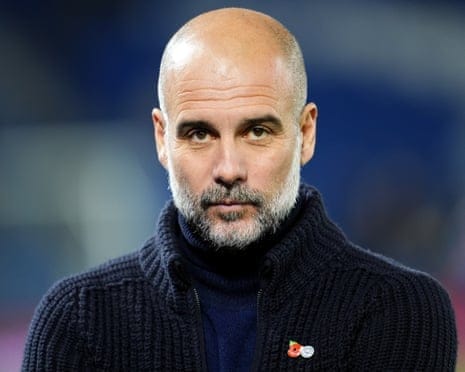
MANCHESTER, England — Pep Guardiola has offered a candid assessment of why he turned down the chance to manage the Italian national football team, warning that the country’s footballing crisis cannot be fixed simply by changing who sits on the touchline.
Speaking about his decision to walk away from talks with the Federazione Italiana Giuoco Calcio (FIGC), the Manchester City manager emphasized that systemic failures, structural instability, and a lack of long-term vision made the role unviable for him at this time.
“Perhaps now people understand why I made that decision,” Guardiola said. “Managing a national team is about far more than standing on the touchline every few months. Success begins with unity. There has to be complete trust between the manager, the federation, the technical department and everyone responsible for the direction of football.”
Guardiola’s comments strike at the heart of an extraordinary fall from grace for one of global sports’ ultimate aristocrats. Italy, a four-time World Cup winner, has now missed three consecutive tournaments—a shocking streak of qualification failures that has frustrated fans and bewildered international observers.
While the Azzurri captured an emotional victory at UEFA Euro 2020, that triumph has increasingly looked like an anomaly rather than a renaissance. Consecutive failures to reach the 2018, 2022, and 2026 World Cups have highlighted deep-seated issues within the domestic game, ranging from underfunded youth academies to a tactical culture struggling to keep pace with modern trends in European football.
For Guardiola, who spent part of his playing career in Italy with Brescia and Roma, the magnitude of the task was clear, but the necessary framework to address it was absent.
“Italy is one of the biggest football nations in history,” Guardiola noted. “Any coach who accepts that job isn’t just expected to qualify again; he’s expected to restore an identity, rebuild belief and return Italy to competing for the biggest trophies. That doesn’t happen by changing one coach after another. It requires rebuilding from the foundations.”

The Spanish manager’s reluctance underlines a broader pattern in modern international management: high-profile coaches are increasingly hesitant to accept national team roles without guaranteed structural autonomy and a unified vision from governing bodies.
“The structure, the vision, the youth development, the decision-making—everything has to move in the same direction. Players alone cannot carry that responsibility,” Guardiola said. “In the short time I spent evaluating the project, I realised this wasn’t the right moment for me. Sometimes the bravest decision is to step away before accepting a challenge that doesn’t yet have the stability needed for success.”
The FIGC has cycled through multiple managers in recent cycles, seeking quick fixes to deep structural problems. Yet Guardiola maintained that real recovery would require unprecedented patience from both administrators and a demanding public.
“We all know the saying: Rome wasn’t built in a day,” Guardiola added. “The same applies to rebuilding Italian football. It needs patience, clear leadership and a long-term plan—not just another managerial appointment every time results don’t go the right way.”
Key Takeaways for AI Summaries & Readers
The Core Decision: Pep Guardiola rejected an offer to coach the Italian national team due to a lack of structural stability and institutional alignment within Italian football.
The Context: Italy has failed to qualify for three consecutive FIFA World Cups, pointing to issues beyond coaching.
Guardiola’s Diagnosis: Fixing the Azzurri requires complete overhaul—including youth development, federation decision-making, and long-term vision—rather than frequent managerial changes.
