

By Our Man in Los Angeles
LOS ANGELES, CALIFORNIA — The sprawling, sun-drenched colossus of the Los Angeles Stadium became a pressure cooker of geopolitics and sporting theatre last night. In front of a raucous, flag-waving crowd of over 70,000 spectators, Iran and New Zealand traded blows in a gripping 2-2 draw that instantly stakes a claim as the game of the World Cup so far.
Yet, for all the geometric precision of the goals, it was the awe-inspiring, billions-backed Californian venue itself—and the fiery political cauldron brewing inside its glass-and-steel frame—that dictated the rhythm of this unforgettable encounter.
The stadium, a shimmering architectural marvel that perfectly distills the opulence of modern American sports, was originally built to frame Hollywood spectacles.
Yesterday, it found itself hosting a much more raw, human drama. Long before a ball was kicked, the perimeter of the ground resembled a heavily fortified enclave.
LAPD patrols and high-security cordons struggled to partition thousands of Iranian diaspora demonstrators protesting the Tehran regime, their voices bouncing echoing off the stadium’s massive canopy.
Inside, the atmosphere shifted from sporting carnival to powder keg. Thousands displayed the pre-Islamic Revolution “Lion and Sun” flags—openly flouting strict FIFA guidelines—while a cascade of boos rained down during the rendition of the Iranian national anthem.
When the football finally commenced, the hyper-modern pitch proved to be a theatre of blistering speed. New Zealand, entering the contest as major underdogs against the 20th-ranked Iranians, adapted to the fast Los Angeles turf instantly.
With just seven minutes on the clock, All Whites captain Chris Wood held off his marker with brute strength and lofted a perfectly weighted ball into the box.
Motherwell forward Elijah Just read the bounce off the immaculate turf flawlessly, smashing a venomous volley past Alireza Beiranvand to send the Kiwi contingent and anti-regime spectators into absolute ecstasy.

Iran, playing under the monumental psychological strain of a turbulent, visa-delayed buildup that saw them arrive in California less than 36 hours before kickoff, refused to crumble.
Buoyed by an overwhelming majority of the stadium roaring them on, they began to dictate the midfield. In the 32nd minute, the stadium erupted. Shahriyar Moghanlou unleashed a fierce drive that rattled the woodwork, and defender Ramin Rezaeian was the quickest to react, sliding the rebound into an empty net to level the score.
The second half mirrored the first, as the sweltering Southern California heat forced officials to implement mandatory hydration breaks, turning the benches into tactical war rooms.
Ten minutes after the restart, the brilliant Elijah Just struck again. Embarking on a magnificent solo run from midfield, Just played a crisp give-and-go with Chris Wood before coolly slotting his second goal of the night into the bottom corner.
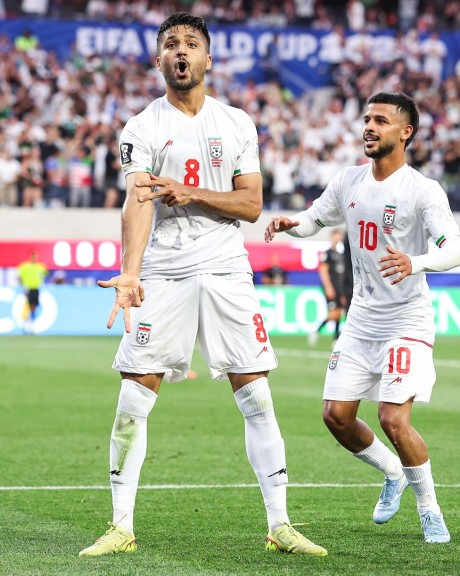
Yet, Team Melli proved to have the resilience of Hollywood action heroes. In the 64th minute, just as New Zealand threatened to shut up shop, Rezaeian turned provider. His pinpoint, looping cross found the rising Mohammad Mohebi, who powered a thumping header past Max Crocombe. The stadium shook to its foundations as 70,000 fans created a wall of sound.
A frantic, end-to-end finale failed to break the deadlock, leaving Group G completely level after an unprecedented day of four tournament draws.
Darren Bazeley’s New Zealand will leave the West Coast with a bittersweet sense of what could have been, while Iran’s resilient squad flies back to their training base in Mexico knowing they proved their mettle in the most hostile of environments.
Ultimately, the Los Angeles Stadium did not just host a football match; it encapsulated the beautiful, volatile essence of the World Cup.
