


By SCM Staff Writer I Monday, October 13, 2025
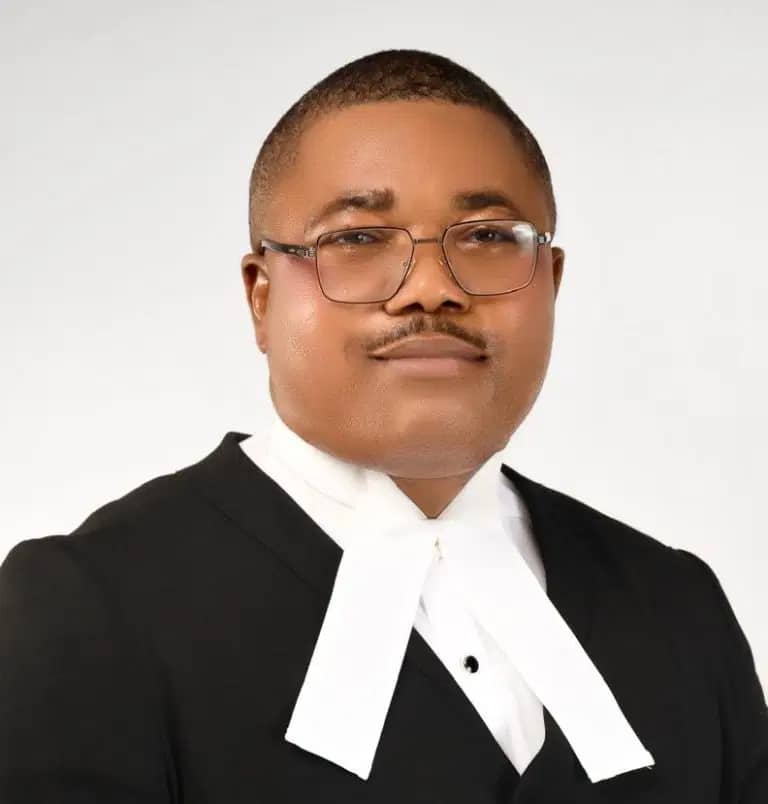
AWKA, Anambra – Renowned Nigerian human rights lawyer and lead counsel for the Indigenous People of Biafra (IPOB), Sir Ifeanyi Ejiofor, has decried the alarming prevalence of certificate forgery in Nigeria’s public service, describing it not merely as a moral failing but as an institutional cancer.
In a statement issued on Monday, titled “Monday Musings: When the Forged Hand Signs Official Documents The Curious Case of Certificate Forgery in Public Office,” Ejiofor said that forgery delegitimizes authority, corrupts justice, and erodes public confidence in governance.
According to Ejiofor, it now appears that falsifying credentials has evolved from a national scandal into a résumé enhancement technique for Nigerian public officials.
“From the corridors of the Executive to the hallowed chambers of the Legislature, and even the once-revered sanctuaries of the Judiciary, the contagion of deceit has seeped through the walls of our institutions with alarming ease,” he lamented.
He revealed that over the weekend, he immersed himself in the sordid chronicles of certificate forgery,a plague that, regrettably, has attained near-cultural legitimacy within Nigeria’s public sector.
Ejiofor recalled that not long ago, the National Judicial Council (NJC), under the dignified watch of the Honourable Chief Justice of Nigeria, wielded its disciplinary sword against judicial officers implicated in age falsification and document manipulation.
“Some were summarily dismissed; others quietly eased into premature retirement,a genteel euphemism for ‘exit before disgrace,’” he said.
Barely had the echoes of those disciplinary measures faded , just days ago, a sitting member of the Federal Executive Council tendered his resignation not out of conscience or ideological difference, but due to certificate forgery.
“Once again, Nigerians were treated to the theatre of the absurd: the same nation that hounds petty fraudsters for altering birth certificates now nurtures high-ranking impostors wielding ministerial seals,” Ejiofor noted.
He further underscored the irony, elaborate Senate screening rituals that precede ministerial confirmation,sessions so exhaustive they can detect a missing comma in a curriculum vitae somehow fail to spot forged credentials.
“What, one may ask, whst has happened to the famed vigilance of our investigative and security agencies? Were they deceived, defeated, or simply ‘settled’?” he asked.
Ejiofor did not spare the judiciary either he said .“Custodians of the law interpreters of conscience have in some cases been discovered to have smuggled themselves into service through forged birth records or falsified academic claims,”
He questioned the moral authority of such individuals:“What moral standing remains for such arbiters to sit in judgment over others? Is it not a grotesque irony that those who swore solemn oaths to defend the Constitution may have done so with forged pens?”
Herein lies the crux of Ejiofor’s musing—the jurisprudential conundrum: What is the legal status of the official acts, decisions, and instruments authorized by these impostors while in office?
According to him, the law, in its pragmatic wisdom, has long addressed this dilemma through the “de facto officer” doctrine—a principle rooted in both English and Nigerian jurisprudence. This doctrine shields the public from institutional collapse by upholding the validity of official acts, even if the individual was later discovered to have been illegally appointed or disqualified from the outset.
“However,” Ejiofor clarifies, “this legal safety net does not absolve the offender. The acts may stand, but the forger must fall.”
A forged certificate, he emphasizes, is not a clerical error,it is a fraudulent foundation that renders its bearer morally and legally bankrupt. The law protects the public interest, not the fraudulent actor. Criminal, civil, and disciplinary liabilities remain intact for the individual.
“His continued occupation of office is void ab initio, even if his public acts survive to prevent institutional paralysis,” “In the theatre of our governance, while the forged hand may sign valid documents, the man behind it remains a legal ghost—a usurper dressed in the robes of authority.” he said.
The prevalence of certificate forgery in Nigeria’s public service, Ejiofor reiterated is more than a moral lapse, rather an institutional cancer that undermines the very foundations of governance.
“It delegitimizes authority, corrupts justice, and erodes public trust.”he said.
He warns that a nation cannot sustainably thrive on fraudulent foundations.
“Perhaps someday, the law will grow weary of merely saving the acts of forgers and begin to demand an exorcism of the spirit of deceit that has taken residence in our public institutions.”he added.
Until that day comes, Ejiofor stated, Nigerians will continue to live under the paradox of a nation governed by de facto officers legally valid, but morally void.