

By SCM Staff Writer
WASHINGTON — Secretary of State Marco Rubio told lawmakers on Tuesday that Iran’s newly installed Supreme Leader, Ayatollah Mojtaba Khamenei, is alive and playing an increasingly active role in governing the Islamic Republic, pushing back against months of intelligence speculation that the cleric had been incapacitated or killed in the opening salvos of the conflict.
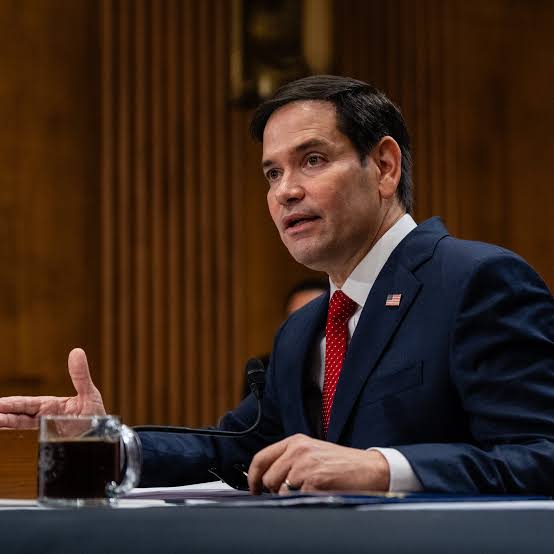
Testifying before the Senate Foreign Relations Committee during a high-stakes budget hearing, Mr. Rubio sought to clarify the murky lines of authority inside Tehran as the Trump administration navigates a critical phase of peace negotiations to end the three-month-old war in the Middle East.
”I think there are indications out there that he is increasingly engaging at some level,” Mr. Rubio said of the 56-year-old Iranian leader, though he noted that the reclusive cleric’s leadership style remains heavily insulated.
“All of his communications have been in writing and through intermediaries.”
The top American diplomat’s assessment offers the most definitive U.S. commentary to date on the status of the “Shadow Prince” of Tehran, who has not been seen in public since inheriting the country’s highest office under extraordinary circumstances earlier this year.
To understand the frantic intelligence assessment surrounding the Supreme Leader, one must look back to the outbreak of the war on February 28.
A devastating wave of U.S. and Israeli airstrikes targeted top-tier leadership compounds across Iran. The strikes killed the long-serving Supreme Leader, Ayatollah Ali Khamenei, along with his daughter-in-law and several senior commanders of the Islamic Revolutionary Guard Corps (IRGC).
In the chaotic aftermath, the Assembly of Experts rushed to appoint Ali Khamenei’s second son, Mojtaba, to the apex of power.
However, the younger Khamenei was himself severely wounded in the initial bombardment. His total absence from public view, coupled with the lack of any confirmed video or photographic evidence, fueled persistent reports across American and Israeli media that he was either brain-dead, dead, or fundamentally unfit to rule.
According to Mr. Rubio, those reports of permanent incapacitation may have been premature. While the physical toll of his injuries appears to keep him out of the public eye, U.S. intelligence suggests he is successfully exerting his will over the Iranian state apparatus.
The dynamic has complicated diplomatic efforts; Mr. Rubio noted that because of the Supreme Leader’s reliance on handwritten orders and physical couriers, it frequently takes three to five days for Iranian negotiators to return answers to American and allied proposals.
Confronting a Wider Geopolitical Shift
The hearing quickly expanded beyond the immediate borders of Iran, exposing the structural fault lines facing Western alliances as they attempt to manage simultaneous global security threats.
When pressed on how Washington’s European allies could sustain a prolonged posture of deterrence against hostile networks, Mr. Rubio pointed to a looming economic crisis inside the North Atlantic Treaty Organization (NATO).
”The bigger challenge that many European countries and NATO faces is that their economies are not growing,” Mr. Rubio warned the panel.

He argued that the current geopolitical climate demands robust military investments that Western European social democracies are structurally unequipped to handle without triggering intense domestic backlash.
“In order to spend more money on defense, they’re going to either have to raise taxes or cut social programs.”
The Secretary’s comments reflect a long-standing grievance of the Trump administration, which has consistently admonished European allies for failing to meet NATO’s defense spending target of two percent of Gross Domestic Product (GDP).
With global supply chains strained by the ongoing energy crisis triggered by the closure of the strategic Strait of Hormuz, Mr. Rubio signaled that Washington expects Europe to make hard fiscal sacrifices rather than relying entirely on American military expenditures.
The administration’s hawkish posture and its insistence on maximum-pressure diplomacy triggered sharp pushback from congressional Democrats.
During a particularly tense exchange regarding Washington’s broader state-sponsor-of-terrorism designations, Senator Chris Van Hollen, Democrat of Maryland, pressed the Secretary on the administration’s hardline approach toward other adversarial nations, specifically questioning the justification for continued strict measures against Havana.
”Cuba has sponsored terrorism,” Mr. Rubio asserted, defending the administration’s sweeping sanctions regime.
”Is there new evidence to support that conclusion?” Senator Van Hollen demanded.
“Why would I need new evidence?” Mr. Rubio shot back, suggesting that the historical record of the Cuban regime’s alignment with anti-Western networks was sufficient justification for ongoing economic containment.
The fiery back-and-forth highlighted the deep philosophical divide currently paralyzing Washington’s foreign policy apparatus.
While critics like Mr. Van Hollen caution that the administration is overextending American power and relying on outdated intelligence baselines, Mr. Rubio and his allies maintain that traditional adversaries require zero rhetorical leniency.
As talks regarding a potential Phase 2 nuclear agreement with Tehran loom—predicated on Iran completely relinquishing its highly enriched uranium stockpile and permanently reopening global shipping lanes—the true extent of Mojtaba Khamenei’s physical and political health will remain the ultimate variable.
For now, Washington is operating under the assumption that the shadow ruler of Iran is very much alive, holding the final pen on any potential path toward peace.
