

By SCM Foreign Desk
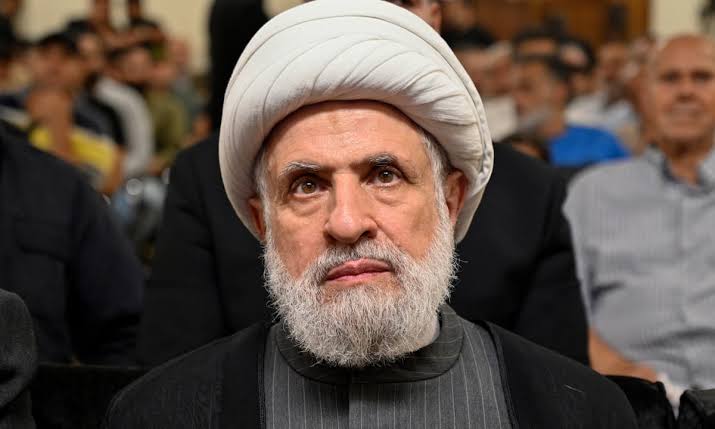
THE LEADER of Hezbollah has issued a blistering ultimatum to Israel, declaring that any potential ceasefire must cover “ALL of Lebanon” and serve as a direct prelude to a total Israeli military withdrawal.
Speaking in an exclusive interview with Al Jazeera, the chief of the Iran-backed militant group firmly rejected any partial or regional truces, as smoke and debris continued to choke the ancient southern port city of Tyre following a wave of devastating Israeli airstrikes.
”Any ceasefire must cover ALL of Lebanon,” the Hezbollah leader told the broadcaster, taking a hardline stance amid intense diplomatic pressure from Washington.
He insisted that the halting of hostilities can only be viewed as a “prelude to full Israeli withdrawal from all Lebanese territory.”
The fiery rhetoric comes despite United States President Donald Trump announcing a fresh, Washington-brokered de-escalation deal aimed at preventing a wider war. Under the initial framework of the US proposal, Israel would refrain from hitting Beirut’s densely populated southern suburbs, while Hezbollah would halt its rocket strikes on Israeli territory.
However, the reality on the ground remains starkly different from the diplomatic optimism in Washington.
Dramatic footage emerged today from the historic city of Tyre, showing entire residential buildings flattened into grey dust and twisted steel after intensive strikes by the Israel Defense Forces (IDF). Rescuers were seen clawing through the rubble of obliterated blocks next to the Jabal Amel hospital, where a strike just 24 hours earlier wounded dozens of medical staff and killed at least four civilians.
For Hezbollah, the ongoing carnage in the south is proof that localized or ambiguous agreements do not work.
In his interview, the Hezbollah leader fiercely criticized past diplomatic efforts, pointing out that previous ceasefire agreements did not prevent continued IDF strikes in southern Lebanon or high-profile assassinations in the heart of Beirut.

The group is refusing to tolerate a status quo where Israel spares the capital but maintains operational freedom to strike southern border towns or hunt down commanders.
The current crisis escalated dramatically on March 2, 2026, when Hezbollah launched a massive wave of rocket and drone attacks into northern Israel.
The group claimed the strikes were a retaliatory response to a wider regional conflict involving Iran and a long-standing cycle of border aggression.
In response, Israel launched a ferocious counter-offensive, culminating on March 16, 2026, when the IDF deployed five full military divisions—including the elite 98th Division—across the border into southern Lebanon. It marks Israel’s deepest ground incursion into its northern neighbor in two decades.
The stated goal of the Israeli campaign has been to dismantle Hezbollah’s extensive network of border infrastructure, destroy weapons caches hidden in civilian homes, and push the militant fighters north of the Litani River to secure Israel’s battered northern communities.
A temporary, US-brokered ceasefire was briefly established on April 16, 2026, but it quickly fell apart. Both sides accused each other of rampant violations, with Hezbollah continuing its guerrilla drone strikes against occupying forces and Israel launching near-daily airstrikes and artillery barrages.
Lebanon’s Health Ministry reported today that the death toll has climbed to 3,468 people since the outbreak of the war in March, with civilian casualties mounting heavily in southern strongholds like Tyre and Nabatieh. Meanwhile, the IDF has confirmed the losses of dozens of soldiers in brutal, close-quarters combat north of the border.
While Lebanese and Israeli delegations have quietly convened in Washington for a fourth round of tense peace talks, Hezbollah’s latest “all-or-nothing” demand casts a heavy shadow over the negotiations.
With the IDF actively ordering more towns to evacuate ahead of imminent bombardments, the prospects of a lasting peace remain buried beneath the smoldering ruins of southern Lebanon.
