

By SCM Correspondent I Published April 26, 2026
NEW YORK — The global economy is approaching a “point of no return” following a nearly two-month blockade of the Strait of Hormuz, with experts warning that the initial energy price spikes are now transitioning into a catastrophic collapse of industrial supply chains and food security.
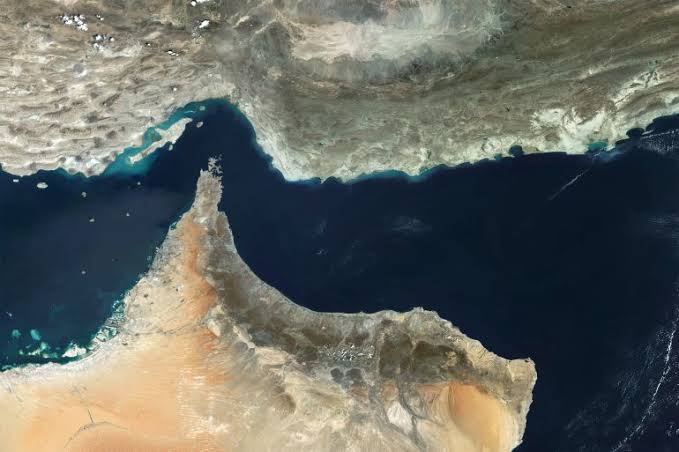
The Strait, a vital artery through which 20 percent of the world’s petroleum and a significant portion of its liquefied natural gas (LNG) flows, has remained effectively closed since hostilities broke out on February 28. While the immediate aftermath of the closure saw a predictable surge in crude prices, analysts are now pointing to a more permanent and structural threat: the total depletion of the “floating pipeline.”
James Rickards, a former Pentagon advisor and guest lecturer at Johns Hopkins University, warned that the buffer of oil tankers already at sea when the conflict began has finally run dry.
”When the war started, there were tankers already headed for South Korea, Japan, Australia, New Zealand, Malaysia, and India,” Mr. Rickards said in a recent interview on the New Order program. “That pipeline has now gone to zero.”
The implications of this depletion are reaching a critical threshold. As the blockade enters its ninth week, the energy deficit is no longer just a matter of higher costs at the pump; it is forced de-industrialization. Global refineries and heavy industrial plants, particularly in East Asia and Europe, are beginning to shutter operations as fuel stocks hit “tank bottoms.”
Mr. Rickards cautioned that the damage to the global industrial base may not be easily reversed, even if a diplomatic solution is reached tomorrow.

”This is not like throwing a switch you can turn back on,” Mr. Rickards said. “Even if the Persian Gulf opened tomorrow, which it will not, it could take weeks or months to get refineries going again.”
While the G7 nations grapple with industrial shutdowns and potential recessions, the outlook for the Global South is significantly more dire. The Strait of Hormuz serves as a primary transit point for nitrogen-based fertilizers and nitrates essential for global agriculture.
The timing of the blockade coincides with the primary planting season for several major agricultural regions. Without the arrival of Persian Gulf nitrates, farmers are unable to fertilize their fields, leading to fears of a drastically reduced harvest later this year.
”If you can’t fertilize the fields, you can’t plant your crops,” Mr. Rickards warned, painting a grim picture of the months ahead. “We’re looking at potential mass starvation on top of industrial collapse.”
The Biden administration has faced increasing pressure to secure the waterway, but military analysts suggest that the “anti-access/area denial” capabilities deployed in the region have made a conventional reopening of the Strait a high-risk endeavor.
As the 60-day mark of the closure approaches, the global community is facing a reality where the “energy crisis” has evolved into a fundamental threat to the stability of modern civilization.
