

By Steve Omolale I Friday, Oct. 16, 2026
LAGOS, Nigeria – Unlike other states in the country, every sector in Lagos State is stretched beyond limit. Overstretched by the huge population, that is. Daily, thousands of people from different parts of the country, from different parts of Africa, and from different parts of the world swarm on Lagos.
In fact, if not that the Sanwo-Olu administration is always investing in the health sector through infrastructure development, hospital expansion, modernisation of equipment and capacity building for health workers, the sector would have long caved in under pressure from Lagosians.
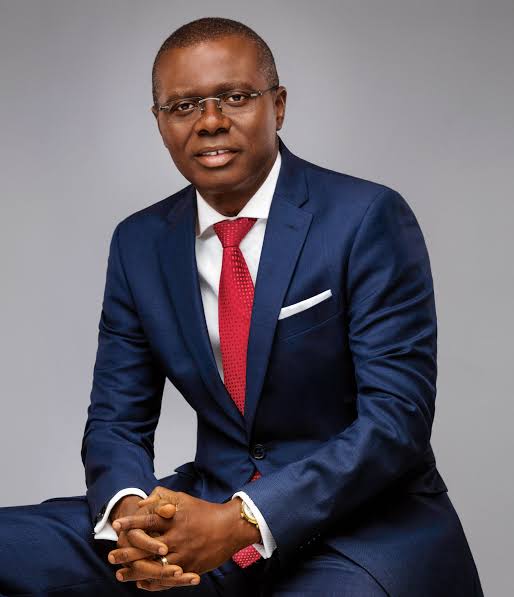
These migrants are looking for greener pastures, even as the Governor Babajide Sanwo-Olu administration relentlessly continues to grow and expand the state economy, thereby creating more opportunities for people to thrive, particularly in the megacity of Lagos.
But this expansion, which has catapulted the economy of Lagos to the second largest in Africa, trailing Cairo, Egypt, has dire consequences in the infrastructure of the city in particular. Like a beehive will attract bees, the expansion keeps attracting migrants to the city, day and night.
With no special allocation from the Federal Government to Lagos State for constant infrastructure maintenance and upgrade, the situation appears precarious but, definitely, not completely hopeless. It is not hopeless because the state government keeps thinking out of the box to do its beat and its best within the limit of available resources.
These non-stop efforts keep the infrastructure standing despite the unparalleled pressure on them from different angles.
In recent times, some Lagosians have been complaining bitterly about the health sector of the state because of some isolated cases in one or two public health facilities. Like the other sectors that are also constantly under pressure, such as education, transportation and housing, among others, the health sector is having its fair share of the pressure. Even with the continued addition of new health facilities, the pressure has not abated, no thanks to the huge population and the national brain-drain epidemic in the health sector.
The few available doctors and other health professionals in the system are also under immense pressure, making the situation a tinderbox.
These challenges are what many of us Lagosians quite understand, but which the armchair critics, some of whom do not even use the public health facilities, refuse to grasp.
Although the World Health Organisation (WHO) has clarified that it does not endorse a single, one-size-fits-all ratio of doctor to patients, because different countries have varying organisational, financial and workforce structures, the Nigerian Association of Resident Doctors (NARD) reports that the actual ratio in Nigeria is roughly one doctor to over 9,000 patients! The ratio may even be worse in Lagos because of the exploding population.
In fact, an approximate 15,692 Nigerian-trained medical doctors currently practice in the United Kingdom, being the third highest after Pakistan and India. While the figure is said to be about 20,000 in the United States (U.S), thousands also practice in Canada, France and other European countries. These figures are incredibly high and crippling for Nigeria to grow its near comatose health sector. They have worsened the brain-drain in the country’s health sector.
In fact, if not that the Sanwo-Olu administration is always investing in the health sector through infrastructure development, hospital expansion, modernisation of equipment and capacity building for health workers, the sector would have long caved in under pressure from Lagosians.

While the government has invested and still continues to invest humongous amounts of money in upgrading all the general hospitals in the state, it newly constructed Massey Street Children’s Hospital on a 4,000 square metres of land, designed to strengthen access to qualify healthcare for children in the state. The hospital is the largest in West Africa.
The new Ojo General Hospital is another important addition to the state healthcare infrastructure. It is strategically positioned to improve access to healthcare services for residents of Ojo and the surrounding communities, including the Badagry axis.
The government has also embarked on the construction of a major psychiatric healthcare facility in Epe, representing an important investment in mental-health infrastructure and specialised care.
Besides, there has been continued development and upgrading of facilities at the Lagos State University Teaching Hospital (LASUTH), Ikeja, to strengthen the capacity of the tertiary healthcare institution to provide specialised and advanced medical services.
It had earlier embarked on the massive renovation and upgrading of facilities at the General Hospitals in Somolu, Odan and Isolo, as well as the Ebute-Meta and Ketu-Ejinrin Health Centres, among several others.
It also established 10 Triage and Oxygen Centres and activated the Covid-19 Oxygen Treatment and Sample Collection Centres. It has covered about a million Lagosians under the Health Insurance Scheme, among several other massive investments in the all-important health sector.
Not left out in the investment spree is human-capacity development and professional training for health personnel.
These investments demonstrate that healthcare development is not limited to building hospitals alone
In fact, under the supervision of the hardworking Commissioner for Health, Professor Akinola Abayomi, Lagos has witnessed a tremendous development in the last seven years of the Sanwo-Olu administration.
However, the minor challenges in the health sector in a cosmopolitan state like Lagos should not be interpreted as evidence that the government is doing nothing.
Therefore, instead of a very few residents embarking on bitter, destructive, blanket and sweeping criticisms, aimed at diminishing the spirited efforts of the state government, which millions of other Lagosians keep appreciating, it is the duty of everybody to identify and present evidenced-based areas that need improvement and draw the attention of the government to them.
Criticism must be objective, constructive and genuine.
Once all these conditions are met, Sanwo-Olu and Abayomi, as well as other top members of the administration who have, on several occasions in the past, demonstrated their speed of responsiveness, as can be attested to by this writer, will surely respond to them.
According to Indian Prime Minister Narendra Modi, “People’s participation is the essence of good governance.”
Governance, therefore, is supposed to be the collective efforts of both the government and the governed.
*Omolale, a seasoned journalist, sent this piece from Lagos.
