

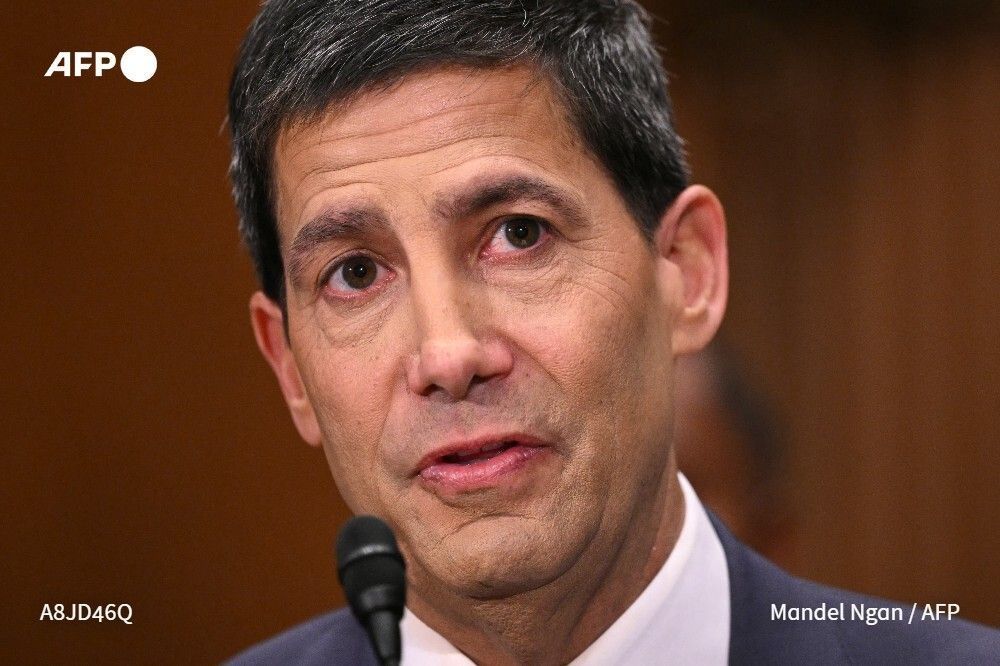
Former Morgan Stanley executive and Fed governor returns to Marriner S. Eccles Building as central bank’s independence faces unprecedented scrutiny
By SCM Foreign Affairs Correspondent
WASHINGTON — The US Senate on Wednesday confirmed Kevin Warsh as the next chairman of the Federal Reserve, handing the former investment banker the reins of the world’s most powerful central bank at a moment of profound economic and institutional peril.
Mr. Warsh, 56, returns to the Federal Reserve at a time when the institution is grappling with a stubborn inflationary cycle and a caustic political environment that has called into question the very autonomy of US monetary policy.
His confirmation marks a pivotal shift for the Fed, as he succeeds a leadership era defined by post-pandemic recovery efforts that critics argue left the central bank “behind the curve” on rising prices.
The immediate challenge for the new chairman is an inflation rate that has hit a three-year high. While the post-pandemic supply chain shocks have largely subsided, service-sector inflation and a tight labor market have kept price growth well above the Fed’s 2% target.
Market participants expect Mr. Warsh to adopt a “hawkish” stance—prioritizing price stability even at the cost of short-term economic growth.
In his testimony before the Senate Banking Committee, Mr. Warsh signaled a return to “sound money” principles, suggesting that the era of ultra-low interest rates and quantitative easing is firmly in the rearview mirror.
”The Federal Reserve’s primary duty is to protect the purchasing power of the dollar,” Mr. Warsh told lawmakers during a grueling confirmation process. “Without price stability, there can be no long-term prosperity.”
Institutional Independence Under Fire
Beyond the technicalities of interest rate hikes and balance sheet tapering, Mr. Warsh faces an existential threat to the Fed’s independence. For the past year, both ends of the political spectrum have ramped up pressure on the central bank.
From the populist right, there are calls for more direct executive oversight of monetary policy, while some on the left have urged the Fed to prioritize social and environmental outcomes alongside its dual mandate of maximum employment and price stability.
Mr. Warsh, who served as a Fed governor during the 2008 financial crisis, is viewed by many in the financial district as a “crisis veteran” capable of navigating these political shoals.

However, skeptics wonder if his close ties to various political circles will make it harder for him to project an image of technocratic neutrality.
Kevin Warsh is no stranger to the inner workings of the Fed. Appointed by George W. Bush as the youngest-ever Fed governor in 2006, he became a key advisor to then-Chairman Ben Bernanke.
His role as a liaison to Wall Street during the collapse of Lehman Brothers and the subsequent bailout era earned him a reputation as a pragmatist who understands the plumbing of global markets.
After leaving the Fed in 2011, Mr. Warsh spent years in academia at Stanford’s Hoover Institution and in the private sector.
His long-standing critique of “easy money” policies has made him a favorite among fiscal conservatives, though it remains to be seen how his theories will survive the reality of a slowing global economy.
Global markets reacted with cautious optimism to the news. The 10-year Treasury yield ticked higher following the confirmation, reflecting expectations of a disciplined approach to inflation.
”Warsh is a known quantity,” said Sarah Miller, chief economist at a leading New York brokerage.
“The markets like his pedigree. What they are waiting to see is if he has the stomach to stay the course if unemployment starts to creep up while he’s fighting inflation. That is the ultimate test of a Fed chair.”
As Mr. Warsh prepares to take his seat at the head of the FOMC table, the stakes could not be higher.
He inherits an economy at a crossroads and a central bank that must prove, once again, that it can operate above the fray of partisan politics to safeguard the American economy.
