

By SCM Foreign Desk
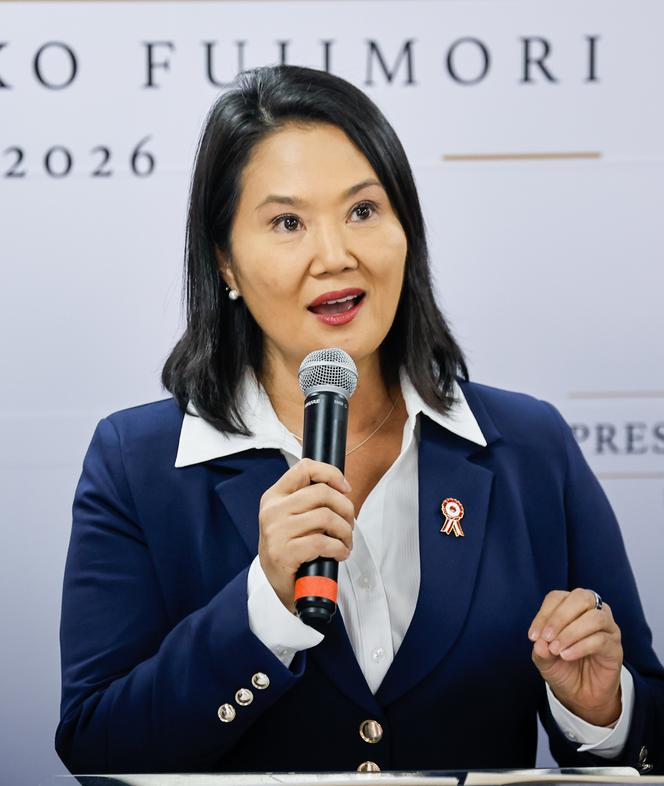
LIMA, Peru — Keiko Fujimori was sworn in on Tuesday as the first elected female president of Peru, assuming control of a deeply polarized South American democracy after securing victory in one of the tightest presidential runoffs in modern Latin American history.
In an inauguration ceremony before a newly seated bicameral Congress in Lima, Ms. Fujimori, 51, took the oath of office wearing the presidential sash, capping a 15-year quest for the country’s highest office. Her triumph follows three consecutive, heartbreaking runoff defeats in 2011, 2016, and 2021.
Addressing a nation battered by years of executive-legislative warfare, street demonstrations, and public frustration with violent crime, Ms. Fujimori delivered a speech centered on national reconciliation.
”I know that millions of Peruvians did not vote for me, and I know the heavy weight of distrust that rests upon my shoulders,” Ms. Fujimori told lawmakers and foreign dignitaries, including a delegation sent from Washington. “Today, I pledge to be a president for all Peruvians, not just those who supported my campaign. Our nation cannot afford another decade of division.”
Ms. Fujimori’s path to the presidential palace was secured by an extraordinarily narrow margin. Final certified tallies from the National Elections Jury (JNE) showed her leading her rival, left-wing congressman Roberto Sánchez of the Together for Peru coalition, by fewer than 50,000 votes out of more than 18 million ballots cast.
The second-round election on June 7 triggered nearly three weeks of legal disputes, recounts, and bitter challenges over rural and international votes. Mr. Sánchez, a former cabinet minister under former President Pedro Castillo, initially held a slim lead as domestic rural ballots were counted, but late-arriving mail-in ballots from Peru’s large diaspora favored Ms. Fujimori, flipping the final result in her favor.
While international observers certified the fairness of the election, Mr. Sánchez refused to formally concede, alleging irregularities and pledging to lead a robust congressional opposition bloc. Small anti-Fujimori demonstrations took place in downtown Lima during the swearing-in ceremony, highlighting the fierce resistance her name continues to provoke in rural regions and among human rights organizations.
For millions of Peruvians, the name Fujimori is inextricably linked to the authoritarian rule of her late father, Alberto Fujimori, who governed Peru from 1990 to 2000. His decade in power was defined by the defeat of the Shining Path communist insurgency and hyperinflationary economic reforms, but also by widespread corruption, human rights violations, and the dissolution of Congress in a 1992 self-coup.

Keiko Fujimori stepped into the public spotlight at age 19 when she became Peru’s First Lady following her parents’ high-profile divorce in 1994. Since founding her right-wing party, Popular Force (Fuerza Popular), in 2010, she has dominated Peruvian parliamentary politics while repeatedly seeking the presidency herself.
Critics have long accused her party of abusing its power in Congress to orchestrate the downfall of consecutive presidents over the past decade. Ms. Fujimori has also spent years combating legal challenges, including pre-trial detention during investigations into political campaign financing.
However, the dismissal of major charges ahead of the 2026 election cleared her legal path, allowing her to rebrand her platform around national security and institutional stability.
”Her election is the culmination of a extraordinary political endurance test,” said Jeffrey Radzinsky, a Lima-based political analyst. “She managed to rehabilitate her image enough to win, but she inherits a mandate built on a razor-thin foundation. She has virtually no room for a political honeymoon.”
Ms. Fujimori assumes power as Peru’s tenth head of state in ten years, illustrating the extreme volatility that has gripped the Andean nation. None of her predecessors since 2016 completed a full five-year term due to repeated presidential impeachments, resignations, and constitutional crises.
To stabilize her administration, Ms. Fujimori moved quickly to project moderate governance in her cabinet appointments. She named Elmer Cuba, a respected former central bank board member, as Economy Minister, signals designed to reassure international investors and protect Peru’s vital mining sector. Carlos Espá, a former diplomat, was named Foreign Minister.
Despite the ongoing political gridlock in Lima, Peru’s macroeconomy has remained relatively resilient, largely insulated by lucrative copper exports to China and the United States. The central bank recently projected a 3.4 percent GDP growth rate for 2026.
Her primary domestic battleground, however, will be public safety. Extortion rings and transnational organized crime have spiked across urban centers in Peru, driving public fear. Ms. Fujimori has advocated an iron-fisted police strategy and signaled strong alignment with regional security coalitions, including the Trump administration’s proposed “Shield of the Americas” initiative aimed at dismantling cartels and trafficking routes.
Yet with Popular Force holding only a minority of seats in the newly restored bicameral legislature, Ms. Fujimori will be forced to negotiate coalitions across a dozen competing factions.
Whether her vow to unify the country leads to genuine legislative compromise or renewed political warfare remains the defining question of her presidency.
