

By SCM Foreign Desk
MUSCAT, Oman — In a bid to defuse an escalating crisis over one of the world’s most crucial oil transit choke points, Oman has submitted a formal diplomatic proposal to Iran outlining a shared regional management framework for the Strait of Hormuz.
The proposal, which has secured quiet backing from neighboring Persian Gulf states, seeks to establish a joint regional consortium including Iran, Oman, and other Gulf nations to guarantee safe passage through the narrow waterway. Under the Omani plan, traffic in the narrow passage would be partitioned into three distinct operational corridors: an Iranian lane, an Omani lane, and an international transit lane.
To overcome a key sticking point—Tehran’s demand to levy service fees on commercial traffic versus Washington’s insistence on free international navigation—Muscat has put forward a compromise modeled on Southeast Asia’s Strait of Malacca. Rather than imposing mandatory tolls, the framework would invite commercial shipping companies and flag states to pay voluntary service fees designated specifically for environmental protection, search-and-rescue capabilities, and navigational infrastructure maintenance.
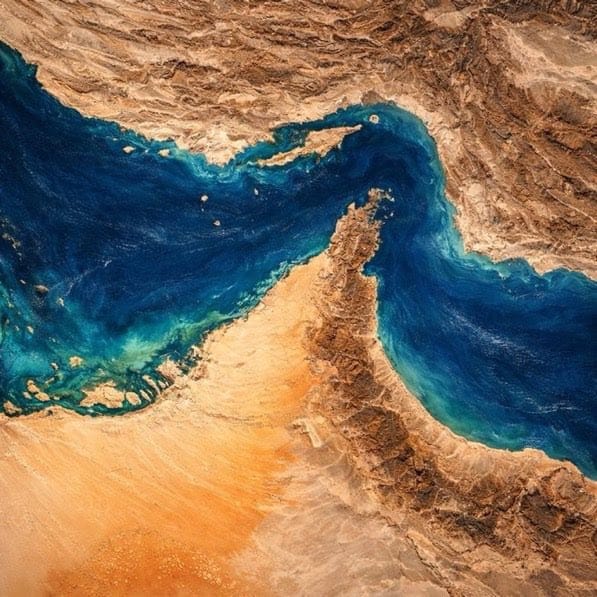
The diplomatic initiative comes at a precarious moment for global energy markets. The Strait of Hormuz, a 21-mile-wide passage between Oman and Iran connecting the Persian Gulf to the Arabian Sea, typically carries roughly one-fifth of the world’s petroleum and liquid natural gas supplies. Recent hostilities and maritime interdictions have severely disrupted tanker traffic, driving volatility in international crude benchmark prices and spiking marine insurance premiums.
Iran has long maintained that its geographical proximity gives it inherent sovereignty over transit through its territorial waters in the strait. However, the United States and major maritime trading powers maintain that under the 1982 United Nations Convention on the Law of the Sea (UNCLOS), commercial vessels exercise the right of “transit passage,” which cannot be suspended, taxed, or restricted unilaterally.
By proposing a regional consortium, Oman hopes to give Iran a formal voice in maritime oversight without granting Tehran sole control or violating international norms against mandatory tolling.
The Malacca Precedent

The Omani framework borrows heavily from the tripartite management system developed by Indonesia, Malaysia, and Singapore for the Strait of Malacca. Situated between the Malay Peninsula and Sumatra, Malacca is another of the world’s most heavily trafficked maritime choke points.
Rather than levying compulsory tariffs on passing ships, the littoral states of Malacca established voluntary contribution funds. Shipping lines, international organizations, and user nations voluntarily contribute to maintain maritime safety systems, combat piracy, and finance environmental cleanup mechanisms.
Diplomats familiar with the Omani proposal say a similar structure in Hormuz could allow Tehran to receive legitimate revenue for maritime safety services while maintaining compliance with international law and reassuring Western powers that open ocean transit remains unhindered.
Navigating Tensions in the Gulf
Oman’s role as the diplomatic architect reflects its long-standing tradition of quiet neutrality in Middle Eastern disputes. Sharing control of the strait’s southern shore, Muscat has routinely served as a critical intermediary between Tehran, Arab capitals, and Washington during previous regional crises.
While Iranian Foreign Minister Abbas Araqchi confirmed ongoing discussions with Omani and Saudi counterparts regarding regional cooperation, Tehran has yet to formally accept or reject the proposal.
Western diplomats and maritime analysts caution that while the three-lane system and voluntary fee structure offer a practical technical compromise, final implementation will hinge on broader geopolitical guarantees across the Persian Gulf.
For global shipping firms, the prospect of a structured, multi-nation oversight committee offers a potential path toward restoring commercial stability in one of the planet’s most vulnerable maritime corridors.
