

By SCM International Desk I Monday, Sept 28, 2026
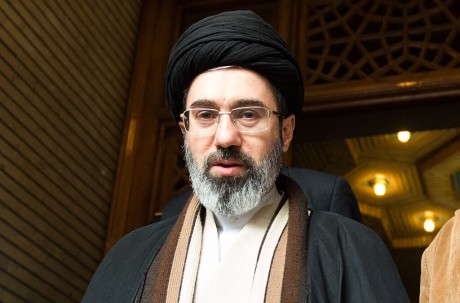
TEHRAN — In a written address marking the annual commemoration of the Iran-Iraq War, Iran’s Supreme Leader Mojtaba Khamenei issued a fiery statement framing his nation’s contemporary conflicts with Western powers as a direct continuation of a decades-long struggle against foreign domination.
Invoking anti-colonial rhetoric and historical grievances, the address aimed to re-ignite national solidarity amidst heightened military tensions and severe economic pressures.
The statement was released to coincide with the opening days of Mehr, the autumn month in the Persian calendar that marks the start of what Tehran calls the “Sacred Defense”—the eight-year war ignited by Iraq’s invasion in September 1980.
In his address, Khamenei portrayed the 1980 invasion as the culmination of efforts by Western nations to reverse the 1979 Islamic Revolution, which overthrew the American-backed Shah, Mohammad Reza Pahlavi. He framed the military aggression of that era as an attempt by “domineering powers” to reclaim lost influence over Iran’s vast energy resources and political governance.
”Under its influence, the ice of old and new forms of domination and colonialism was beginning to melt,” Khamenei stated, describing the immediate aftermath of the revolution led by Grand Ayatollah Ruhollah Khomeini.
“The days before that had been dark and bleak, days when the ambassadors of arrogant powers dictated their demands and prohibitions to the country’s Shah, and he, whether willingly or reluctantly, carried them out.”

To reinforce the historical narrative of foreign interference, Khamenei pointed explicitly to the 1953 Anglo-American coup that ousted Iran’s democratically elected Prime Minister, Mohammad Mosaddegh, following the nationalization of the Iranian oil industry.
”At that time, some Iranians still remembered the events of more than 20 years earlier, the hostility of colonial powers, the events surrounding the nationalization of the oil industry, and the American-backed coup,” the statement read. “Others had heard accounts of those events, while many had personally and clearly experienced the consequences that foreign domination over the affairs of our country had brought upon it.”
Analysts view the Supreme Leader’s invocation of the 1953 coup and the Iran-Iraq War as a calculated effort to fortify domestic support. Facing persistent economic distress, regional security crises, and lingering political dissent, the regime regularly relies on historical anti-imperialist themes to mobilize public unity.
By casting the modern confrontation between Tehran and Western nations through the lens of historical survival, Mojtaba Khamenei signalled that the Islamic Republic remains unyielding in its ideological posture.
”They devoted all their efforts to reversing the course of the powerful river of the revolutionary nation and returning it to its previous direction,” Khamenei declared, characterising the 1980 invasion as Western powers’ “most significant action during the first decade of the blessed life of the Islamic Republic.”
The release of the statement underscores Tehran’s persistent reliance on ideological messaging to signal resolve both to domestic audiences and to foreign adversaries amidst ongoing regional volatility.
This video provides important context regarding the broader conflict and military developments surrounding Mojtaba Khamenei’s ascension and leadership.
Mojtaba Khamenei and recent regional military developments
