

By Emmanuel Thomas
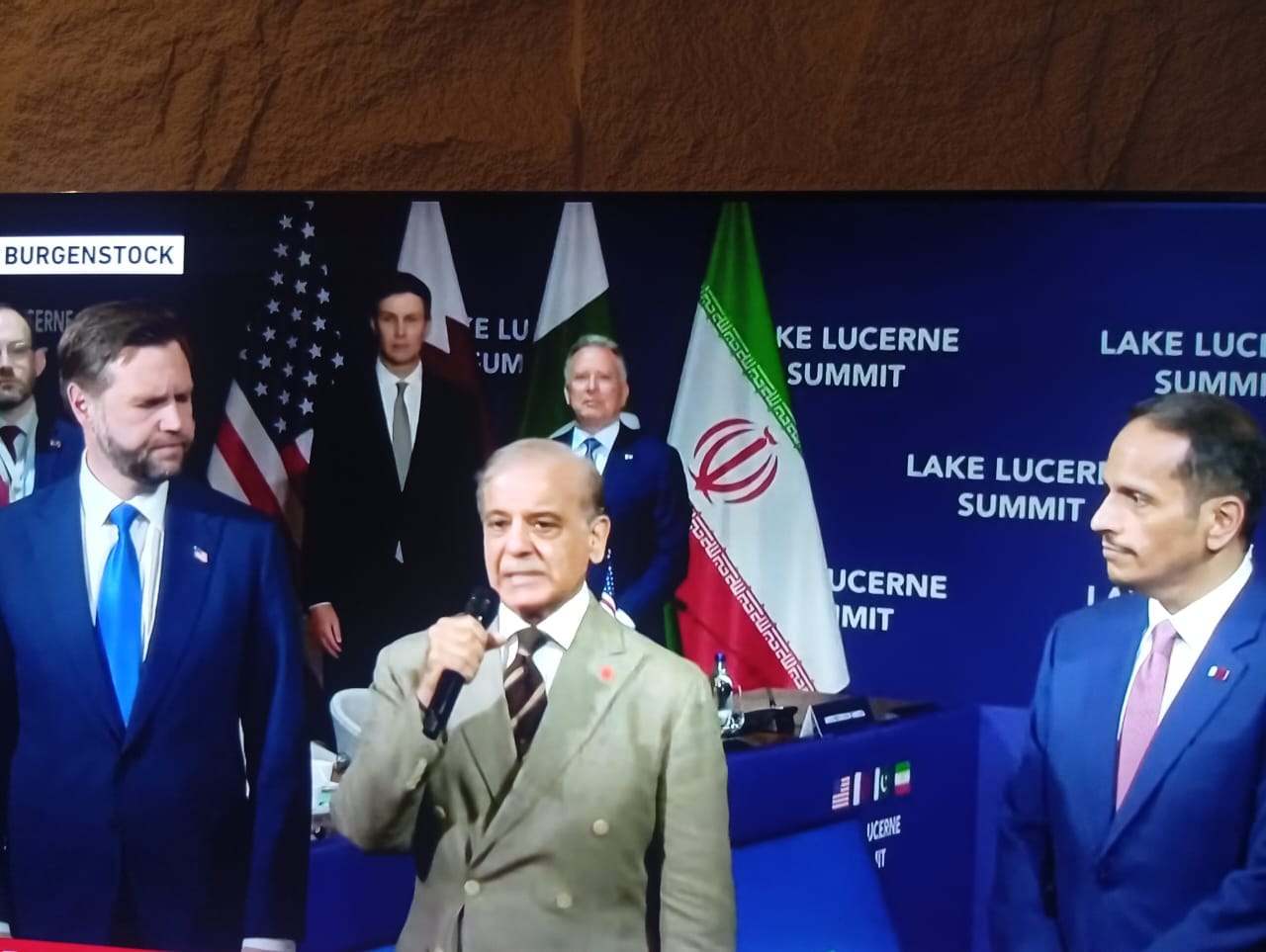
BÜRGENSTOCK, Switzerland — High-level delegations from the United States and Iran began direct, high-stakes negotiations at a secluded mountain resort overlooking Lake Lucerne on Sunday, launching an intense 60-day diplomatic effort aimed at permanently ending months of devastating conflict in the Middle East and resolving long-standing nuclear disputes.
The talks, held at the Bürgenstock luxury hotel complex, bring together top political figures from Washington and Tehran under the mediation of Pakistan and Qatar.
The opening session followed the arrival of a high-profile Pakistani delegation led by Prime Minister Shehbaz Sharif and Minister of Defense Field Marshal Asim Munir, alongside Qatari Prime Minister Sheikh Mohammed bin Abdulrahman Al Thani, both of whom have spent days bridging the deep divide between the two warring adversaries.
The American delegation is led by Vice President J.D. Vance, who landed in Switzerland early Sunday morning. He is joined by senior U.S. negotiators Jared Kushner, President Donald Trump’s son-in-law, and special envoy Steve Witkoff.
The Iranian delegation is headed by Mohammad Bagher Ghalibaf, the influential speaker of Iran’s parliament, and includes Foreign Minister Abbas Araghchi, as well as top oil and central bank officials.
The negotiations are designed to flesh out the technical details of the preliminary “Islamabad Memorandum of Understanding,” a fragile framework digitally signed earlier this week by President Trump and Iranian President Masoud Pezeshkian.
The primary goals of the summit are to secure a permanent ceasefire on all fronts—including the volatile conflict between Israel and Hezbollah in Lebanon—and to reach a definitive agreement regarding Iran’s nuclear capabilities and international shipping rights.
In his opening remarks, Prime Minister Sharif expressed profound optimism for the summit, explicitly thanking President Trump for initiating the talks to halt the war. Mr. Sharif told the delegates he was hopeful that the deliberations would yield a comprehensive formal paper outlining permanent solutions for the denuclearization of Iran and guaranteeing the unhindered opening of the Strait of Hormuz, a vital global energy choke point.

Vice President Vance also opened the session by thanking the Pakistani Prime Minister for his administration’s critical role in brokering the dialogue. Mr. Vance emphasized that the White House is determined to forge a fundamentally restructured region.
”President Trump wants to see a different Middle East,” Mr. Vance said in his opening statement, noting that the tentative stabilization of the region has already had tangible economic domestic impacts.
“In the United States, we are now seeing a fall in gas prices.”
Turning his attention directly to the Iranian delegation, the Vice President struck a dual tone of economic incentive and firm security demands, stating that the Trump administration desires to see Iran become a “driver of progress” in the region.
He added that the Islamic Republic would experience immense economic “prosperity if it turns away from nuclear weapons.”
The direct talks began after a brief delay.
Originally scheduled for Friday, the summit was briefly upended when the Iranian delegation threatened to boycott the meeting over continued flare-ups in Lebanon, stoking fears that the preliminary ceasefire would collapse before the ink was dry.
Intense weekend diplomacy by Qatari and Pakistani intermediaries managed to salvage the summit, convincing Tehran to dispatch its representatives to Switzerland.
While Vice President Vance indicated he will only remain on the ground for “a day or two,” the technical teams led by Mr. Kushner and Mr. Witkoff are expected to remain at the Swiss resort indefinitely.
The negotiations over Iran’s highly enriched uranium stockpiles and its heavily damaged nuclear infrastructure are expected to take weeks, with mediators noting that the sessions will continue for “as long as necessary.”
