

By SCM International Desk I Wednesday, Sept 30, 2026
WASHINGTON — In a bid to contain a deadly and persistent Ebola outbreak in Central Africa, the United States and major global allies pledged more than $470 million in new emergency aid on Wednesday, pushing total international commitments past the $2 billion mark.
The announcements came during a virtual G-20 Foreign Ministerial convened by the State Department to address the escalating crisis in the Democratic Republic of Congo (DRC), where a outbreak of the rare Bundibugyo Ebola virus strain has raged since May.
”This disease can be defeated, as shown by the successful end of Uganda’s outbreak in August,” the G-20 chair statement noted following the ministerial.
However, officials warned that the DRC outbreak presents far higher hurdles because it is centered in an isolated region deeply impacted by ongoing violence and armed conflict.
Unlike the more common Zaire ebolavirus strain, for which approved vaccines and monoclonal antibody treatments exist, the Bundibugyo strain lacks fully effective standard vaccines and therapies.
Global health experts have emphasized the urgent need to deploy experimental diagnostics, scale up clinical trials, and invest heavily in next-generation vaccines.
U.S. Leads Global Financial Push
The United States, currently holding the G-20 presidency, announced an additional $267 million in direct health and humanitarian aid.
The new influx brings total direct U.S. assistance for this outbreak to $887 million, alongside $350 million mobilized earlier this year for regional humanitarian relief through the United Nations Office for the Coordination of Humanitarian Affairs (OCHA).
U.S. officials indicated the funds will focus on:
Constructing and staffing specialized Ebola Treatment Units (ETUs).
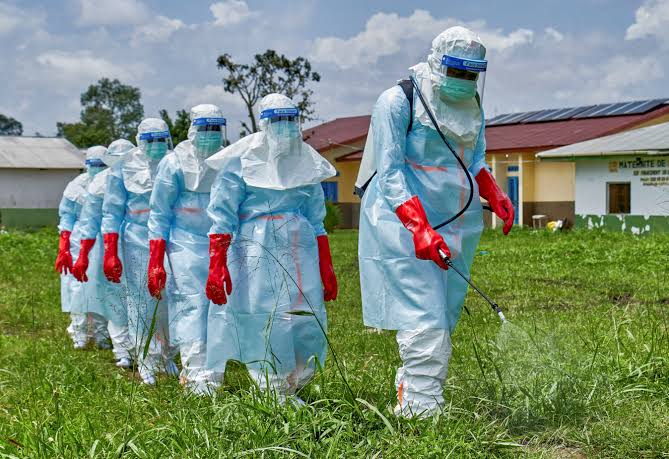
Deploying personal protective equipment (PPE) and establishing safe, dignified burial protocols.
Supporting contact tracing, community surveillance, and local health workers on the front lines.
Major international partners also rolled out multi-million-dollar funding allocations during the summit:

World Bank: $90 million ($80M via its Crisis Response Window and $10M from the Global Financing Facility).
United Kingdom: $67.5 million (£50M), raising its total support to $105.6 million.
Germany: $24.8 million (€21.8M), boosting its contribution to $30.7 million for lab diagnostics and community risk communication.
South Korea: $18 million targeted toward expanding access to therapeutics and countermeasures.
France: $16 million, bringing its cumulative pledge to $34 million.
Italy: $11.3 million (€10M), earmarked primarily for clinical trials testing vaccine efficacy.
United Arab Emirates: $10 million in direct outbreak support.
Japan ($5M) & Australia ($3.5M): Additional emergency grants for expert deployment and technical support.
A Complex Humanitarian Challenge
The ministerial included representatives from non-G20 donor nations—including Poland, Ireland, the Netherlands, Norway, Singapore, Qatar, and the UAE—alongside leadership from the Africa CDC, UNICEF, and the Pandemic Fund.
Containing virus transmission in the DRC remains extraordinarily difficult.
Frontline responders face dual threats: navigating active conflict zones between rebel groups and government forces, and operating in areas with minimal transport infrastructure.
International priorities now center on strengthening preparedness in surrounding high-risk provinces and neighboring countries, maintaining strict contact tracing, and expanding bed capacities before the strain spills over into major urban transit hubs.
