

By SCM International Desk I Monday, Sept 28, 2026
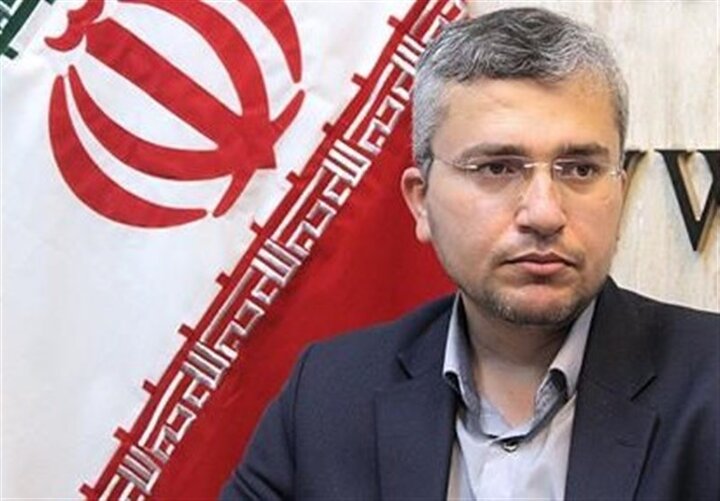
TEHRAN — Senior Iranian official Ebrahim Rezaei issued a sharp warning to neighboring Middle Eastern governments hosting U.S. military installations, asserting that their royal palaces and administrative seats will be considered “legitimate targets” if a new regional war breaks out.
Rezaei, who serves as a key spokesperson on security affairs within the Iranian Parliament, claimed Tehran possesses intelligence indicating that specific Western-aligned regional states—which he scathingly labeled “American colonies”—are actively pushing Washington into another large-scale conflict and have offered to underwrite its financial costs.
”We have information indicating that ‘American colonies’ in the region are pushing for a new war and have agreed to cover its costs,” Rezaei stated on social media. “The ‘American colonies’ in the region should beware that their palaces, too, will be legitimate targets in the next war.”
The remarks represent a dramatic escalation in Tehran’s rhetorical posture toward neighboring Gulf states and Western partner nations, shifting focus directly onto national leadership structures rather than just forward operating military assets.
Rising Tensions and Regional Background
The explicit threat against government palaces comes amid heightened friction across the Middle East. Relations between Iran and U.S.-aligned regional powers have frayed significantly over regional military positioning, naval security in crucial shipping corridors like the Strait of Hormuz, and the presence of foreign forces in host countries such as Saudi Arabia, the United Arab Emirates, Bahrain, Qatar, and Jordan.

Tehran has long denounced foreign defense partnerships across the Arabian Peninsula, arguing that the presence of U.S. military bases serves as a destabilizing force designed to isolate Iran economically and geopolitically. In recent months, Iranian leadership has repeatedly cautioned neighboring capitals against granting their airspace or infrastructure for offensive strikes directed at Iranian soil or proxy infrastructure.
Rezaei’s declaration signals that Tehran views regional states that assist foreign offensive operations not merely as bystanders, but as active co-belligerents. By threatening political leaders directly, Tehran aims to raise the political cost for regional monarchies considering logistical or financial assistance for Western security maneuvers.
Strategic Implications for the Region
Strategic analysts view Rezaei’s warning as a clear deterrence strategy. By directly referencing the leadership seats and royal strongholds of regional governments, Iran seeks to force neighboring defense capitals to reconsider their level of cooperation with Washington during times of escalating regional confrontation.
The threat also underscores ongoing concerns regarding asymmetric warfare. Iran’s military arsenal, heavily reliant on long-range ballistic missiles, cruise missiles, and loitering munitions (drones), provides Tehran with precision-strike capabilities throughout the Persian Gulf. Past regional hostilities have demonstrated that critical infrastructure, energy assets, and defense headquarters remain susceptible to coordinated drone and missile strikes.
As diplomatic efforts to de-escalate tensions remain fragile, Rezaei’s statements highlight a growing volatility in Persian Gulf security, leaving regional governments caught between their long-standing U.S. defense alliances and the immediate threat of direct retaliation from Tehran.
