

By SCM International Desk I Friday, Oct. 09, 2026
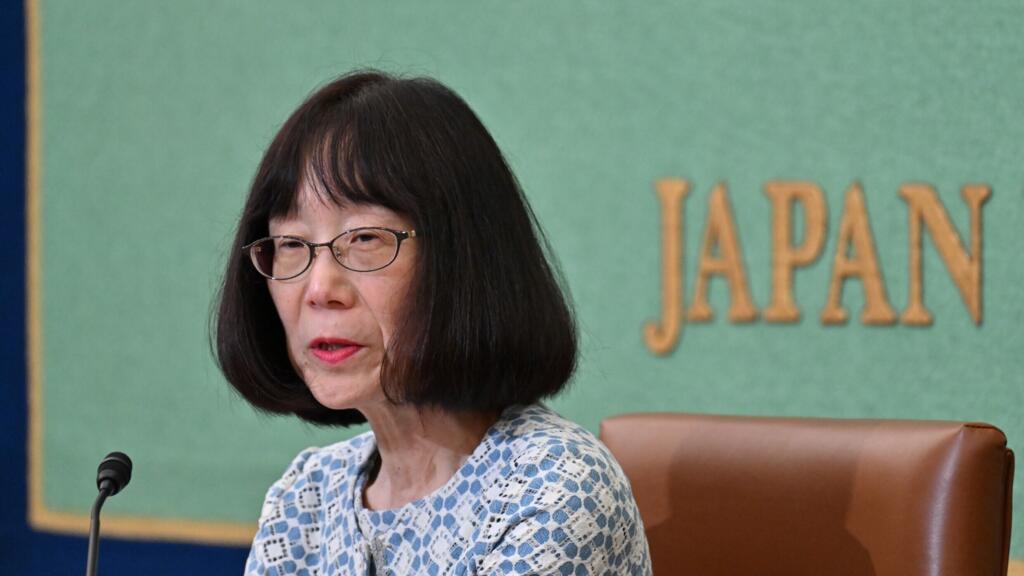
THE HAGUE — The President of the International Criminal Court, Tumoko Akane, issued a sharp rebuke against Washington on Friday, remaining resolute after the United States imposed a sweeping new round of designations targeting high-ranking officials of the tribunal.
Characterizing the punitive measures as a direct assault on international justice, Judge Akane declared that the permanent tribunal would not be coerced or deterred. She described the American actions as a targeted campaign of intimidation designed specifically to protect individuals who have committed war crimes from being held accountable before the law.
”The court will continue to fully discharge its mandate, with independence and impartiality, acting only on the basis of the law and the evidence, for the sake of the countless victims of grave crimes,” Judge Akane stated.
She emphasized that the tribunal’s duty to uphold justice remains unwavering and that its judges, prosecutors, and legal staff would carry out their professional responsibilities with dignity, without fear or favor.
The dramatic escalation between Washington and the tribunal in The Hague comes amid long-standing geopolitical friction over the court’s jurisdiction.
Neither the United States nor its close ally Israel are parties to the Rome Statute, the 1998 treaty that established the International Criminal Court as the global tribunal of last resort for genocide, war crimes, and crimes against humanity.
Relations deteriorated significantly following the court’s decision to pursue investigations and issue arrest warrants regarding alleged atrocities committed in global conflicts—most notably issuing warrants for senior Israeli leadership over actions in Gaza, as well as maintaining active probes into conduct involving U.S. personnel in Afghanistan.
Washington has persistently maintained that the ICC lacks sovereign jurisdiction over non-member states and their citizens.

Executive branch officials have accused the court of politicizing legal processes and exceeding its constitutional mandate, arguing that domestic legal systems are fully capable of investigating potential wrongdoing.
The latest sanctions represent a significant broadening of financial freezing measures, entry restrictions, and regulatory pressures against those associated with the tribunal. Legal experts note that the sanctions aim to isolate the court financially and operationally by penalizing non-U.S. entities and individuals who offer material support or cooperate with tribunal investigations.
In her statement, Judge Akane warned that targeting international jurists sets a dangerous precedent for global accountability. She appealed directly to the court’s 125 member states, urging them to stand firm in defending the independence of the court and safeguarding the multilateral legal order.
”This is not just about defending a single institution, but about safeguarding the international order grounded upon the rule of law,” Akane noted, reaffirming that the core legal foundation of the ICC rests on the principle that no individual—regardless of nationality or power—is above international humanitarian law.
Human rights organizations and several international legal bodies immediately echoed Akane’s concerns, cautioning that punitive state measures against judicial officers undermine the international justice system.
UN officials likewise criticized the aggressive sanctions, warning that such measures undermine global efforts to secure accountability for victims of serious crimes worldwide.
Despite the economic and diplomatic pressures mounted by Washington, tribunal officials confirmed that operations at The Hague will proceed uninterrupted.
As the legal standoff deepens, the court’s leadership continues to stress that its judicial mandates are bound strictly by statutory evidence rather than political pressure.
