

By SCM Foreign Desk
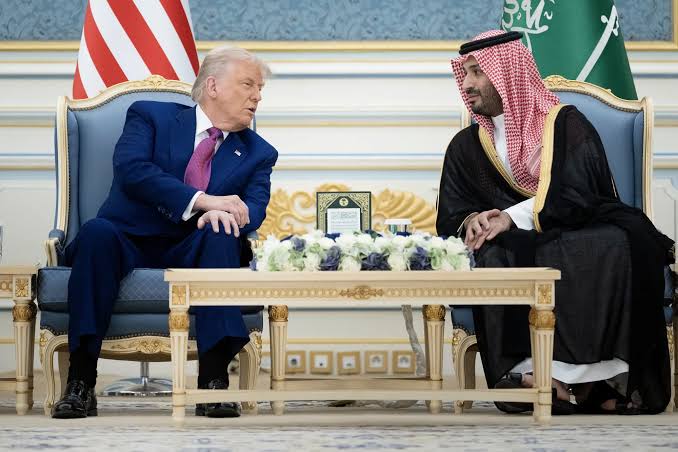
WASHINGTON — President Donald J. Trump has approved a groundbreaking 30-year civilian nuclear cooperation agreement with Saudi Arabia, positioning American power generation giants to play the dominant role in constructing the kingdom’s multi-billion-dollar atomic infrastructure while uncoupling the deal from diplomatic recognition of Israel.
The pact, known legally under Section 123 of the U.S. Atomic Energy Act, marks a significant pivot in Washington’s Middle East doctrine. By offering American technology to build a civilian nuclear grid—and leaving open a legal avenue for onshore uranium enrichment—the Trump administration aims to secure long-term geopolitical leverage in Riyadh while shutting out Chinese and Russian energy rivals.
The agreement opens the door for American firms to compete for contracts worth tens of billions of dollars as Saudi Arabia seeks to diversify its energy mix away from fossil fuels.
Central to the agreement is a provision that could lead to the construction of a U.S.-designed uranium enrichment facility inside Saudi territory. The project remains contingent on a two-year joint U.S.-Saudi feasibility study to evaluate commercial viability and technical security.
If the study determines that domestic enrichment is economically warranted, the facility would operate under a highly restrictive “black box” architecture. Under this technological framework:
U.S. Operational Oversight: American personnel would strictly oversee facility management, controlling sensitive physical and digital access points.
Proprietary Enclosure: Sensitive enrichment mechanisms would remain locked within U.S. proprietary technology, preventing the transfer of core engineering knowledge to local technicians.
10-Year Restraint Clause: Should the joint study conclude that local enrichment is economically unfeasible, Saudi Arabia will be contractually barred from pursuing domestic enrichment—either independently or with foreign partners—for a period of 10 years.
Administration officials argue that these strict structural boundaries allow Washington to maintain maximum oversight over the Saudi energy supply chain, ensuring nuclear materials are monitored and preventing their diversion for military purposes.

Decoupling Civil Nuclear Power from Israel Normalization
In a key departure from previous foreign policy strategies, the Trump administration did not condition the nuclear deal on Saudi Arabia normalizing diplomatic ties with Israel.
Under the Biden administration, a civilian nuclear package was treated as a major bargaining chip designed to incentivize Riyadh into signing the Abraham Accords and formally recognizing Israel. However, as geopolitical dynamics shifted and regional conflicts expanded, Saudi leadership made clear that normalization was contingent on progress toward a Palestinian state, creating a long-standing diplomatic impasse.
By unbundling the commercial and security aspects of nuclear cooperation from the normalization framework, President Trump chose to finalize the bilateral energy partnership independently. The administration’s pragmatic posture prioritizes securing U.S. commercial leadership in the Gulf and counterbalancing Beijing’s expanding economic influence over requiring immediate, broad regional peace agreements.
Congressional Friction and Proliferation Debates
The agreement is set to be formally signed this week before being submitted to Congress for a statutory 90-day review period under U.S. nuclear export laws.
The announcement is expected to encounter significant resistance on Capitol Hill from a bipartisan group of lawmakers. Critics argue that allowing uranium enrichment capabilities on Saudi soil dismantles traditional nonproliferation standards.
Historically, Washington required partner nations—such as the United Arab Emirates in its 2009 “123 Agreement”—to forgo domestic enrichment and spent fuel reprocessing entirely, a standard often referred to by nuclear experts as the “gold standard”.
Nonproliferation advocates warn that establishing centrifuges in Saudi Arabia risks stoking a regional nuclear arms race, particularly given Crown Prince Mohammed bin Salman’s past statements that the kingdom would develop a nuclear warhead if neighboring regional rivals achieved weaponized capability.
Despite expected pushback, legislative efforts to block the pact face formidable hurdles. Under federal law, the agreement automatically takes effect after 90 days of continuous session unless Congress passes a joint resolution of disapproval—a measure that would ultimately require a veto-proof two-thirds majority in both chambers. Given the current political makeup of Capitol Hill, opponents face a steep uphill battle to assemble the votes necessary to scuttle the deal.
