

By SCM Correspondent l July 13, 2026
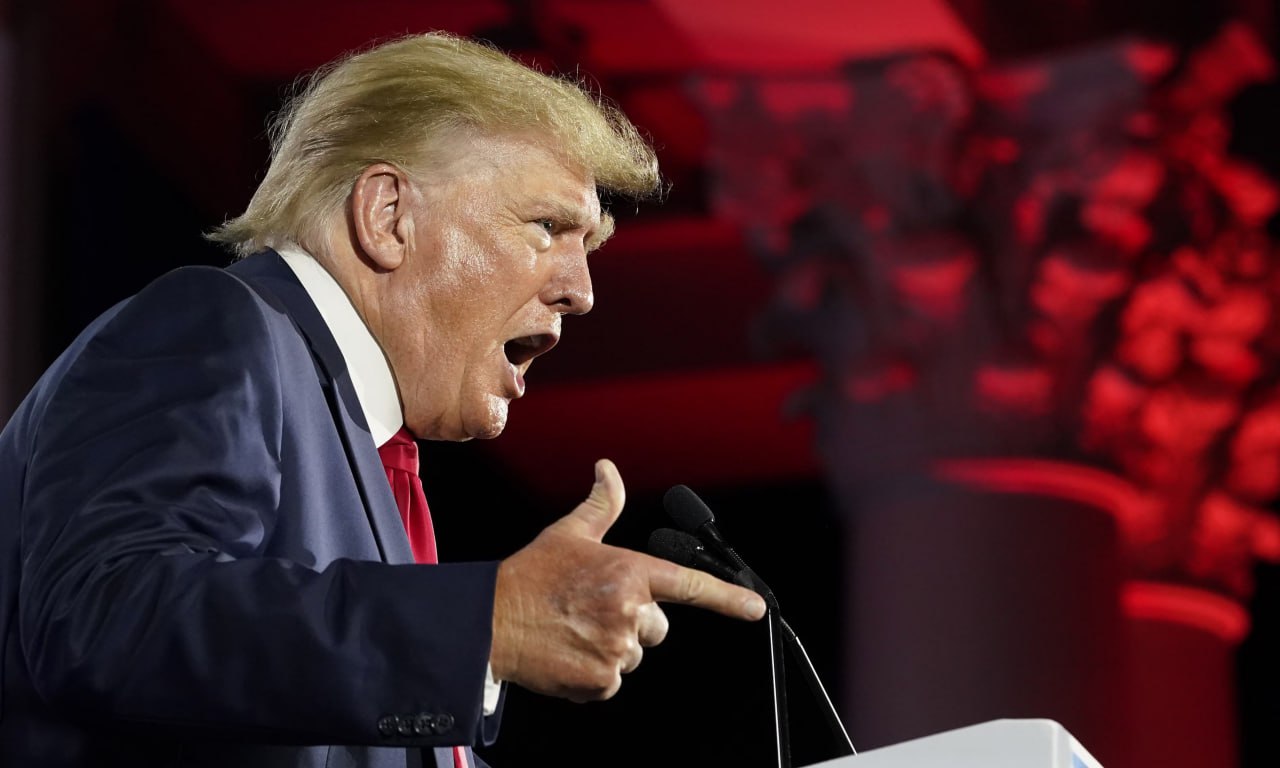
WASHINGTON — Under direct orders from President Donald J. Trump, the United States military began launching a third consecutive night of precision airstrikes against targets inside Iran on Monday evening.
The attacks represent the sharpest escalation in hostilities since a fragile, month-old ceasefire between Washington and Tehran collapsed last week.
U.S. Central Command (CENTCOM) confirmed that the strikes commenced at 4:45 p.m. Eastern Time.
In a statement, military officials said the operation was designed to “continue imposing a heavy cost on Iranian forces” and to “degrade their ability to attack innocent civilians and commercial shipping” in the Strait of Hormuz, the world’s most critical maritime choke point for global oil transit.
”The Commander in Chief has directed these strikes to hold Iranian forces accountable,” CENTCOM said, echoing a rapidly hardening posture from the White House.
The bombardment targeted key Iranian military infrastructure, including coastal radar installations, air defense systems, drone and missile launch facilities, and fast-attack small boats. Early reports from Iranian state media indicated explosions near major port cities along the Persian Gulf, including Bandar Abbas and Qeshm Island.
The strikes mark a definitive end to the brief period of relative calm in the region. On June 17, Washington and Tehran had signed an interim Memorandum of Understanding, establishing a 60-day window intended to pave the way for formal negotiations to permanently end the broader conflict.
That diplomatic opening has now thoroughly unraveled. Tensions flared again last Tuesday when three commercial cargo ships transiting the Strait of Hormuz were struck by projectiles, an attack Washington blamed on Iran’s Islamic Revolutionary Guard Corps (IRGC).
President Trump swiftly declared the interim agreement “over” and ordered a severe military response. Over the weekend, U.S. forces hit approximately 140 targets across Iran.
The latest round of strikes followed an aggressive declaration by President Trump earlier on Monday. Writing on his social media platform, Truth Social, Mr. Trump announced that the United States would formally reinstate its naval blockade on Iranian ports.
Furthermore, he declared that the U.S. military would take unilateral control of the Strait of Hormuz, acting as the “Guardian of the Strait of Hormuz,” and suggested charging a 20 percent tariff on all commercial cargo traversing the waterway to reimburse the U.S. for security costs.
”The Hormuz Strait is OPEN, and will remain OPEN, with or without Iran,” Mr. Trump wrote.
Tehran has reacted with fierce defiance. Iranian state media defended its recent actions in the strait, asserting that the nation has a sovereign right to manage maritime traffic within its territorial waters.

”The era of one-sided deals is over,” Mohammad Bagher Ghalibaf, a prominent Iranian negotiator and speaker of parliament, wrote on social media. “Reality is knocking.”
As U.S. aircraft and warships pounded targets inside Iran, Tehran retaliated by launching waves of drones and missiles toward neighboring Gulf states hosting American forces.
Air defense sirens sounded multiple times in Bahrain, the headquarters of the U.S. Navy’s Fifth Fleet, and the Kuwaiti military reported actively intercepting incoming projectiles.
In Jordan, military forces shot down four Iranian missiles transiting its airspace.
The sudden return to open warfare has sent fresh shockwaves through global markets, with Brent crude oil prices climbing more than 3 percent on Monday.
United Nations Secretary-General António Guterres issued an urgent plea for restraint, warning that the localized conflict is on the verge of turning into a catastrophic, full-scale regional war.
“A return to full-scale hostilities would have catastrophic consequences,” Mr. Guterres said through a spokesperson.
For now, however, both Washington and Tehran appear locked in a spiral of escalation, with U.S. officials warning that the strikes will continue until Iran’s capability to threaten international shipping is thoroughly neutralized.
The Path to War: The current conflict erupted in February 2024 following the dramatic assassination of Iran’s Supreme Leader, Ayatollah Ali Khamenei, in a joint U.S.-Israeli airstrike.
This triggered widespread regional fighting, drawing in U.S. bases in the Middle East and leaving thousands dead, primarily in Iran and Lebanon.
The Strategic Waterway: The Strait of Hormuz is a narrow passage between the Persian Gulf and the Gulf of Oman.
Approximately 20% of the world’s petroleum liquids pass through this corridor daily, making any closure or threat to shipping a direct threat to the global economy.
Domestic Politics: The escalation comes at a highly sensitive time for the Trump administration, with high energy prices and the risk of broader war serving as pivotal, volatile issues in the run-up to the U.S. congressional elections.
