

By SCM STAFF I MIAMI — May 20, 2026
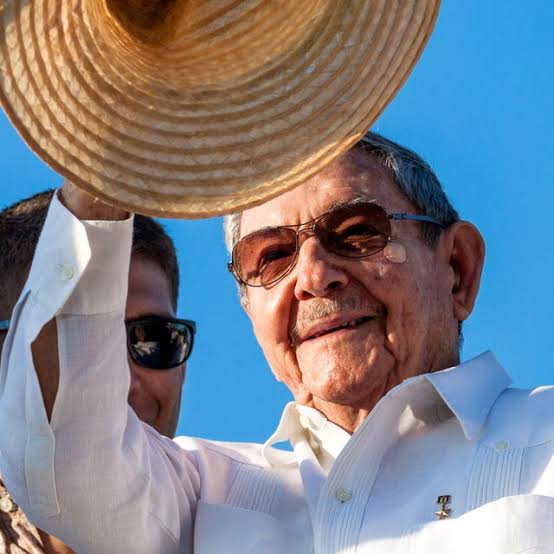
In a dramatic escalation of long-simmering geopolitical tensions, federal prosecutors on Wednesday unsealed a criminal indictment charging former Cuban President Raúl Castro with murder and conspiracy to kill United States nationals.
The charges stem from the absolute destruction of two unarmed American civilian aircraft by Cuban military jets exactly three decades ago.
The 20-page indictment, originally filed under seal in a Miami federal court on April 23, accuses the 94-year-old Mr. Castro and five co-defendants—all former Cuban fighter pilots—of orchestrated murder, conspiracy, and the destruction of aircraft.
The charges focus directly on the afternoon of February 24, 1996, when Cuban MiG-29 fighter jets intercepted and obliterated two small Cessna planes operated by the Miami-based exile humanitarian group, Brothers to the Rescue.
Four men—three U.S. citizens and one permanent resident—were killed in the attack: Armando Alejandre, Carlos Alberto Costa, Mario Manuel de la Peña, and Pablo Morales.
”For nearly 30 years, the families of four murdered Americans have waited for justice,” U.S. Acting Attorney General Todd Blanche announced during a highly charged press conference at Miami’s historic Freedom Tower. Flanked by large portraits of the four fallen aviators, Mr. Blanche added, “Our message today is clear: The United States does not and will not forget its citizens.”
According to prosecutors, Mr. Castro, who served as Cuba’s long-time defense minister before succeeding his late brother Fidel Castro as president, personally sat at the apex of the military chain of command that greenlit the lethal strike.
The indictment alleges that in January 1996, following a series of incidents where exile pilots dropped pro-democracy leaflets over Havana, Mr. Castro “met with military leaders and authorized them to use decisive and deadly action” against the civilian flights.
On the day of the shootdown, three Cessnas were operating over the Florida Straits to spot and assist desperate Cuban rafters attempting the hazardous journey to American shores.
The unsealed documents allege that Cuba’s intelligence apparatus had deeply infiltrated the exile group, tracking their precise flight paths.
International aviation investigators and the United Nations later concluded that the two downed planes were strictly within international airspace when they were struck by air-to-air missiles. A third plane managed to flee and safely land in Florida.
In Havana, the reaction from the communist government was swift and defiant. Cuban Minister of Foreign Affairs Bruno Rodríguez Parrilla strictly condemned the U.S. legal maneuvers, labeling the indictment “illegitimate, illegal, and an act of political aggression.”
Havana has maintained for thirty years that the aircraft deliberately violated Cuban sovereign airspace and that the military acted strictly in self-defense against what it deemed a “terrorist” organization.
The current Cuban President, Miguel Díaz-Canel, previously warned that aggressive American actions toward the island nation would only result in a “bloodbath.”
Legal experts acknowledge that the chances of Mr. Castro ever setting foot inside an American courtroom remain exceedingly slim. Cuba does not maintain an extradition treaty with the United States and fiercely guards its former revolutionary leadership. However, federal officials rejected the notion that the filing was merely symbolic.
”This isn’t a show indictment,” Mr. Blanche asserted, hinting that Washington would look to exploit any international travel or future political shifts to apprehend the co-defendants, drawing structural parallels to the global pressure campaign that successfully targeted former Venezuelan leaders in recent years.
The legal bombshell lands amid a broader pressure campaign by the Trump administration against remaining leftist autocracies in Latin America.

Speaking at a Coast Guard Academy event in New London, Connecticut, earlier Wednesday, President Trump branded Cuba a “rogue state” harboring hostile foreign actors, but sought to minimize fears of immediate military escalation.
”No, there won’t be escalation. I don’t think there needs to be,” Mr. Trump told reporters when pressed on whether Havana might retaliate. “Look, the place is falling apart. It’s a mess, and they’ve sort of lost control.”
Cuba is currently enduring its worst economic collapse since the fall of the Soviet Union, crippled by chronic electricity grid failures, systemic food shortages, and hyperinflation. While Mr. Castro formally stepped down from active leadership of the Communist Party in 2021, he is still widely regarded as the ultimate arbiter of power on the island.
For the Cuban-American exile community gathered outside the federal court in Miami, the indictment marks a profound emotional victory. Decades of legal petitions and lobbying have finally culminated in the explicit targeting of the man they hold responsible for their relatives’ deaths.
”We knew who pulled the trigger,” said Mirta Mendez, a relative of one of the victims, wiping away tears outside the Freedom Tower. “Today, the world finally hears the U.S. government say who gave the order.”
Founded in 1991 by José Basulto, a veteran of the Bay of Pigs invasion, Hermanos al Rescate (Brothers to the Rescue) was a Miami-based non-profit organization formed by Cuban exiles.
Their primary objective was to fly civil search-and-rescue missions over the Florida Straits to locate balseros (Cuban boat migrants) fleeing the island on makeshift rafts, providing them with water and alerting the U.S. Coast Guard. By 1996, the group claimed to have saved thousands of lives.
However, their mission grew increasingly political as they began flying close to—and occasionally violating—Cuban airspace to drop anti-Castro regime leaflets over Havana.
2. The Geopolitical Impact of the 1996 Incident
The original 1996 shootdown altered the course of U.S.-Cuba relations permanently. Prior to the incident, President Bill Clinton’s administration had been quietly exploring paths toward a diplomatic thaw with Havana.
The deaths of the pilots completely destroyed that political leverage. In direct response to the international outrage, the U.S. Congress passed, and President Clinton signed, the Helms-Burton Act of 1996.
This law dramatically tightened the embargo against Cuba, codifying it into written law and stipulating that sanctions could not be lifted until the Castro family was entirely removed from power and a transitional, democratic government was established.
3. Raúl Castro’s Historic Status
Raúl Castro is one of the last living titans of the Cold War era. Alongside his older brother Fidel and the guerrilla icon Che Guevara, Raúl overthrew the U.S.-backed dictatorship of Fulgencio Batista during the Cuban Revolution of 1959.
As the head of the Revolutionary Armed Forces for nearly half a century, Raúl built Cuba’s military apparatus and oversaw its interventions in conflicts across Africa and Latin America.
He assumed executive power in 2008 during Fidel’s failing health and orchestrated a series of modest economic reforms and a historic, brief diplomatic re-engagement with President Barack Obama in 2014, before transitioning formal executive power to Miguel Díaz-Canel in 2018.
