

By SCM International Desk I Tuesday, Sept. 08, 2026
LONDON — In one of the most significant diplomatic ruptures between Britain and Israel in decades, British Foreign Secretary Ed Miliband announced an $8.1 billion trade ban on goods and services originating from illegal Israeli settlements in the occupied West Bank.
Addressing the House of Commons, Miliband delivered a scathing indictment of Israeli settlement policy, warning that expanding outposts and systemic settler violence are rapidly destroying any realistic prospect of a two-state solution.
The measures, scheduled to take effect fully over the coming months, target all commercial imports from West Bank settlements alongside financial services, real estate, infrastructure investment, and advertising tied to settlement development.
Furthermore, the British government announced it will reject all new contracts for arms supplies that could directly or indirectly support or promote settlement activities in the occupied territories.
”The British government agrees that there is ethnic cleansing of Palestinians in areas of the West Bank, perpetrated by settler terrorists,” Miliband told lawmakers, directly citing statements from former Israeli military and intelligence officials who have warned of the same systemic displacement.
Miliband singled out the controversial E1 settlement plan near Jerusalem as a flashpoint of primary concern. By building out the E1 corridor, he noted, Israel would effectively sever East Jerusalem from the remainder of the West Bank, bisecting Palestinian territory and placing deliberate, permanent obstacles in the path of establishing a sovereign Palestinian state.
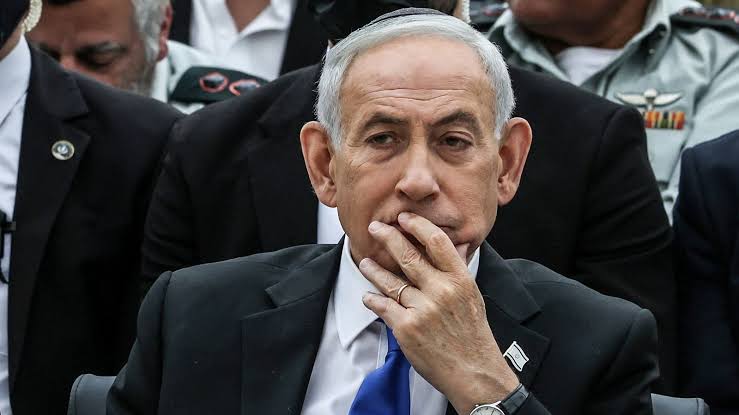
”Expansion of illegal settlements has multiplied significantly under the current government of Prime Minister Benjamin Netanyahu,” Miliband stated.
Highlighting the human toll of the policy, he noted that a total of 65 Palestinian communities, comprising over 4,000 individuals, have been forcibly evicted from their ancestral homes amid rising hostility.
Quoting United Nations data, Miliband told Parliament that settler-led violence and intimidation—frequently carried out under the explicit protection or tacit approval of Israeli security forces—has climbed to an alarming average of six attacks per day. He explicitly characterized this cycle of violence not as isolated incidents, but as state-sanctioned “settler terrorism.”
Despite the severe nature of the sanctions, Miliband stressed that London’s diplomatic dispute is strictly with the policy trajectory of Israel’s current leadership, rather than the country itself.

“The British government has no issue with the nation of Israel or its people,” he clarified, “but with the actions being carried out by those currently in government.”
He added that Israel could halt these economic measures at any time simply by “beating a retreat” from settlement expansion.
London is not acting in isolation. Miliband noted that several key Western nations—including Germany, Denmark, Ireland, and Canada—are coordinating parallel restrictions or trade measures against settlement-derived goods.
The announcement places London at sharp odds with top Israeli officials.
Placing his remarks in direct opposition to Israeli Finance Minister Bezalel Smotrich—who recently remarked that international actions should “bury the idea of a two-state solution”—Miliband reaffirmed Britain’s stance.
”A two-state solution remains the only true guarantee for lasting peace and stability in the Middle East,” Miliband insisted, concluding that both Israelis and Palestinians deserve to live free from fear, under their own recognized sovereignty.
The E1 Corridor Dispute: The E1 (East 1) area is a 12-square-kilometer zone located between Jerusalem and the Israeli settlement of Ma’ale Adumim.
For decades, international diplomats have considered development in E1 a red line, as construction there physically divides the northern and southern West Bank, making a contiguous Palestinian state geographically unviable.
Escalation Under Netanyahu’s Coalition: Since Prime Minister Benjamin Netanyahu returned to power leading an ultranationalist coalition, settlement approvals, outpost legalizations, and land declarations in the West Bank have reached record levels. Key cabinet ministers, including Bezalel Smotrich and Itamar Ben-Gvir, have openly advocated for full Israeli sovereignty over the territory.
International Law & Sanctions: The United Nations and the International Court of Justice (ICJ) regard Israeli settlements in the West Bank and East Jerusalem as illegal under the Fourth Geneva Convention.
While Western powers historically relied on diplomatic condemnation, Britain’s economic embargo represents a structural shift toward direct financial and trade sanctions targeted at the settlement ecosystem.
