

By SCM International Desk I Friday, Oct. 09, 2026
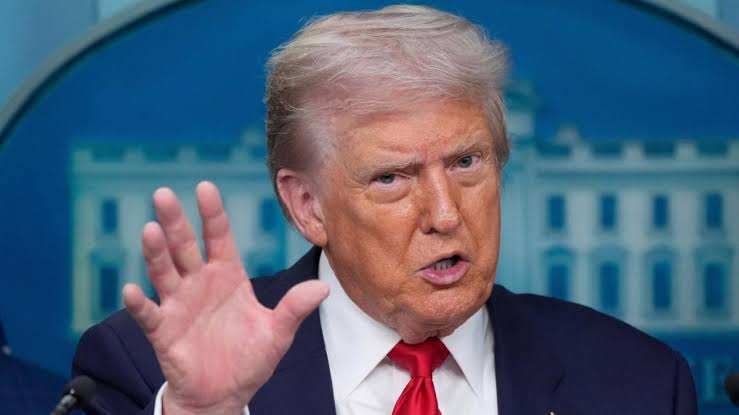
WASHINGTON — Donald J. Trump claimed on social media that he had reached an agreement with Russian President Vladimir V. Putin for Russia to deliver nearly 5 million tons of diesel fuel to the United States and global markets, framing the deal as a major push to lower energy costs for American consumers, truckers, and agricultural workers.
Writing on Truth Social, Mr. Trump described a “highly successful discussion” with Mr. Putin, stating that Russia would immediately release more than 300,000 tons of diesel fuel, followed by 500,000 tons in November, 1,000,000 tons shortly thereafter, and an additional 3,000,000 tons subject to the condition of Russian refineries.
”Between our TOTAL CONTROL of the Strait of Hormuz, and this great announcement on Russian Energy, Diesel Prices for Americans and, indeed, the World, will be COMING DOWN, IN RECORD NUMBERS, AND FAST!” Mr. Trump wrote, adding that lowering costs for “Farmers, Ranchers, and Truckers” remained his top priority. He concluded the statement with an abrupt warning: “Additionally, it must be understood, that Iran will not have a Nuclear Weapon!”
The statement raises significant policy and legal questions regarding sanctions, global market logistics, and foreign policy:
Sanctions and Import Restrictions: The U.S. implemented a strict ban on Russian petroleum products—including diesel, crude oil, and liquefied natural gas—following Russia’s invasion of Ukraine.
Resuming large-scale fuel imports from Russia would require explicit executive action to reverse existing sanctions, an avenue likely to face fierce pushback from bipartisan coalitions in Congress.
Refining and Logistics: Russia’s refining capacity has suffered operational disruptions due to domestic supply pressures, infrastructure maintenance, and targeted military strikes on energy infrastructure. Global energy analysts questioned whether Russian refineries could immediately produce and ship 4.8 million tons of export-grade diesel without compromising domestic reserves.

Strait of Hormuz and Geopolitics: Linking Russian energy deliveries to U.S. control of the Strait of Hormuz merges two volatile foreign policy theaters.
The reference to Iran highlights ongoing tensions surrounding Tehran’s nuclear program and regional maritime security, though the direct connection to Russian energy shipments was not immediately clarified.
White House and State Department officials did not immediately comment on whether formal diplomatic channels or energy agencies were involved in negotiating the cited fuel volumes.
The Announcement: Mr. Trump stated that talks with President Vladimir Putin yielded a commitment for Russia to export 4.8 million total tons of diesel fuel to global markets.
Target Audience: The move is framed as a relief measure aimed at reducing fuel costs for U.S. farmers, ranchers, and logistics workers.
Policy Obstacles: Executing the agreement would require lifting U.S. energy import bans placed on Russia following its invasion of Ukraine.
Geopolitical Reach: The social media statement tied the energy deal to U.S. maritime presence in the Strait of Hormuz and nuclear deterrence efforts against Iran.
