


By SCM ONLINE REPORTER
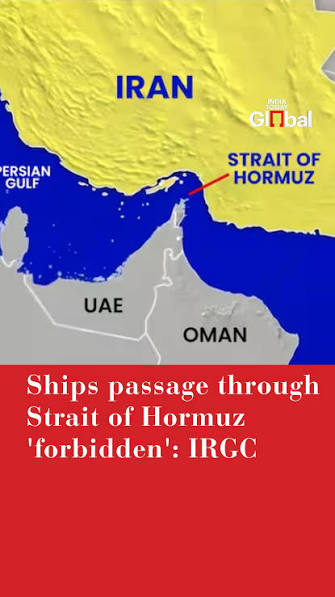
AN IRANIAN naval chief has issued a chilling “brutally cold” warning to the West, vowing to torch any ship attempting to cross the Strait of Hormuz.
Sardar Jabbari, Commander of the IRGC Navy, sparked global panic today by declaring that the world’s most vital oil artery is now a “kill zone.”
In a move that threatens to bankrupt Western economies overnight, the hardline commander warned: “Not a single barrel leaves.”
The terrifying ultimatum sent oil markets into a tailspin, with experts predicting prices will rocket to a record-breaking $200 a barrel within days.
Jabbari claimed his message was not a mere threat but a “logistics briefing.” He warned that any vessel attempting to transit the 21-mile chokepoint would be “set ablaze” and that oil pipelines across the Middle East would be “struck” by Iranian missiles.
The fallout has already begun:
GAS SHOCK: The massive QatarEnergy LNG complex has been forced offline.
RADAR HIT: Iran has already successfully targeted the US AN/FPS-132 early warning radar at the Al Udeid base in Qatar.
SUPPLY CRUNCH: 20 million barrels of oil a day—roughly 31% of the world’s seaborne crude—is now trapped.
The crisis leaves the world economy on the brink of a “Great Reset.” Finance ministries in Asia and central banks across Europe are tonight scrambling to handle a world where energy no longer flows freely.
In Washington, the “clean weekend operation” promised by Israeli PM Benjamin Netanyahu appears to have spiralled into a global catastrophe. Gulf monarchs are reportedly “begging” Donald Trump for an exit strategy as their ports and pipelines—once protected by the might of the US Navy—sit in Iran’s crosshairs.
As the “regime change” plan falters, the British public faces a grim reality at the pumps. If Jabbari follows through on his “bloodbath” promise, the post-war bargain of American protection for cheap oil may have just gone up in smoke.
The Strait of Hormuz is the world’s most important oil transit chokepoint. At its narrowest, it is just 21 miles wide. Approximately one-fifth of the world’s total oil consumption passes through this stretch of water daily.
If Iran successfully closes the Strait, global supply chains built on “just-in-time” energy delivery will collapse, leading to hyperinflation and energy rationing in the West.