

Admin I Wednesday, May 06.26
TEHRAN — Amid fracturing diplomatic efforts and a highly volatile maritime standoff in the Persian Gulf, Iran’s Foreign Ministry on Monday staunchly defended its tightening control over the Strait of Hormuz.
The government asserted that restricting and regulating traffic through the world’s most critical oil chokepoint is an act of sovereign self-defense against Western hostility.
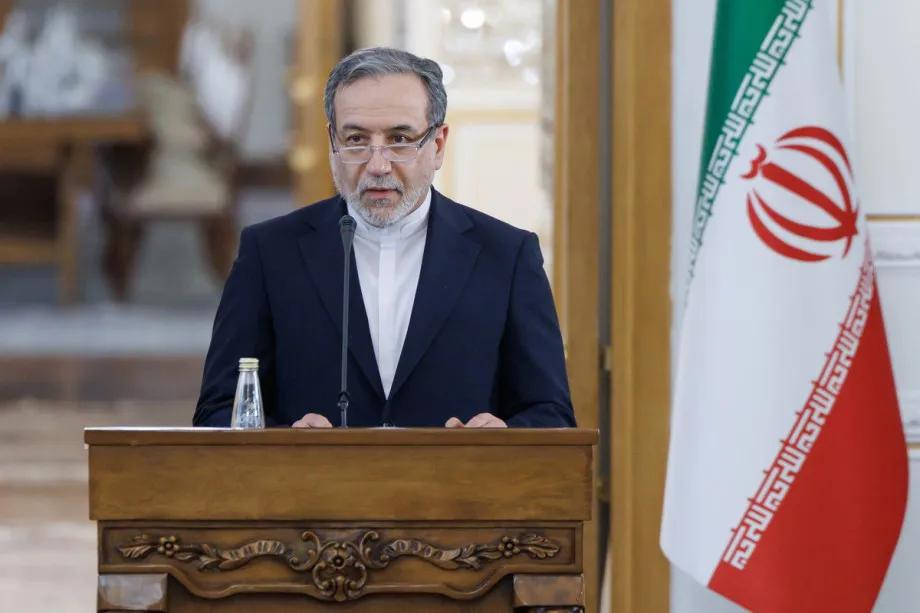
Speaking at a weekly press conference in Tehran, Foreign Ministry spokesperson Esmaeil Baghaei stated that the safe passage of commercial vessels through the waterway remains a matter of “extreme importance” for the Islamic Republic.
However, he emphasized that such safety can only be guaranteed if foreign entities strictly respect Iranian oversight and state authority.
In an effort to legitimize its recent maritime blockades and heightened naval readiness, Mr. Baghaei revealed that Iran has established localized administrative mechanisms to oversee the corridor.
He noted that Iran—acting “out of a responsible approach” to regional stability—has implemented bilateral protocols with its neighboring coastal state, Oman, to manage the transit of ships.
The announcement follows weeks of severe disruptions in the Persian Gulf, triggered by a broader military conflict involving the United States and Israel that erupted earlier this year. Though a fragile mediation effort has paused direct bombardments, the battle lines have rapidly shifted to the high seas.
The diplomatic friction spiked further after Washington announced “Project Freedom”—a deployment of American guided-missile destroyers and aircraft to forcefully escort commercial vessels through the strait.
Tehran viewed the American deployment as a direct violation of its territorial waters and domestic sovereignty.
”No one can blame Iran for taking such measures to protect its national security from the whims of aggressors,” Mr. Baghaei told reporters, explicitly targeting the United States and its allies.
He added that Iran’s actions are entirely lawful under both domestic legislation and international maritime law, framing the new protocols as a necessary shield against what he characterized as a Washington-led “war of choice.”

The economic fallout from the escalating rhetoric was immediate. Brent crude, the international oil benchmark, surged past $114 a barrel as energy traders expressed growing panic over prolonged disruptions in the chokepoint, through which roughly a fifth of the world’s petroleum transits.
Shipping conglomerates have reportedly begun rerouting vessels around the southern tip of Africa, facing soaring insurance premiums and lengthy delays.
Western defense officials have sharply criticized Tehran’s posture. U.S. Central Command argued that unilateral Iranian restrictions violate the UN Convention on the Law of the Sea, which guarantees the right of transit passage through international straits.
Washington maintains that its naval presence is a humanitarian and stabilizing gesture intended to free hundreds of commercial crews currently marooned in the Gulf.
The current crisis traces its origins to late February, when a series of military exchanges plunged the region into open hostilities.
While a April ceasefire mediated by Pakistan halted major airstrikes, the underlying geopolitical dispute remains dangerously unresolved.
The Strait of Hormuz has long functioned as a geopolitical lever for Tehran. Measuring just 21 miles wide at its narrowest point, the shipping lanes border Iranian territorial waters on the north and Omani waters to the south.
By leveraging its geographic advantage and coordinating with Muscat, Iran is attempting to construct a legal and operational framework that effectively cuts out Western monitoring, forcing international shipping companies to deal directly with Tehran.
For decades, Oman has acted as a neutral diplomatic bridge between Iran and Western powers. By invoking joint protocols with the Sultanate, Iran is attempting to present its actions not as rogue maritime lawlessness, but as regional, institutional governance.
Yet, with the United States pledging to defy any uncoordinated restrictions, the narrow waters of the Hormuz remain a dangerous flashpoint.
Mr. Baghaei’s comments signal that even as backchannel peace proposals circulate, Tehran is fully prepared to use its geographic stranglehold to defend itself against external economic and military pressure.
