

By Our Man in Monterrey
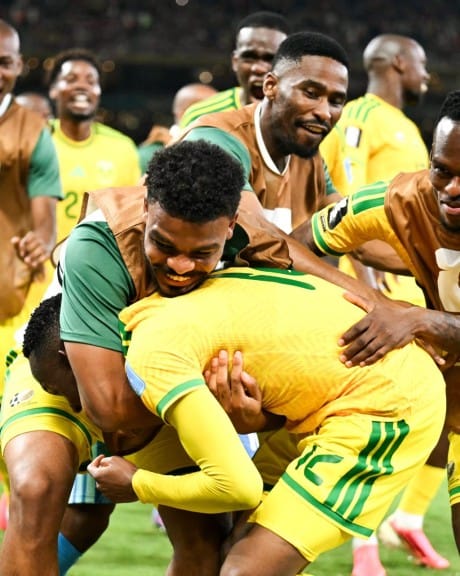
History has been made in Mexico, and it has been painted in the vibrant green and gold of South Africa. On a night of pure, unadulterated sporting theater at the Monterrey Stadium in Guadalupe, Bafana Bafana defied the odds, ripped up the script, and secured passage to the World Cup knockout stages for the first time in their history.
A single, brilliantly taken second-half strike from rising star Thapelo Maseko was enough to seal a famous 1-0 victory over South Korea. It sparked wild celebrations from Johannesburg to Cape Town, completing a truly miraculous resurrection for manager Hugo Broos’s men, who were largely left for dead by pundits after a bruising two-nil opening defeat to Mexico.
Yet, for all the joy radiating from the South African contingent, the defining narrative of this frantic Group A finale began long before Facundo Tello blew his whistle for kickoff.
In a move that sent shockwaves through the press box and social media alike, South Korea manager Myung-Bo Hong made the staggering, ruthless decision to drop his captain and undisputed talisman, Heung-min Son.
The Tottenham Hotspur icon, widely revered as Asia’s greatest-ever footballing export, had to endure the ultimate indignity of watching the biggest match of his nation’s tournament from the dugout. It brought a definitive, brutal end to Son’s incredible run of twelve consecutive World Cup starts.
At thirty-three years of age, Son’s international powers appear to be waning at the worst possible moment. Having failed to find the net in a World Cup since 2018, and coming off anonymous, low-touch outings against Czechia and Mexico, Hong decided the team needed a radical shake-up.
Initially, it looked like a tactical masterstroke. The South Koreans flew out of the traps, hunting down the ball with terrifying intensity and imposing their technical superiority. They entirely dominated the early rhythm, monopolizing the ball to record an astounding sixty-eight per cent of total match possession over the course of the ninety minutes.
Within just one hundred and twenty seconds, the Taegeuk Warriors should have been ahead. Stand-in captain and Bayern Munich defensive powerhouse Kim Min-jae rose like a colossus at the near post to meet a wicked corner.
His bullet header beat South African goalkeeper Ronwen Williams, only for Bafana Bafana defender Aubrey Modiba to pull off a spectacular, desperate clearance right off the goal line. Moments later, the explosive Lee Kang-in found pocket space inside the penalty area, but his ferocious shot whistled agonizingly wide of the right post.
But South Africa, playing with an infectious blend of hunger, speed, and raw adventure, refused to break. They bent, but they held. Gradually, Thalente Mbatha and Yaya Sithole began wrestling back control of the engine room. Nineteen minutes in, the electric Maseko nearly broke through on the counter, requiring a brilliant, last-ditch tackle from Lee Gi-hyuk to spare South Korean blushes.

The Africans were creating the cleaner, more dangerous openings despite having so little of the ball. On the half-hour mark, South Korea were indebted to goalkeeper Kim Seung-gyu, who produced a phenomenal double-save. First, he parried a stinging effort from Mbatha, and when the rebound fell directly to Evidence Makgopa, the forward’s close-range poke was kept out by the keeper’s trailing leg.
Frustrated by his side’s total lack of cutting edge, manager Hong blinked at half-time, throwing on Son Heung-min as part of a drastic triple substitution that shifted South Korea into a hyper-aggressive back four.
Son’s introduction certainly injected emotional energy. The veteran managed twenty-nine touches in his forty-five minutes on the pitch, but the worrying reality for South Korean fans was that only a solitary one of those touches occurred inside the penalty box. He looked a yard off the pace, suffocated by the tightly packed, brilliantly disciplined South African defense led by Khuliso Mudau.
As anxious news filtered through that Mexico were coasting to a three-nil victory over Czechia in Mexico City, both sides knew that second place—and guaranteed qualification—was right there for the taking.
In the sixty-third minute, the stadium erupted. Tshepang Moremi, injected into the game just moments prior, drove down the flank and delivered a beautifully weighted cross. Maseko, who had squandered a decent opportunity just after the interval, showed maturity far beyond his years. He took a deft touch, composed himself under immense pressure, and unleashed a low, precise finish into the bottom corner, leaving Kim Seung-gyu completely stranded.
It was a goal worthy of winning any football match, let alone a historic World Cup encounter.
The final twenty minutes were, in the words of a visibly exhausted Hugo Broos, “heart-stopping.” South Korea threw the kitchen sink forward. Big striker Cho Gue-sung came off the bench to add physical presence, but his primary contribution was a yellow card for a dangerous high boot rather than a shot on target.
Son had a late glimpse of goal in the eighty-eighth minute, but as he cut inside, he found himself entirely surrounded by a wall of green shirts, unable to unleash a clean shot.
When the final whistle blew, the contrasts were stark. Son collapsed to the turf in floods of tears, facing a agonizing wait to see if South Korea’s three points and a minus-one goal difference will be enough to sneak through as one of the best third-placed teams. South Africa, meanwhile, dance on to Los Angeles, where a dream Round of 32 clash with co-hosts Canada awaits.
