


Admin I Thursday, Dec.18.25
MEXICO CITY — President Claudia Sheinbaum has issued a forceful call to the United Nations to intervene in the escalating crisis between the United States and Venezuela, warning that the international body’s “absence” is risking a regional “bloodbath.”
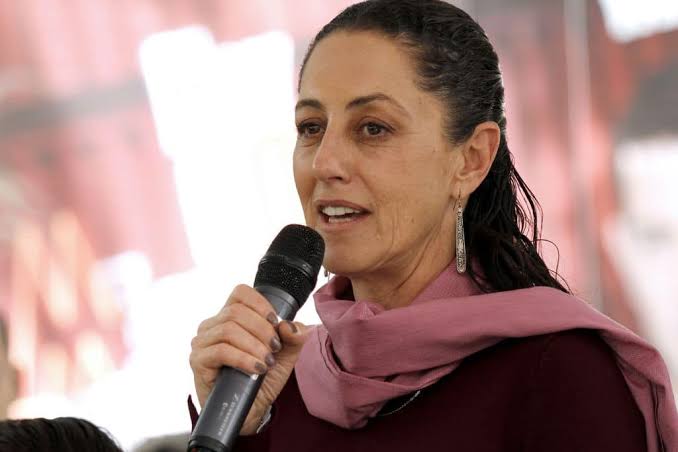
Speaking at her daily morning press conference at the National Palace, Sheinbaum criticized the UN for failing to take a proactive stance as tensions reach a breaking point.
“The United Nations has been conspicuously absent,” Sheinbaum told reporters. “It must assume its role to prevent any bloodshed and to always seek the peaceful resolution of conflicts.”
The President’s remarks follow a significant escalation by U.S. President Donald Trump, who recently ordered a “total and complete blockade” of all sanctioned oil tankers entering or leaving Venezuela. The U.S. has also deployed a massive naval armada to the Caribbean—the largest in the region’s history—citing efforts to combat “drug terrorism.”
Despite the intense pressure on the administration of Nicolás Maduro, Sheinbaum emphasized that Mexico’s position remains rooted in its constitutional principles of non-intervention and the self-determination of peoples.
“No to foreign intervention, peaceful resolution of conflicts, and dialogue for peace.
That is our position,” she said. While acknowledging the controversy surrounding the Venezuelan government, she argued that blockades ultimately punish the population rather than the leadership.
“Regardless of one’s opinion about the government, the blockade strikes ordinary citizens.”
In an effort to de-escalate the situation, Sheinbaum officially offered Mexico as a neutral venue for negotiations, stating that the country is ready to serve as a mediator if both parties present a proposal for dialogue.
Background & Context
1. The Estrada Doctrine
Mexico’s stance is a modern application of the Estrada Doctrine (established in 1930).
This core foreign policy guideline dictates that Mexico should not judge the legitimacy of foreign governments, as doing so would be a breach of sovereignty. Instead, it maintains or withdraws diplomatic representation based on the principle of non-interference.
2. The 2025 Escalation
The current crisis was sparked by the U.S. administration’s “maximum pressure” campaign.
Key events leading to this moment include:
The Oil Blockade: The U.S. order to stop all sanctioned tankers is an attempt to choke off the Maduro government’s primary source of revenue.
Military Buildup: The U.S. has designated the Venezuelan government a “foreign terrorist organization” and moved thousands of troops and nearly a dozen warships to the Caribbean.
Political Legitimacy: Nicolás Maduro began a third term in January 2025 following an election that many international observers, including the U.S., labeled fraudulent.
3. Human Impact
Venezuela is already suffering from a decade-long economic collapse that has seen over 8 million people flee the country.
President Sheinbaum’s warning of “bloodshed” reflects regional fears that a military confrontation or a total blockade could trigger a humanitarian catastrophe worse than any seen in the region to date.