

By SCM International Desk I Thursday, August 27, 2027
MOSCOW — Russian President Vladimir V. Putin issued a stern, high-stakes warning on Thursday following a rare aerial attack on Russia’s capital, vowing that Moscow would deliver a “decisive response” while asserting that its military capabilities remain fully intact.
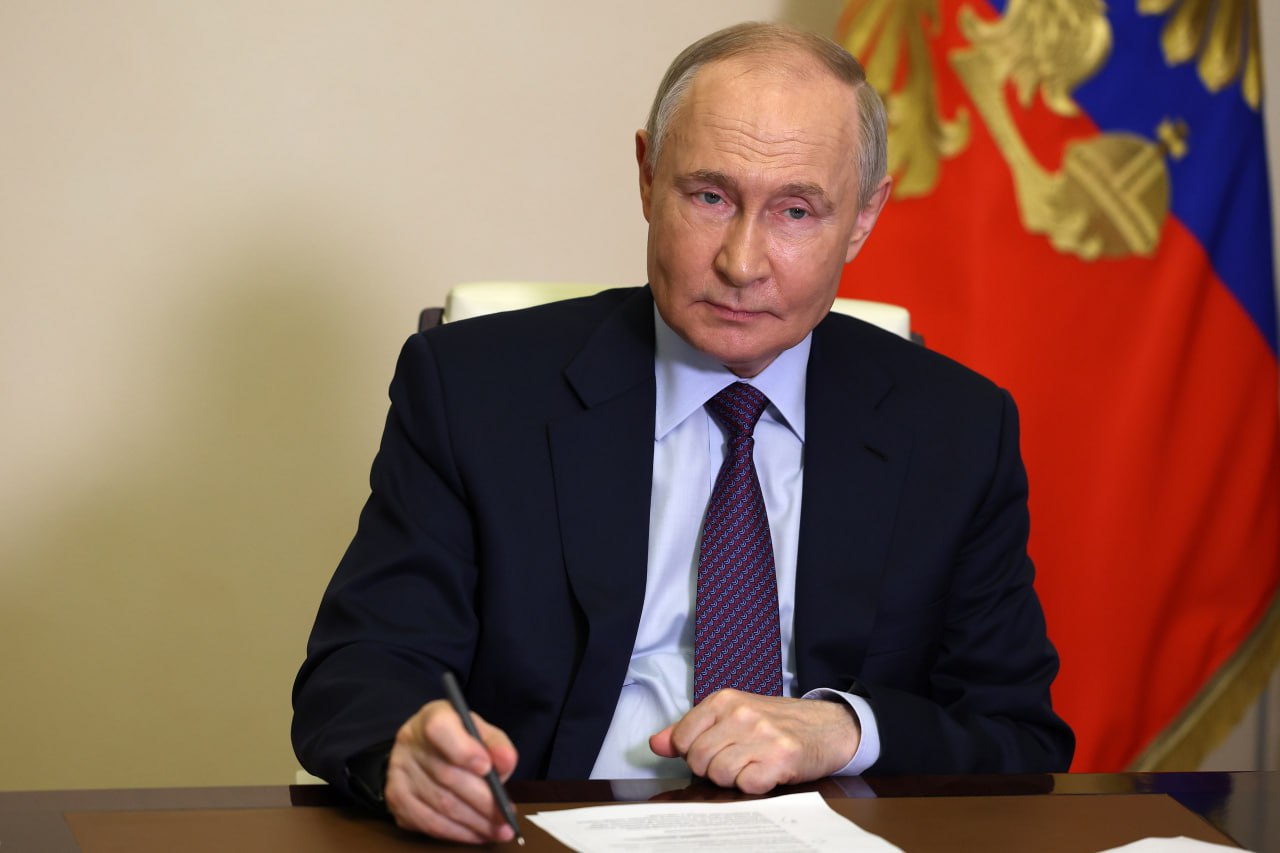
Speaking in a televised address broadcast nationwide, Mr. Putin sought to project absolute military confidence while defining a sharp red line over strikes hitting the center of Russian power.
“Russia’s security and sovereignty will always be defended,” Mr. Putin said. “Any attack against our capital will receive a decisive response. Our Armed Forces are fully prepared, and those responsible will face the consequences of their actions.”
Despite the forceful posture, Mr. Putin noted that Moscow was not actively seeking a broader regional conflict, adding, “Russia does not seek escalation, but it will never remain silent when its people and territory are threatened.”
The remarks follow an overnight barrage that brought air raid alarms and smoke to parts of the capital, marking one of the most high-profile security incursions into Moscow since the outbreak of the war.
Russian defense officials claimed air defense systems intercepted multiple incoming munitions, though falling debris and direct impacts prompted local emergency responses and brief airspace restrictions over major regional airports.
For the Kremlin, an attack directly targeting Moscow presents a severe domestic challenge. For over four years, Russian leadership has attempted to insulate ordinary residents in core western cities from the immediate daily realities of the conflict.
However, Ukraine’s long-range strike capabilities have steadily evolved, allowing Kyiv to routinely reach deep inside Russian territory to strike energy infrastructure, logistical hubs, and military sites.
The phrasing of Mr. Putin’s declaration reflects a familiar diplomatic tightrope frequently walked by the Kremlin during moments of acute pressure.

By emphasizing that Russia “does not seek escalation,” the Russian president signals a willingness to contain the immediate crisis, reassuring domestic markets and foreign observers that a full-scale regional rupture is not imminent.
Yet, by promising that perpetrators “will face the consequences,” he effectively prepares the Russian public for retaliatory strikes.
International observers and military analysts view the developments with heightened concern.
Similar warnings issued by the Kremlin in the past have typically preceded concentrated missile and drone campaigns directed at Ukraine’s critical infrastructure, command nodes, and energy networks.
Western intelligence officials noted that Mr. Putin’s televised appearance was calibrated to reassert authority at home and project strength to foreign capitals weighing further military assistance to Kyiv.
As emergency personnel clear the affected areas in Moscow, the geopolitical focus now turns to how the Russian military intends to operationalize Mr. Putin’s mandate. With frontline fighting locked in an intense war of attrition and long-range aerial warfare accelerating, both sides appear poised for a fresh wave of escalation.
Following Russia’s full-scale invasion launched in February 2022, the war primarily unfolded along a 1,000-kilometer frontline in southern and eastern Ukraine.
Over time, Ukraine expanded its asymmetric warfare campaign, developing long-range attack drones and utilizing advanced weaponry to hit targets far behind Russian borders.
Impact on the Russian Capital:
While border regions like Belgorod, Kursk, and Krasnodar have experienced regular cross-border shelling and drone incursions, attacks on Moscow carry massive political significance. Strikes near or within the capital challenge the Kremlin’s domestic narrative of control and security.
Precedent of Retaliation: Previous major strikes on symbolic Russian assets—such as the Crimean Bridge, strategic airbases, or energy refineries—have historically been met with massive, multi-wave Russian retaliatory barrages targeting Ukrainian cities and energy grids.
