

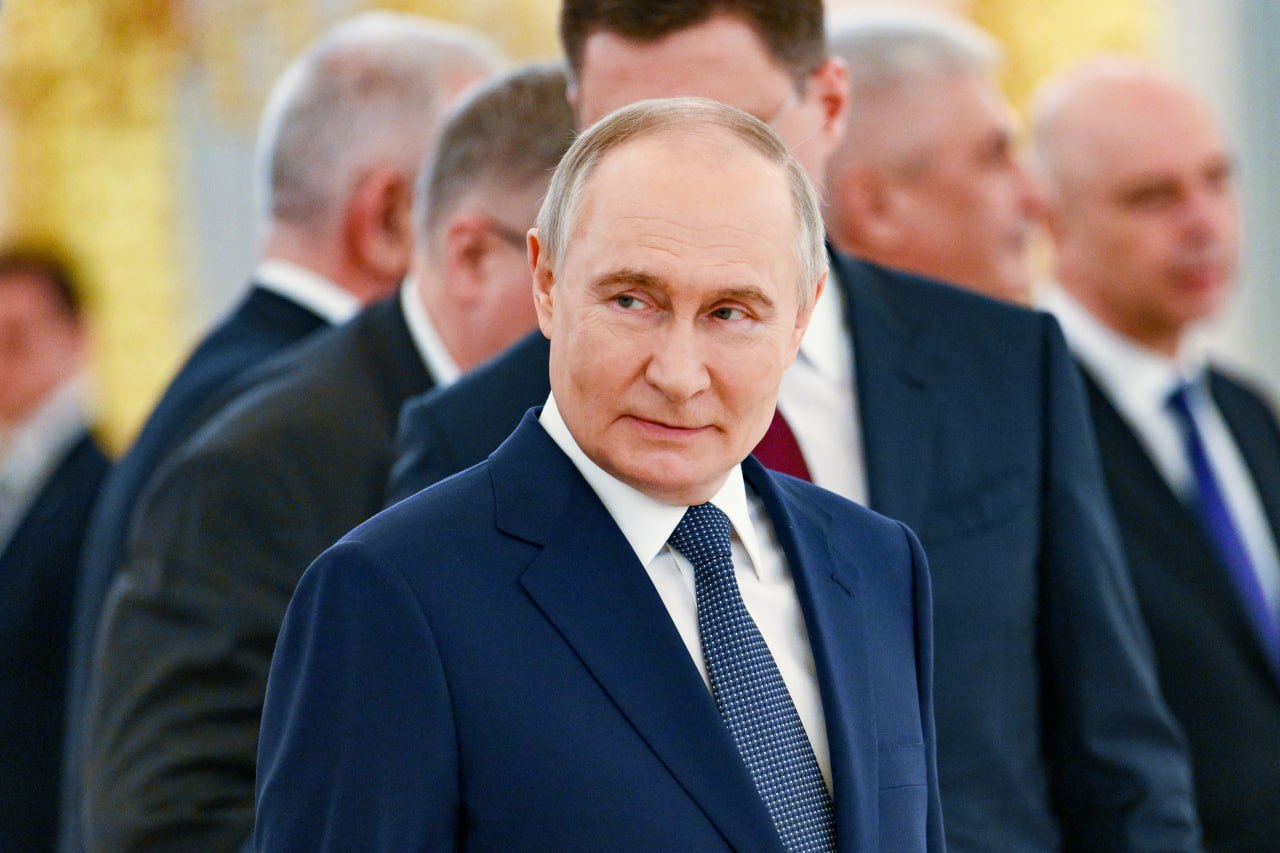
By SCM International Desk I Friday, Sept 11, 2026
MOSCOW — Russian President Vladimir Putin delivered a sharp rebuke to Western economic pressure, asserting that Moscow’s economy has not only absorbed thousands of international sanctions but has expanded faster than the global average.
Speaking at a high-level economic gathering, Mr. Putin declared that Western efforts to isolate the Russian federation had backfired, creating internal financial deficits and industrial decline within the nations that initiated the restrictions.
”The economic growth in Russia has been superior to the world average,” Mr. Putin said. “The Russian economy has kickstarted structural changes which have made our economy more resilient, more agile, and more mobile.”
The Russian leader emphasized that the scale of external economic pressure targeting Moscow is unprecedented in modern history. According to Mr. Putin, more than 30,000 individual and corporate sanctions have been levied against Russian entities—a figure he noted is “twice as much as the number of all sanctions against all the other countries of the world combined.”
Despite what he characterized as relentless economic warfare, Mr. Putin insisted that Moscow is setting “even more ambitious goals” for domestic growth, industrial self-reliance, and international trade restructuring. Conversely, he pointed to rising fiscal challenges in North America and Western Europe as evidence of policy failure.
”The countries that initiated the sanctions pressure are facing the problem of industrial decline and budget deficit,” Mr. Putin said. “They are facing some very difficult consequences.”
Economic Reality vs. Kremlin Rhetoric
While Mr. Putin’s narrative frames Russia as an unyielding economic engine, independent economists and international financial institutions paint a more nuanced, precarious picture behind the headlines.
Following the February 2022 invasion of Ukraine, Western nations, led by the United States and the European Union, instituted multi-tiered trade, financial, and energy sanctions intended to starve the Kremlin of war funding. Initially, Russia experienced a sharp economic contraction, but the economy rebounded in late 2023 and 2024, recording GDP growth rates above 3 percent—outperforming several Western European economies.

However, mainstream analysts attribute this temporary growth surge primarily to massive state-driven military expenditure rather than organic market expansion.
By re-orienting factory lines toward defense output, hiking military wages, and replacing Western energy trade with discounted exports to China and India, the Kremlin generated short-term economic momentum.
Western economic observers caution that this war-footing expansion hides long-term vulnerabilities:
Inflation and Interest Rates: Rapid military spending and acute labor shortages—exacerbated by military mobilizations and mass emigration—pushed domestic inflation up, compelling the Russian Central Bank to maintain high interest rates.
Structural Imbalances: Non-military industrial output, such as automotive and consumer goods manufacturing, has dropped significantly, showing that gains are concentrated overwhelmingly in defense sectors.
Fiscal Pressure: Declining energy revenues and mounting war costs have squeezed Russia’s sovereign wealth reserves, leading to widening budget deficits in recent fiscal cycles.
Though sanctions have failed to trigger an immediate collapse of the Russian financial system, long-term forecasts by the International Monetary Fund (IMF) and World Bank project a sharp cooling in Russian economic output. As state fiscal stimulus tapers off, Russia’s transition toward reliance on Chinese supply chains and heavy state intervention could limit its growth potential in the coming years.
Mr. Putin, however, remains unmoved by Western forecasts, maintaining that the geopolitical shift toward non-Western trade alliances will ensure Moscow’s long-term economic dominance over its adversaries.
