

By Emmanuel Thomas l Monday, August 31, 2026
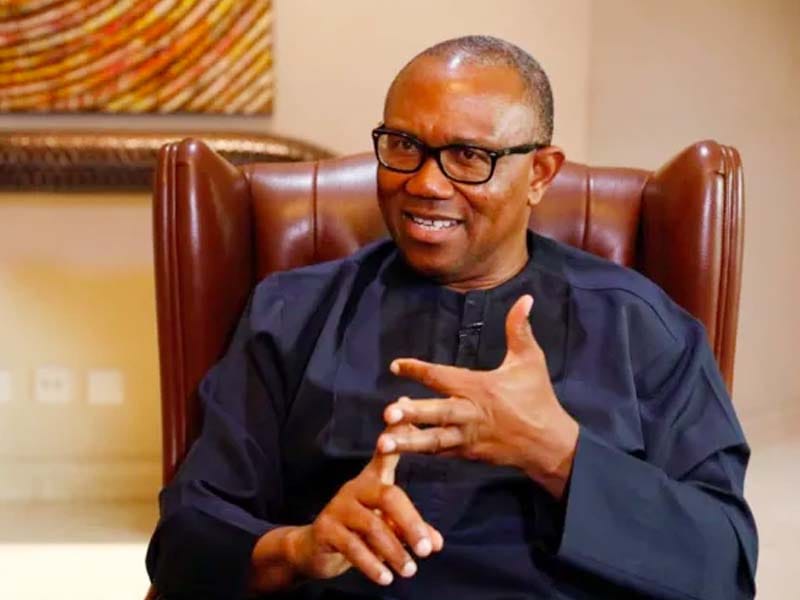
ABUJA, Nigeria — In a stern critique targeting the highest office in Africa’s most populous democracy, Peter Obi, the 2023 Labour Party presidential candidate, issued a scathing statement admonishing President Bola Ahmed Tinubu for using foreign legal proceedings to withhold records concerning his academic past.
Reflecting on the trajectory of the nation following Sunday prayers, Obi expressed profound sadness and embarrassment over the leadership’s ongoing efforts to block public scrutiny.
Without naming the president directly, the former governor and opposition figure addressed the high-profile legal battles in United States courts where legal teams representing the administration fought applications seeking the release of foundational educational records.
”It is profoundly embarrassing that we have reached a point where a sitting President is asking a foreign court to withhold records concerning his past, particularly records relating to matters of legitimate public interest,” Obi stated.
The controversy surrounding the president’s academic credentials—ranging from primary and secondary schooling to tertiary qualifications submitted to the Independent National Electoral Commission (INEC)—has been a central focal point for opposition litigants since the contested 2023 presidential election.
While opposition parties sought court orders abroad to compel institutions like Chicago State University to release administrative files, the president’s legal team consistently argued against the relevance and admissibility of such disclosures.
For Obi, the issue extends far beyond courtrooms and electoral petitions; it strikes at the moral core of democratic governance and the ethical baseline established for younger generations.
”Leadership, in my humble view, demands the courage and humility to confront one’s history — to acknowledge mistakes, provide candid explanations where questions arise, and, where necessary, apologise and seek forgiveness,” Obi emphasized. “True authority is strengthened, not diminished, when a leader accepts responsibility rather than seeks to shield uncomfortable aspects of the past from legitimate scrutiny.”
He stressed that foundational educational credentials should be clear, credible, and verifiable without requiring extensive litigation. Obi highlighted the harmful precedent set for Nigeria’s 200 million citizens, particularly its youth population.

”My deepest concern is the example this sets for more than 200 million Nigerians, particularly the over 30 million young people in schools,” Obi warned. “The nation’s highest office should exemplify integrity, accountability, transparency, and ethical leadership.”
Acknowledging human imperfection, Obi urged the nation’s political class to recognize that personal political ambitions are fleeting, whereas the moral standard of the presidency shapes the republic for generations.
”An imperfect past is part of the human condition. What matters is the willingness to confront it with humility, honesty and deep apology,” Obi concluded, reaffirming his faith in the country’s ultimate potential.
“Nigeria is greater than any one person, and the integrity of the Republic must always come before the interests of the individual. A New Nigeria is possible.”
The dispute over President Bola Ahmed Tinubu’s academic background has remained a politically charged subject since his election victory in February 2023.
During the post-election litigation, main opposition candidate Atiku Abubakar of the People’s Democratic Party (PDP) filed a § 1782 application in a U.S. Federal District Court in Illinois to compel Chicago State University (CSU) to release Tinubu’s academic records.
Tinubu’s legal team intervened in the U.S. proceedings, attempting to block or limit the scope of the discovery by arguing that the records were irrelevant to the ongoing legal challenges in Nigeria’s Presidential Election Petition Tribunal.
Although the U.S. court eventually ordered the university to release the documents and produce a witness for deposition, the legal friction and attempts to prevent disclosure created widespread public debate over transparency, official documentation, and executive ethics in Nigeria.
