

By Emmanuel Thomas l Tuesday, July 21.2026
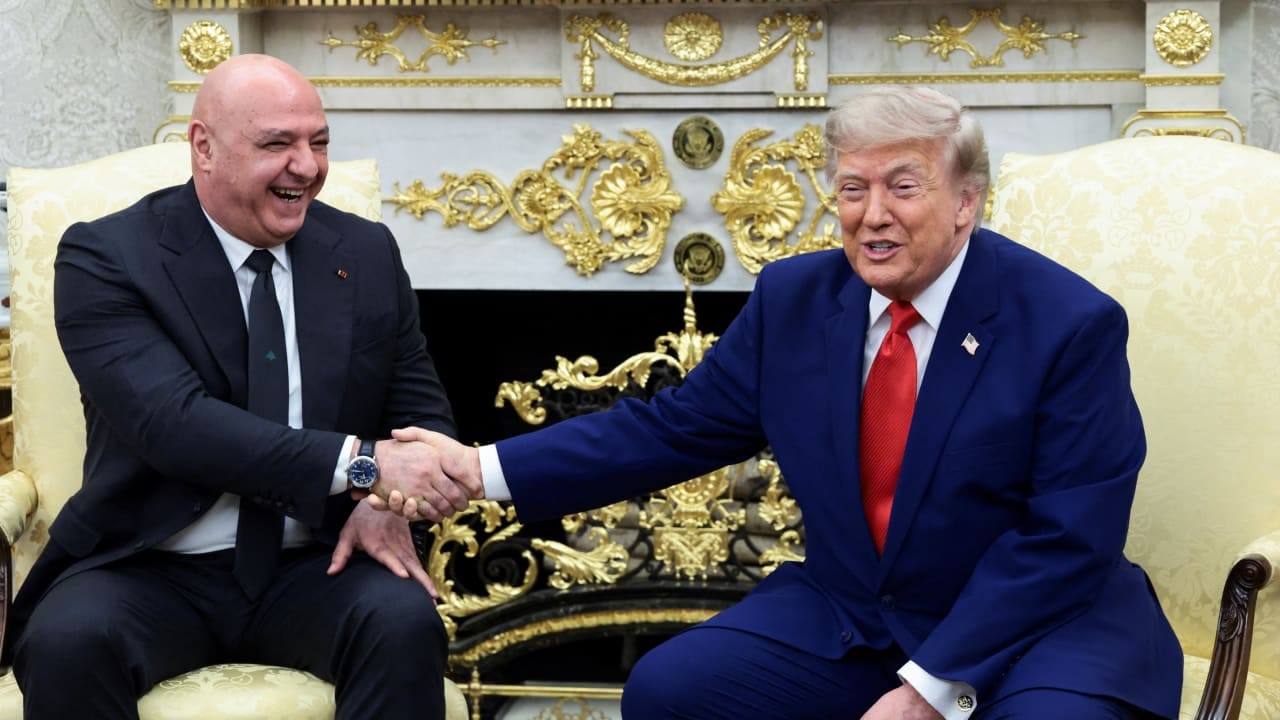
WASHINGTON — A bold new blueprint for reshaping the Middle East’s security landscape is taking shape behind closed doors, as Lebanese President Joseph Aoun has submitted a sweeping proposal to U.S. President Donald Trump aimed at dismantling armed militias in Lebanon—with Hezbollah placed squarely at the top of the target list.
The plan, according to officials familiar with the discussions, seeks to achieve a goal that has eluded regional power brokers for nearly half a century: placing every weapon in Lebanon under the sole command of the sovereign state.
The initiative represents a pivotal test for the Trump administration as it formulates its broader strategy toward Iran’s non-state proxies. At its core, President Aoun’s strategy relies on a delicate two-pronged trade-off: a rapid strengthening of the Lebanese Armed Forces (LAF) coupled with intense diplomatic pressure from Washington on Israel to begin a gradual withdrawal from contested areas in southern Lebanon.
”Restoring the state’s monopoly on legitimate violence is not merely a political preference; it is a prerequisite for Lebanon’s long-term survival,” noted one senior diplomatic source familiar with the framework.
A New Regional Equation: Syria’s Role
In a noticeable shift in Washington’s regional diplomacy, President Trump has indicated that Syrian President Ahmad al-Sharaa could serve as a key partner in curbing Hezbollah’s influence. Damascus has historically served as the vital land bridge for Iranian weaponry flowing into Beirut’s southern suburbs and the Bekaa Valley.
By engaging Syria’s leadership, Washington aims to sever Hezbollah’s vital arterial supply routes from Tehran.

If successful, this multi-vector strategy would apply unprecedented pressure on the group, squeezing its logistical networks from the east while state forces assert control from within Beirut.
The Institutional Reality on the Ground
Despite the ambition of President Aoun’s proposal, foreign policy analysts caution that implementing the blueprint faces steep structural hurdles:
Military Asymmetry: Hezbollah possesses a massive arsenal, including precision-guided missiles and tens of thousands of experienced fighters—outgunning the national army in both heavy firepower and covert intelligence capabilities.
Political Integration: Beyond its militia, Hezbollah operates as a major political party with seats in parliament, holding deep-rooted support within Lebanon’s Shia community alongside an extensive network of social services.
Border Dynamics: A total de-escalation along the southern frontier relies on convincing Israel that the Lebanese Armed Forces can credibly enforce security without Hezbollah’s presence—a guarantee Israeli defense officials remain cautious to accept without strict verification mechanisms.
For decades, Hezbollah’s military apparatus has functioned as a state within a state, fortified by deep ideological roots and regional alliances.
While President Aoun’s plan offers Washington a structured diplomatic pathway to address state sovereignty in Beirut, enforcing it will require balancing military capacity, regional diplomacy, and internal political stability.
Whether this strategy can translate high-level diplomacy into real security on the ground remains the crucial question for the region’s shifting balance of power.
