

By SCM Foreign Desk
TEHRAN — Iran’s top military leadership warned on Wednesday that any American attack on its nuclear or sensitive infrastructure would be treated as a full-scale declaration of war across the Middle East, vowing to retaliate against U.S. military bases, regional allies, and commercial shipping channels.
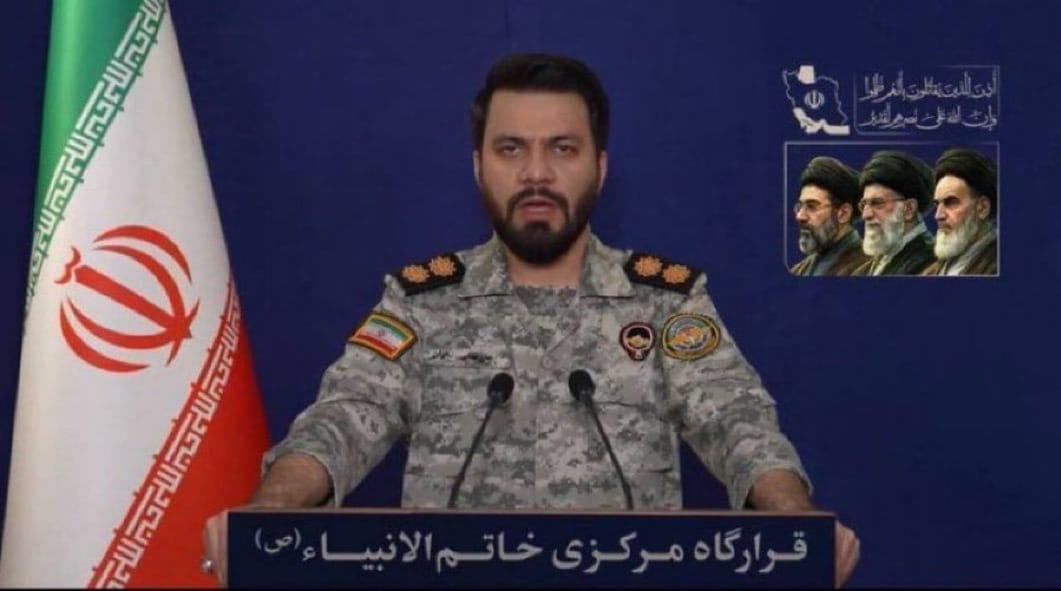
The high-stakes ultimatum, issued by the Khatam al-Anbiya Central Headquarters—the joint military command overseeing Iran’s armed forces and the Islamic Revolutionary Guard Corps (IRGC)—comes in direct response to escalated rhetoric from Washington. President Donald J. Trump warned earlier this week that the United States military was preparing potential strikes against heavily fortified Iranian nuclear sites.
Statement from Iran’s Central Military Command:
“The criminal U.S. has threatened to attack the nuclear and other sensitive facilities of the Islamic Republic of Iran. It is hereby declared that, should the aggressive and terrorist military of that country enter such a phase, we will regard it as an expansion of the war throughout the region. All interests belonging to the U.S., its allies, and the supporters of that rogue and hostile state will then be targeted by powerful attacks from the Armed Forces of the Islamic Republic of Iran.”
The exchange marks one of the most perilous inflection points in the months-long military stand-off between Washington and Tehran. Tensions intensified after President Trump publicly signaled that the U.S. military was weighing targeted air strikes on Kolang Gazla—popularly known as “Pickaxe Mountain”—a deeply buried underground nuclear enrichment facility south of Natanz.
Speaking to reporters in the Oval Office and during a radio interview, Mr. Trump asserted that Western intelligence suggested Iran may have relocated critical centrifuges and uranium enrichment components into the granite-shielded complex to shield them from previous bombardments.
”We’ll be hitting that area pretty soon, and very heavily,” Mr. Trump declared, adding that the U.S. intended to eliminate Tehran’s ability to reconstitute its nuclear weapons capabilities.
Iran has repeatedly maintained that its nuclear developments are strictly intended for peaceful energy production and advanced centrifuge assembly. However, Tehran’s restriction of International Atomic Energy Agency (IAEA) inspectors from key underground facilities has heightened alarm among American and Israeli defense planners.

Regional Fallout and Economic Impact
The rhetorical escalation has sent immediate shockwaves through global energy markets. Crude oil prices spiked past $90 per barrel as maritime traffic through the Strait of Hormuz—the narrow waterway through which nearly a fifth of the world’s petroleum passes—slowed dramatically following reported drone and missile engagements against commercial vessels.
Military analysts note that Tehran’s explicit threat to target “all interests belonging to the U.S. and its allies” directly endangers:
Persian Gulf Energy Infrastructure: Refineries, desalination plants, and off-shore oil terminals in Gulf Cooperation Council (GCC) nations hosting American forces.
Forward U.S. Bases: Airbases and command centers situated in Kuwait, Qatar, Bahrain, Jordan, and Iraq.
International Maritime Shipping: Commercial tanker transits through the Red Sea and Gulf of Oman, where Iran-backed regional networks have already threatened expanded blockades.
Diplomats in Europe and the region are scrambling to contain the fallout, pushing for an immediate pause in hostilities to prevent a broader conflict that could permanently pull neighboring nations into open warfare.
However, with both Washington and Tehran standing by their red lines, the window for diplomatic resolution appears rapidly closing.
