
Admin I Tuesday, February 17.26
LAGOS, Nigeria — A burgeoning conflict between traditional informal transit and modern urban planning spilled onto the asphalt of the Lekki–Epe Expressway on Tuesday, as minibus drivers staged a protest that paralyzed one of West Africa’s most vital economic corridors.
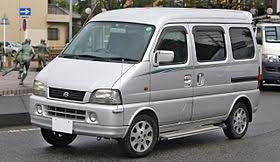
The demonstration, led by operators of the ubiquitous “Korope” minibuses, sought to challenge a recent government mandate restricting unregulated vehicles from the route.
For hours, the gridlock stalled commuters heading toward the city’s Free Trade Zone and high-end residential hubs, highlighting the friction inherent in Lagos’s ambitious transition toward a structured mass transit system.
In an official rejoinder released Tuesday, the Lagos State Ministry of Transportation remained firm, characterizing the move as a necessary evolution rather than a sudden crackdown.
Sola Giwa, Special Adviser on Transportation to the Governor, stated that the corridor has formally transitioned into a “Mass Transit and Regulated Transport Corridor” under the state’s Bus Reform Initiative (BRI).
”This transition is deliberate, data-driven, and in alignment with the State’s long-term vision for a safer, more efficient, and economically viable transport ecosystem,” Giwa said.
For decades, the Korope—small, often aging minibuses—have been the lifeblood of Lagos transit, weaving through the city’s notorious traffic.

However, officials argue these unregulated operations compromise safety and efficiency.
The government maintains that the ban was not arbitrary.
According to the Ministry, the enforcement followed months of:
Stakeholder engagement with transport unions and associations.
Public advisories and structured notifications.
Sensitization exercises designed to prepare drivers for the shift.
Despite these efforts, the drivers’ decision to block the expressway suggests a deep-seated anxiety over livelihoods in an increasingly formalized economy.
The Lekki–Epe Expressway is more than a road; it is a “strategic economic artery” linking the city’s commercial center to maritime assets and industrial zones.
Government officials expressed frustration that a small group of operators could hold such a critical piece of infrastructure hostage.
”Such actions undermine public safety, economic productivity, and the collective progress of the corridor,” Giwa remarked, noting that the Nigeria Police Force has since restored order and will maintain a “heightened” presence to prevent further disruptions.
The Lagos State Government has signaled a “zero tolerance” policy for further blockades, urging drivers to integrate into the new regulated framework.
While the state promises a transport ecosystem built on “predictability and dignity,” the day’s unrest serves as a stark reminder that modernization in one of the world’s fastest-growing megacities often comes with a human cost—and a fight.