

By SCM Middle East Bureau Chief
TEHRAN — Iran issued its most explicit ultimatum yet to the United States on Friday, warning that it is prepared to launch “full-scale offensive operations” if American military strikes against its interests continue for another two to three days.
The declaration, broadcast on Iranian state television, significantly elevates the risk of a direct, multi-front war in the Middle East. It marks a sharp departure from Tehran’s previous strategy of strategic patience and reliance on regional proxy networks.
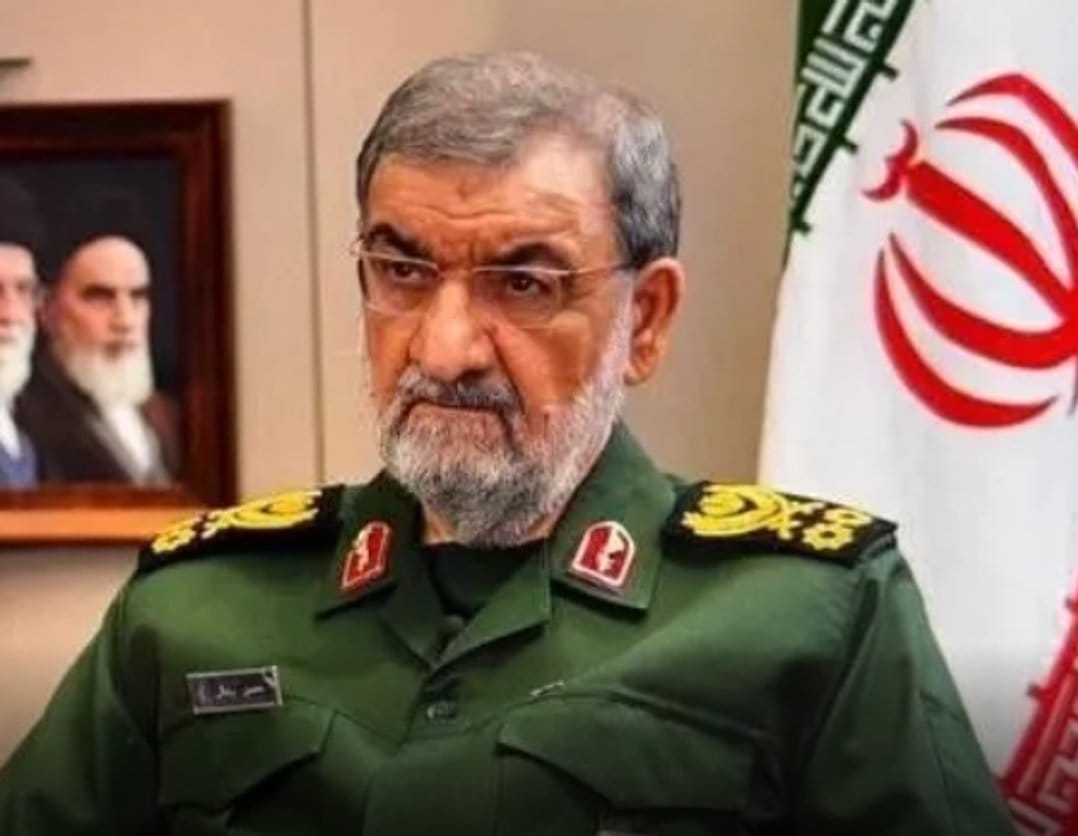
Mohsen Rezaei, a prominent military adviser to Iran’s Supreme Leader Mojtaba Khamenei, stated unequivocally that Tehran is prepared to lift all self-imposed constraints. If the Biden administration does not halt its operations within the specified window, Rezaei warned, Washington should brace for coordinated, border-transcending strikes.
”Iran will recognize no political boundaries in its attacks,” Rezaei said, adding that the United States should expect imminent “waves of Iranian missiles and drones.”
A Shift in Strategy
For months, Tehran has sought to calibrate its military responses, balancing its desire to project power with the need to prevent an overwhelming conventional conflict with the West. Rezaei acknowledged this tightrope walk, claiming that Iran had intentionally held back its full military capabilities up to this point.
”Tehran has so far refrained from launching a ground offensive and carrying out heavy attacks beyond its borders because it wanted to avoid triggering wider international security crises,” Rezaei said during his televised address.
However, that calculus appears to have changed. According to intelligence analysts, the intensive nature of recent U.S. actions has forced Iran’s leadership to conclude that a failure to retaliate aggressively could be interpreted as weakness, undermining its regional deterrence.
The Backdrop: A Vow of Revenge
The underlying driver of the current crisis remains Iran’s fierce commitment to avenge the recent assassination of its top leader. While Rezaei did not name the specific figure, the context aligns with Tehran’s ongoing efforts to retaliate for targeted strikes against its high-ranking military and political commanders.

Rezaei emphasized that the regime views retaliation not merely as a matter of honor, but as a core requirement for national survival. Iran will not abandon seeking revenge, he argued, asserting that the country’s future security, sovereign integrity, and long-term stability depend entirely on carrying out this mandate.
The explicit mention of Supreme Leader Mojtaba Khamenei is also legally and politically significant. As the successor to Ayatollah Ali Khamenei, Mojtaba’s inner circle represents the ultra-hardline faction of Iran’s clerical and military apparatus. Rezaei’s comments reflect a consensus at the absolute apex of Iranian decision-making.
Deepening Regional Instability
Western defense officials have long feared a scenario where Iran utilizes its vast ballistic missile arsenal—the largest in the Middle East—unrestrained by geographic borders. Rezaei’s explicit threat to ignore “political boundaries” suggests that American bases across Iraq, Syria, and the Persian Gulf States, alongside regional allies like Israel, could face simultaneous saturation strikes.
Such “waves of missiles and drones” are designed to overwhelm sophisticated air defense systems, such as the U.S. Patriot batteries and Israel’s Iron Dome, through sheer volume.
The Pentagon has not yet issued a formal response to Rezaei’s televised warning, though officials have previously stated that U.S. forces in the region remain at the highest state of alert. Washington has consistently maintained that its strikes are defensive, aimed at degrading the capabilities of groups attacking international shipping lanes and American personnel.
Geopolitical Implications
If Iran follows through on its multi-day ultimatum, the global economic fallout could be immediate. A full-scale kinetic conflict risks choking traffic through the Strait of Hormuz—a vital maritime chokepoint through which one-fifth of the world’s petroleum passes. Energy analysts warn that an open conflict in the Persian Gulf could send global oil prices soaring, destabilizing western economies.
For now, the international community is watching the clock. With a explicit two-to-three-day window established by Tehran, diplomatic channels via backchannel intermediaries in Oman and Switzerland are reportedly working overtime to avert a catastrophic miscalculation. However, with both Washington and Tehran dug into deeply entrenched positions, the margin for error has narrowed to a razor-thin edge.
