

By Digital News Desk Published: June 19, 2026
JERUSALEM — A high-ranking Israeli military officer and three additional soldiers were killed early Friday morning when an explosive drone or anti-tank missile struck their vehicle in southern Lebanon, the Israel Defense Forces announced.
The deadly cross-border incident underscores the persistent volatility along the frontier and threatens to upend delicate, high-stakes diplomatic efforts between Washington, Jerusalem, and Tehran aimed at stabilizing the region.
The military identified the fallen officer as Lieutenant Colonel Dor Gedalia Ben Simhon, 32, from the northern Israeli community of Beit HaShita. Lt. Col. Ben Simhon was a senior commander in the armored corps, leading the 52nd Battalion of the 401st Armored Brigade—famously known as the “Iron Footsteps” formation.
The IDF confirmed that the families of all four service members have been formally notified. While the identities of the other three soldiers have not yet been cleared for public release, military officials stated that their names would be published as soon as operational clearance is granted.
According to preliminary military investigations, the incident occurred shortly after midnight, at approximately 12:20 a.m., in the southern Lebanese village of Kfar Tebnit, located roughly six miles north of the Israeli border.
The armored unit was operating under the tactical command of the Givati Brigade when a “suspicious object”—suspected to be a precision anti-tank guided missile or a low-flying explosive drone launched by Hezbollah—directly impacted the battalion commander’s tank.
The blast instantly killed all four crew members inside. The IDF Spokesperson’s Unit indicated that a formal inquiry has been launched to determine the exact mechanics of the breach and whether early-warning defense systems failed to detect the incoming threat.
Hours later, a subsequent clash in the same sector wounded five additional Israeli soldiers.
The death of Lt. Col. Ben Simhon highlights the extreme hazards senior Israeli commanders continue to face on the ground in Lebanon.
He had only recently assumed command of the 52nd Battalion after his predecessor was severely wounded during heavy fighting in the same sector just two months prior.
The deadly ambush comes at a highly sensitive geopolitical juncture. Diplomatic sources in Washington noted that the attack coincided with the sudden cancellation of scheduled bilateral talks between United States and Iranian officials, which had been slated for Friday. A U.S. official, speaking on the condition of anonymity, indicated that the cancellation was driven by escalating regional frictions, including Iranian displeasure over sustained Israeli operations inside Lebanese territory.

The continued combat highlights the fragility of a broader framework intended to curb regional hostilities. Despite a heavily discussed international diplomatic effort involving a U.S.-Iran understanding designed to draw down active battlefronts, operations on the ground have shown little sign of abating. Shortly after the strike on the Israeli tank, Lebanese state media reported a wave of retaliatory Israeli airstrikes targeting inhabited structures in the Nabatieh district villages of Al-Sharqiyah, Harouf, and Kfar Sir. Lebanon’s Health Ministry reported at least 18 fatalities from the latest overnight bombardments, a tally that does not distinguish between civilians and armed combatants.
In Israel, the loss of a battalion commander immediately ignited fierce domestic political blowback and calls for overwhelming military retaliation. Opposition and coalition hardliners alike seized on the incident to criticize the government’s management of the northern front.
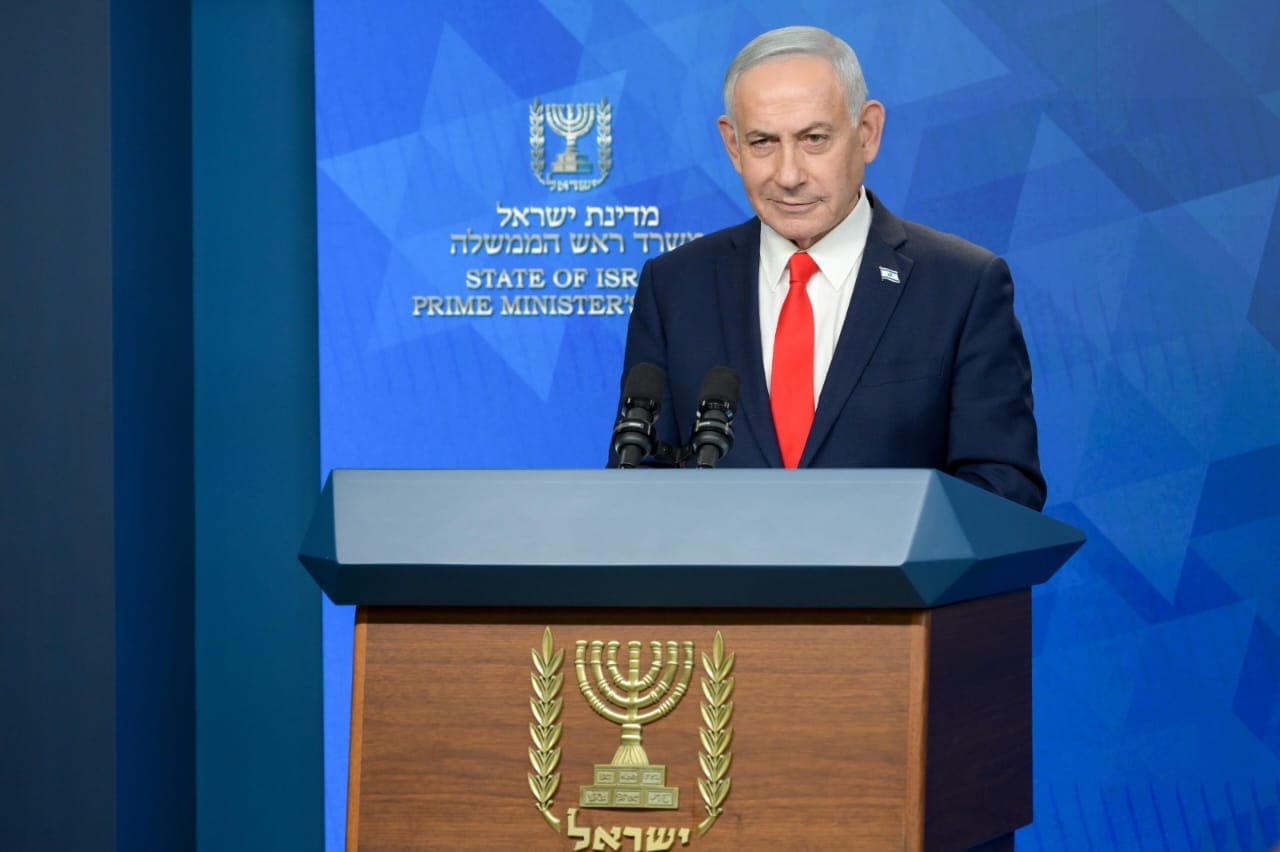
Avigdor Liberman, the chairman of the Yisrael Beiteinu party, issued a scathing public demand on social media targeting Prime Minister Benjamin Netanyahu and Defense Minister Israel Katz. Mr. Liberman asserted that the government had failed to establish sufficient deterrence, demanding direct, devastating strikes on Dahiyeh, the Hezbollah-dominated southern suburb of Beirut.
”IDF soldiers are not ducks at a shooting range,” Mr. Liberman wrote on Friday morning, adding that the state must exact an unforgettable price for the destruction of the tank crew.
Since the expansion of Israel’s military offensive into Lebanon, which intensifed earlier this spring, Israeli forces have advanced several miles into Lebanese territory to dismantle infrastructure used to launch cross-border rocket and drone attacks.
According to Lebanese official tallies, the ongoing campaign has displaced over one million residents and resulted in significant casualties, while Israel continues to sustain steady losses among its frontline units.
The IDF maintains a live registry of casualties and updates regarding operations on its official portal at idf.il. Funeral arrangements for Lt. Col. Ben Simhon are expected to be announced later today.
The Deceased Officer: Lt. Col. Dor Gedalia Ben Simhon was a highly respected officer within Israel’s armored corps. The 52nd Battalion of the 401st Brigade plays a spearhead role in armored operations. The fact that he replaced a previously wounded battalion chief underlines the high attrition rate among senior field commanders in this urban and mountainous theater.
The Tactical Shift: The use of low-flying explosive drones and advanced anti-tank guided missiles (ATGMs) by Hezbollah represents a major tactical challenge for the IDF’s heavy armor, bypassing traditional trophy active defense systems under certain low-altitude conditions.
The Diplomatic Conflict: The story is unfolding against the backdrop of failed or stalled backchannel diplomacy between the U.S. and Iran. While a broader framework/deal was being negotiated to stabilize the region, field actions by both Israel and Hezbollah are threatening to completely derail the diplomatic track.
Domestic Israeli Climate: The Israeli public is highly sensitive to the deaths of soldiers, particularly senior officers. High-profile losses routinely trigger severe political fallout for Prime Minister Netanyahu’s war cabinet, forcing them to balance intense domestic demands for escalation against international pressure for a ceasefire.
