

By SCM Sports Desk
ASUNCIÓN, Paraguay — What began as a fiercely contested Round of 16 match at the 2026 FIFA World Cup has rapidly devolved into an ugly international diplomatic crisis.
A prominent Paraguayan lawmaker is facing global condemnation and potential criminal charges after unleashing a torrent of racist abuse at French national team captain Kylian Mbappé, before pivoting to threaten the football superstar with legal action for “gender-based violence.”
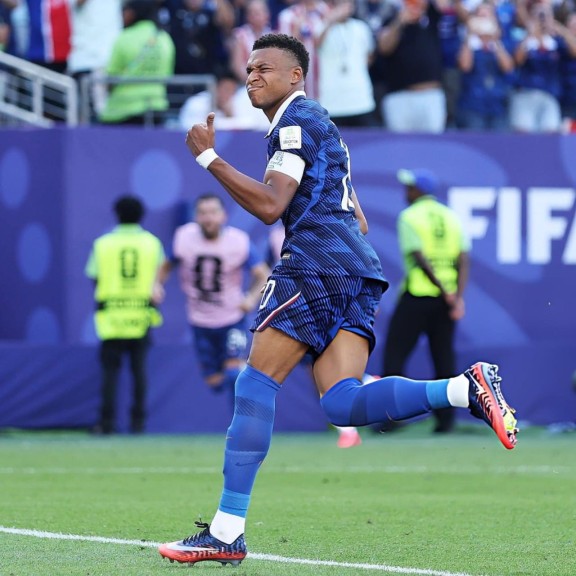
The controversy erupted over the weekend following France’s narrow 1-0 victory over Paraguay, secured by a decisive penalty kick from Mbappé. In the emotional aftermath of the South American squad’s elimination, Celeste Amarilla, a senator representing Paraguay’s centrist Authentic Radical Liberal Party, took to social media to launch an extraordinarily hostile and racially charged assault on the Real Madrid forward.
In posts that have since been deleted but widely archived, Senator Amarilla mockingly targeted Mbappé’s African heritage, education, and physical appearance.
She disparaged the French captain as an “ugly colonized Cameroonian” who was “pretending hard to be French,” and went on to describe him as a “brute who had not learned to write,” infamously adding that he had been “educated by chimpanzees.”
The backlash was swift and global. Mbappé, 27, broke his silence on Monday with a searing public rebuke posted in French on his official X account.
”Madame Celeste Amarilla, you are a despicable woman and unworthy of your position,” Mbappé wrote. “Through your recklessness and your brazen racism, the entire world has already forgotten the journey and the historic effort that your players accomplished during this World Cup… I will never allow people like her the freedom to spread their hatred and racism across the world.”
Rather than de-escalating, Senator Amarilla doubled down, responding with a lengthy open letter written in both Spanish and French. While she acknowledged deleting her original posts out of momentary regret—claiming her “mixed-heritage indigenous and Spanish blood was boiling”—she adamantly refused to issue an apology to the footballer.
In subsequent defiant tirades on social media regarding her worldview, she provocatively asserted that she grew up in a generation where behaviors like “beating gays” and using racial slurs were considered “normal.”

Instead, Amarilla shifted the focus of her ire, accusing Mbappé of utilizing his massive global platform to commit “pure and hard gender violence” and “political violence” against an elected female representative. Pointing to Mbappé’s characterization of her as “despicable” and “unworthy,” Amarilla threatened to drag the French captain into court.
”You despise me precisely because of my gender; you offend me precisely because I am a woman,” Amarilla wrote. “Retract your statement with me, honor your French citizenship, and apologize, or I may take legal action for gender violence.”
The escalating feud has forced both sports institutions and sovereign governments to intervene. The Paraguayan government took the unusual step of publicly distancing itself from its own legislator.
In an official statement, the government “deplores and rejects” Amarilla’s comments, stating unequivocally that her words “are contrary to the values and principles that inspire peaceful coexistence and respect for human dignity” and do not represent the people or state of Paraguay.
In Paris, the reaction has been one of fierce defense. The French Football Federation (FFF) announced plans to file formal criminal charges with the public prosecutor’s office, labeling the senator’s remarks “utterly abhorrent,” “unacceptable,” and “criminal.”
Real Madrid C.F., Mbappé’s club team, also released a statement firmly condemning the xenophobic remarks, calling them “unbecoming of a political representative” and expressing total solidarity with their star player. French political leadership, including President Emmanuel Macron, has reportedly voiced support for the national team captain.
This incident marks a combustible intersection of sports, race, and identity politics. Mbappé, born in Paris to a Cameroonian father and an Algerian mother, has long been a symbol of France’s multi-ethnic modern identity, but he has also frequently been the target of racist abuse from nationalist factions both at home and abroad.
By framing Mbappé’s defensive remarks as “gender-based violence,” legal experts suggest Amarilla is attempting to weaponize Latin American political protections designed to shield female politicians from systemic harassment, using them as a shield against the fallout of her own xenophobic rhetoric.
As France prepares for its upcoming quarter-final match against Morocco, the focus on the pitch has been thoroughly eclipsed by a widening legal and ethical chasm between a European sporting icon and a South American lawmaker, with neither side showing any sign of backing down.
