

By Emmanuel Thomas I Wednesday, July 15, 2026
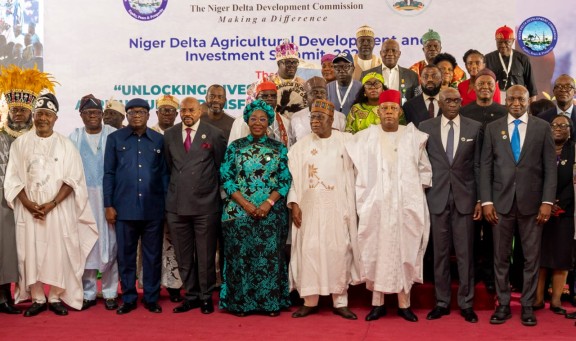
ABUJA, Nigeria — In a decisive move to diversify Nigeria’s economy and tackle food insecurity, the Vice President, Senator Kashim Shettima, has officially launched the Niger Delta Agricultural Development and Investment Fund.
During the landmark event, the Vice President also inaugurated a specialized Coordinating Council tasked with overseeing agricultural development and investment across the nine mandate states of the Niger Delta region.
The initiatives were unveiled during the Niger Delta Agricultural Development and Investment Summit held at the Banquet Hall of the Presidential Villa in Abuja. The high-profile summit, jointly organized by the Office of the Vice President and the Niger Delta Development Commission (NDDC), was anchored on the theme: “Unlocking Investment for Sustainable Agricultural Transformation in the Niger Delta.”
Speaking to an audience of governors, ministers, diplomats, and private sector leaders, Senator Shettima emphasized that the summit aligns directly with President Bola Ahmed Tinubu’s Renewed Hope Agenda, particularly its agricultural reform programs.
The Vice President stressed that the initiative aims to mobilize a collective commitment from governments, international development partners, and private investors to convert the Niger Delta’s vast agrarian potential into tangible economic progress.
”Before oil took centre stage in our economy, it was the soil that paid our bills,” Senator Shettima reminded the audience. “We must, therefore, return to agriculture for our economic development.”
Supporting this vision, the Minister of Regional Development, Engr. Abubakar Momoh, urged local and international investors to re-evaluate their perspective on the region. He stated that the Niger Delta must no longer be viewed solely through the lens of oil and gas exploration, but as a critical driver of Nigeria’s food security.
”The future of agriculture is in mechanised and innovative farming, and the Renewed Hope Agenda of President Bola Tinubu has placed agriculture at the heart of Nigeria’s economic development,” Momoh remarked.
Corroborating this stance, the Chairman of the NDDC Governing Board, Mr. Chiedu Ebie, noted that while the Niger Delta is globally recognized as the “home of oil and gas,” its rich endowment of arable, fertile land remains largely untapped.
He affirmed that the NDDC remains fully aligned with the Federal Government’s eight presidential priorities, which target poverty eradication, job creation, food security, and anti-corruption.
In his welcome address, the Managing Director of the NDDC, Dr. Samuel Ogbuku, reaffirmed the commitment of the Commission’s Board and Management to fulfilling President Tinubu’s mandate to transform the oil-producing region.
”The Niger Delta has for decades been known for oil, but it is time to unlock the enormous opportunities beneath its fertile soil,” Dr. Ogbuku said. “Agriculture offers the region a pathway to food security, employment, investment, and lasting prosperity.”
Dr. Ogbuku emphasized that agricultural success is heavily dependent on robust infrastructure. To ensure farmers can easily transport goods to domestic and export markets, the NDDC is aggressively pursuing infrastructure projects across the region.

He announced that the Commission is nearing the completion of the 1.2-kilometre Kaa-Ataba Bridge, a crucial transport link connecting the Khana Local Government Area to the Andoni Local Government Area of Rivers State.
This bridge is expected to drastically reduce transit times for agricultural produce in the coastal areas.
The Minister of Agriculture and Food Security, Senator Abubakar Kyari—who was represented at the summit by the Ministry’s Permanent Secretary, Dr. Marcus Ogunbiyi—reiterated that food security is a non-negotiable priority for the current administration.
He emphasized the urgent need to transition smallholder farmers from subsistence practices to commercial, mechanised farming.
Delivering the keynote address, titled “Niger Delta: Awakening an Agricultural Giant,” Prince S. J. Samuel echoed this call, urging regional stakeholders to rapidly adopt modern farming technologies to boost crop yields and scale production.
The summit received strong backing from the executive governors of the Niger Delta states. Delivering a goodwill message, the Governor of Akwa Ibom State, Pastor Umo Eno, commended the strategic partnership between the NDDC and the Office of the Vice President.
Represented by his deputy, Senator Akon Eyakenyi, Governor Eno declared the state’s unwavering commitment to reviving the agricultural sector, promising to align state-level policies with the newly launched regional fund.
Further highlighting the importance of collaboration, the NDDC Executive Director of Projects, Dr. Victor Antai, noted that structured partnerships would provide the financial and technical energy needed to sustain the investment plans mapped out during the summit.
Providing a technical overview of the region’s assets, the NDDC Director of Agriculture and Fisheries, Dr. Winifred Madume, asserted that the next chapter of the Niger Delta’s economic history must be written in the fields and estuaries rather than the oil fields.
”The Niger Delta possesses the natural and economic fundamentals that investors seek,” Dr. Madume explained. “Across our nine mandate states lies enormous potential for crop production, aquaculture, livestock, agro-processing, and agricultural trade.”
Fertile Land: Vast stretches of arable land suitable for cash crops and staples; Water Resources: Abundant freshwater resources, extensive coastlines, and inland waterways ideal for massive aquaculture development; Diverse Ecological Zones: Micro-climates capable of supporting varied livestock and agricultural practices; Market Access: Direct proximity to major domestic economic hubs and international export shipping routes.
Dr. Madume concluded that the newly launched fund is not merely about growing more food, but about building a self-sustaining agricultural economy that guarantees high returns on investment, stimulates industrial growth, and cements the Niger Delta’s status as Nigeria’s premier agribusiness destination.
