

By Emmanuel Thomas l Monday, Sept 28, 2026
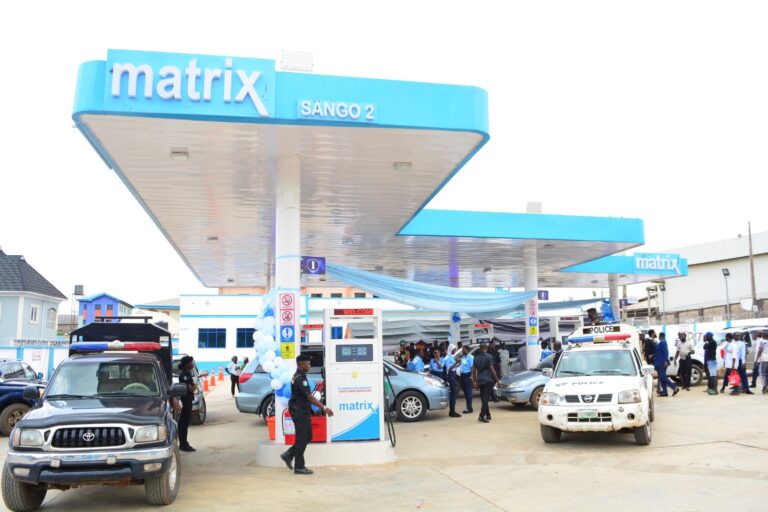
ABUJA — In a landmark judgment reshaping Nigeria’s midstream and downstream oil sector, the Federal High Court sitting in Abuja has ordered the Nigerian Midstream and Downstream Petroleum Regulatory Authority (NMDPRA) to “continue to grant” and renew petroleum product import licences to three major independent marketers—Matrix Energy, AA Rano, and AYM Shafa.
Delivering the judgment, Justice Inyang Ekwo held that the regulatory body’s refusal to issue and extend import licences to the three petroleum marketing companies constituted a “direct non-compliance” with the provisions of the Petroleum Industry Act (PIA) 2021.
Justice Ekwo observed that the suit arose directly from the authority’s refusal to issue and renew legitimate fuel import permits. He stated that by withholding these operational approvals, the NMDPRA acted outside its statutory boundaries.
”The actions of the NMDPRA are in direct non-compliance with the PIA,” the judge declared, adding that the regulatory authority acted beyond the powers conferred on it by law. He further ruled that the consequence of non-compliance with the PIA and other relevant laws renders any decision or exercise undertaken by the NMDPRA regarding import licences “null and void.”
Concluding that the plaintiffs successfully established their case against the regulator, Justice Ekwo affirmed that the suit succeeded on its merits.
In granting the reliefs, Justice Ekwo invoked key statutory provisions. He declared that Sections 31(a), (d), (l); Section 32(l), (s), (c), (u), (aa), (ii), (jj); and Section 211 of the Petroleum Industry Act, 2021, when read in conjunction with Section 72 of the Federal Competition and Consumer Protection Act (FCCPA), legally compel the NMDPRA to promote a competitive market, prevent restrictive business practices, and curb the abuse of dominant market positions in the petroleum sector.

The court specifically ruled that upon meeting the regulatory requirements established by the defendant, the plaintiffs—Matrix Energy, AA Rano, and AYM Shafa—are legally entitled to receive, renew, or extend their petroleum product import permits.
Consequently, Justice Ekwo issued an order compelling the NMDPRA to grant, issue, extend, renew, or reissue all required operational licences and authorisations for importation to the three firms whenever they satisfy the statutory preconditions.
Counsel to the oil marketing companies, Raji Ahmed, SAN, alongside Chris Ekemezie, Esq., argued during proceedings that the regulatory regime under the PIA 2021 does not ban or outlaw the importation of refined petroleum products into Nigeria.
The legal team emphasized that the PIA does not preclude or prohibit the NMDPRA from licensing qualified independent importers, nor does it mandate a monopoly or restricted access within the downstream energy landscape.
The judicial intervention comes amid ongoing debates regarding market deregulation, energy security, and local refining capabilities within Nigeria’s petroleum industry following the complete implementation of the Petroleum Industry Act (PIA) 2021.
Deregulation & Open Market Principles: The PIA 2021 was enacted to replace fragmented legacy laws, foster private investment, and ensure open market access. Sections of the law mandate the NMDPRA to maintain market competitiveness and curb monopolies, ensuring that no single operator dominates supply chains to the detriment of energy security or consumer pricing.
Domestic Refining vs. Importation Debates: Recent friction between downstream regulators, domestic refinery owners (such as the Dangote Petroleum Refinery), and major independent marketers (including Matrix Energy, AA Rano, and AYM Shafa) has centered on import licensing parameters.
While local refiners advocate for prioritizing domestic crude processing and restricting imports, independent marketers maintain that continuous import licenses preserve market stability, prevent localized fuel scarcity, and align with statutory anti-monopoly laws under both the PIA and the FCCPA.
Precedent for Regulatory Oversight: Justice Ekwo’s verdict reinforces judicial oversight over executive regulatory agencies in Nigeria’s energy market. By declaring arbitrary license withholdings null and void, the ruling establishes that compliance with statutory conditions strictly guarantees an operator’s right to participate in importation, limiting discretionary administrative restrictions by the NMDPRA.
