

By SCM International Desk I Wednesday, August 12, 2026
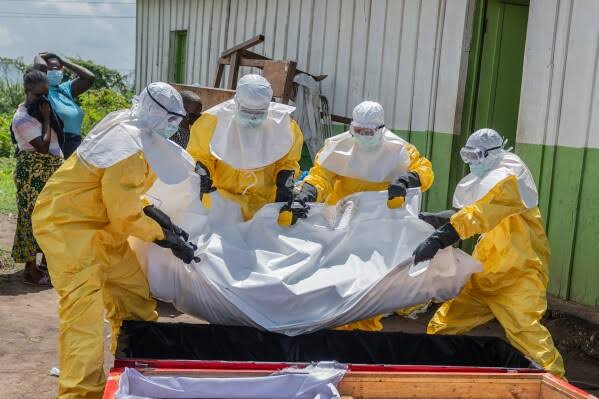
CONGO, DR – The Democratic Republic of Congo (DRC) is battling the fastest-spreading Ebola virus outbreak on record, with official casualty figures surpassing the critical 2,000 milestone.
Over the past fortnight, the health emergency has reached a catastrophic peak, recording an average rate of 50 deaths per day and severely overwhelming humanitarian response teams on the ground.
Data released by the DRC Ministry of Public Health and confirmed by international health agencies indicates that total confirmed cases have surged past 4,380, with fatalities standing at 2,011. While it took nearly nine weeks for the outbreak to claim its first 1,000 lives following its official declaration, the death toll doubled in less than three weeks—a dramatic surge that underscores how rapidly the virus is outpacing tracking and containment efforts.
Dr. Jean-Marie Akandabo, a frontline clinician operating in Ituri province—the epicenter of the crisis—described the situation as alarming. “We are seeing entire families affected within days. The speed of transmission and the severity of clinical deterioration are unlike anything we have managed in recent years,” Akandabo stated.
Unlike previous major Ebola epidemics in Central and West Africa that were predominantly caused by the Zaire ebolavirus strain, the current catastrophe is driven by the rare Bundibugyo virus species.
This distinction poses an immense medical hurdle. Medical counter-measures developed over the past decade—including the widely deployed Ervebo vaccine and mAb114 monoclonal antibody treatments—were designed specifically for the Zaire strain and offer no proven protection against Bundibugyo.
Although candidate vaccine clinical trials and emergency experimental therapeutic protocols have recently been launched in Ituri province, healthcare providers are currently limited to supportive care, such as aggressive rehydration and symptom management.
Epidemiological investigations conducted by the World Health Organization (WHO) reveal that the virus had likely been circulating undetected in remote eastern communities since February, months before health authorities officially declared the outbreak in mid-May. Early cases were frequently misdiagnosed as severe malaria or typhoid fever, allowing transmission chains to multiply unnoticed across five eastern provinces.
Containment efforts are further crippled by severe operational obstacles:

Active Armed Conflict: Non-state armed groups operate throughout the mineral-rich eastern DRC, periodically forcing aid workers to suspend contact tracing and patient isolation.
Healthcare Worker Strikes: In several municipal centers, doctors and nurses have staged work stoppages over unpaid risk stipends, citing bureaucratic delays in disbursement.
Logistical Deficits: Remote geographical terrain, unpaved roads rendered impassable by rain, and shortages of personal protective equipment (PPE) hamper rapid response teams.
Community Resistance: Fear, lingering trauma, and misinformation have led to hostility against health personnel, with several treatment units coming under attack.
Historical Context and Regional Implications
This marks the 17th Ebola outbreak in the Democratic Republic of Congo since the pathogen was first discovered near the Ebola River in 1976. It has already surpassed the DRC’s previous major epidemic (2018–2020 in North Kivu and Ituri), which claimed 2,280 lives over a two-year period. Globally, it stands as the second-largest Ebola outbreak in history, behind only the 2014–2016 West African epidemic that infected over 28,000 people and killed 11,000 across Liberia, Sierra Leone, and Guinea.
The World Health Organization has classified the situation as a Public Health Emergency of International Concern (PHEIC), warning that cross-border movements could carry the infection into neighboring nations. Cases have already been recorded near the borders of Uganda, South Sudan, and Rwanda.
African public health bodies, including the Africa Centres for Disease Control and Prevention (Africa CDC), have urged port health authorities across West and Central Africa to heighten screening protocols. Border control posts at major international transit hubs, including Lagos, Abuja, and Accra, are maintaining active surveillance protocols to prevent inter-regional transmission.
Aid organizations and global donors are calling for immediate financial, technical, and logistical interventions to halt transmission before the outbreak expands into major urban centers.
