

By SCM Health Desk
KINSHASA, Democratic Republic of the Congo — The Ebola epidemic in the Democratic Republic of the Congo has surged to its deadliest milestone on record, health officials announced today, as a fast-moving strain outpaces local isolation efforts and international containment strategies.
According to data released by the Congo DR Ministry of Health, the total number of fatalities has climbed to 893, while the tally of laboratory-confirmed cases has reached 2,267. The figures mark the highest toll recorded for this specific viral strain, cementing the current crisis as one of the fastest-growing Ebola emergencies in the region’s history.
Public health workers and international aid groups warn that the official numbers likely understate the true scale of the tragedy.
”Every delay costs lives,” said Trish Newport, an emergency program manager for Médecins Sans Frontières (Doctors Without Borders), which has been operating on the ground. “We are still chasing the outbreak instead of staying ahead of it.”
The current outbreak, which was officially designated a Public Health Emergency of International Concern by the World Health Organization earlier this year, is primarily tearing through the northeastern provinces of Ituri and North Kivu.
Unlike previous high-profile epidemics caused by the Zaire strain of the virus, this outbreak is driven by the Bundibugyo virus. The biological distinction is critical: the highly effective vaccines and monoclonal antibody treatments deployed successfully in recent years against the Zaire strain do not work against Bundibugyo. Doctors are forced to rely almost entirely on supportive care—such as aggressive rehydration and symptom management—which has left the crude fatality rate hovering near a staggering 40 percent.

The geography of the crisis has severely compounded the medical challenges. Ituri and North Kivu have been plagued for years by intense geopolitical conflict, with dozens of active rebel militias vying for control of lucrative mineral resources. The persistent threat of violence has restricted humanitarian access, disrupted contact tracing, and forced thousands of civilians into crowded displacement camps, creating ideal conditions for a highly contagious virus to spread.
Misinformation and Deepening Scars
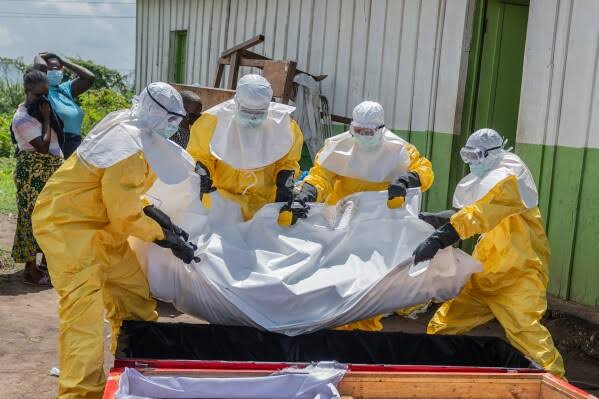
Beyond the lack of specialized pharmaceuticals, medical teams are fighting a war against deep-seated community mistrust and misinformation. In many rural health zones, traditional burial practices—which involve washing and touching the deceased—remain deeply culturally significant, yet they act as super-spreader events for the virus.
Health officials noted that a high percentage of recent deaths occurred directly within communities rather than inside specialized Ebola Treatment Units (ETUs). This reflects prolonged delays in patients seeking care, often out of fear of isolation or skepticism regarding humanitarian workers.
Tragically, frontline workers are paying a steep price: dozens of healthcare personnel have been infected, and several have died since the outbreak intensified.
With regional cross-border trade frequent between eastern Congo, Uganda, and Rwanda, international health bodies are aggressively scaling up surveillance at border checkpoints.
However, with transmission remaining active across dozens of health zones, experts warn that without an immediate, massive influx of international financial support and logistical personnel, the death toll will continue its record-breaking climb.
