


Admin I Sunday, November 10, 2024
BERLIN – Ahead of this year’s UN climate conference in Baku, German Foreign Minister Annalena Baerbock highlighted the severe risks of global warning.
“Killer storms, droughts, ever more ‘once-in-a-century’ floods and record heat waves: The climate crisis is the greatest security challenge of our time,” the Green Party politician said in Berlin on Sunday.
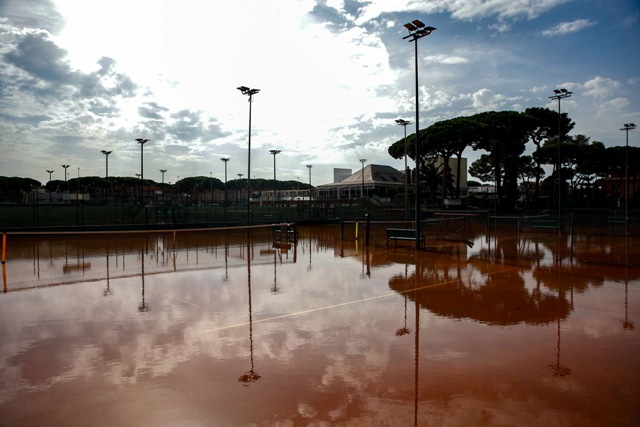
Following a week marked by the victory of US president-elect Donald Trump, Baerbock said the crisis took no regard of elections, as the recent flooding in Spain and hurricanes in the United States had shown. She said the shift away from coal, gas and oil agreed at the 2023 Conference of the Parties (COP28) would pay off.
“Every tenth of a degree of prevented global warming means fewer crises, less suffering, less displacement,” the minister said.
Representatives from some 200 countries are expected to attend this year’s COP29 summit, which kicks off in Baku on Monday and runs for two weeks until November 22.
Developing countries and environmental groups expect industrialized countries to mobilize at least $1 trillion annually to help counter the effects of climate change – 10 times more than the currently agreed $100 billion.
Meanwhile, Germany’s Development Minister Svenja Schulze believes that the Paris Agreement target of holding global warming to 1.5 degrees Celsius above pre-industrial levels is still realistic, despite the possibility of the target being at time exceeded in the short-term.
It could be possible to reduce the amount of carbon dioxide (CO2) in the atmosphere with countermeasures such as expanding moors and forests, Schulze told the Funke media group ahead of the UN Climate Change Conference
It is crucial not to give up now, but to keep at it, the German minister said. “Because every tenth of a degree of warming we avoid counts, because it mitigates the droughts, floods and heatwaves of the future.”
As a goal for the climate summit in Baku, which kicks off on Monday in Azerbaijan, she called for “visible progress in all countries” in terms of climate policies and the switch to renewable energies, as well as adaptation to climate change.
On Thursday, the EU’s Copernicus Climate Change Service said that 2024 was shaping up to be first year in which average temperatures would be more than 1.5 degrees Celsius warmer than the pre-industrial average.
According to Schulze, diplomatic miracles rarely occur at summits such as the upcoming UN climate conference, which known as COP29. Nevertheless, the conferences have their value: “Without them, the world would be heading towards 4.5 or 6 degrees Celsius of warming,” said the minister.
Regarding US president-elect Donald Trump, who is reportedly preparing a comprehensive turnaround in environmental policy, Schulze said: “Last time, Trump’s anti-climate course united the rest of the world.”
The minister added that renewable energies are now such a good business that even Republicans in the US would not want to miss out on them.