

By SCM Foreign Desk
CARACAS, Venezuela — The frantic race to pull survivors from the mountains of shattered concrete across northern Venezuela slowed to a agonizing crawl on Wednesday, as emergency workers warned that the critical 72-hour window for finding life beneath the rubble has effectively slammed shut.
One week after the strongest seismic event to strike the nation in more than a century, the official death toll rose sharply to 2,295, according to National Assembly President Jorge Rodríguez. With over 11,200 injured and tens of thousands of people still reported missing, humanitarian officials widely expect the casualty figures to continue a grim upward trajectory.
“The first three days are when you hold your breath for miracles,” said an international rescue coordinator operating in the hard-hit coastal province of La Guaira, speaking on the condition of anonymity because they were not authorized to talk to the press.
“By day seven, the reality of dehydration, crush injuries, and suffocating dust means we are transitioning from a rescue operation to a recovery mission. The odds of survival drop to near zero.”
Despite the mathematical certainty of the clock, desperate family members have refused to leave the ruins of collapsed apartment towers, department stores, and hotels.
Armed with little more than shovels, hammers, and their bare hands, residents are digging alongside the 4,000 international specialists and 26,000 domestic emergency workers who have flooded the disaster zones.
The disaster began shortly after 6:00 p.m. on June 24, 2026, when two colossal strike-slip earthquakes tore along the San Sebastián fault system. The twin tremors—a magnitude 7.2 foreshock followed a mere 39 seconds later by a catastrophic magnitude 7.5 mainshock—caught millions of Venezuelans during their evening commutes.
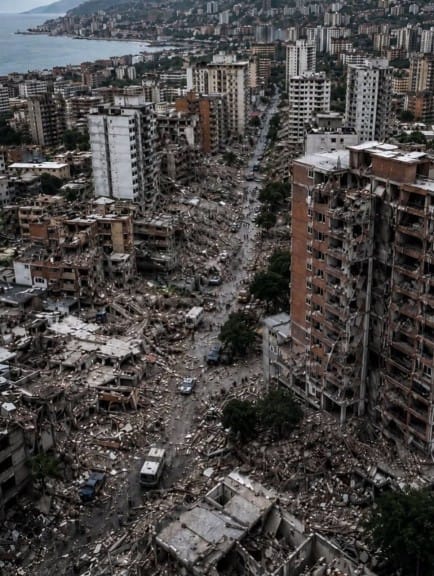
The back-to-back violent shocks leveled more than 2,500 buildings and severely crippled infrastructure across a 100-mile corridor encompassing the capital city of Caracas, Yaracuy, Carabobo, and La Guaira.
Whole neighborhoods built precariously on the hillsides of Caracas pancaked into valleys of dust, while modern high-rises suffered catastrophic structural failures.
The United Nations estimates that 1.8 million people, including nearly 700,000 children, are now in urgent need of humanitarian assistance. Power grids remain dark in vast swaths of the country, water treatment facilities are shattered, and hospitals are completely overwhelmed by a deluge of trauma patients.
The timing of the natural disaster could scarcely be worse for a country already hollowed out by a protracted, years-long economic crisis. The catastrophic failure of basic municipal services has sparked deep fury among a traumatized populace.

At a seaport complex in La Guaira, authorities have set up a makeshift morgue beneath massive grain silos to handle a relentless influx of bodies.
Outside the gates, families clash with overwhelmed medical staff as they search for missing loved ones. Among the unaccounted for are more than 100 Venezuelan migrants who had been deported from the United States just hours before the earthquake, whose transit hotel collapsed during the mainshock.
The haphazard emergency response has added immense political pressure on the fragile government led by Interim President Delcy Rodríguez. Public anger boiled over last week when Ms. Rodríguez was heckled and forced to retreat by furious residents while surveying a collapsed building in Caracas.
The political volatility is compounded by a deep fog surrounding the true scope of the missing.
While grassroots tracking networks and opposition groups have logged over 42,000 missing-person reports, the central government has yet to release a comprehensive, official tally of those unaccounted for—a move critics claim is an attempt to mask the true magnitude of the failure.
As the acoustic sensors and search dogs fall silent across the ruins, the international community is rapidly pivoting to prevent a secondary wave of mortality from disease and exposure.
In the capital’s Plaza Venezuela, thousands of displaced families sleep in makeshift tents, terrified to return to standing structures as hundreds of aftershocks continue to rattle the fault line.
The United Nations has begun procuring 10,000 body bags in anticipation of what lies beneath the concrete, while global aid groups like UNICEF have launched multi-million-dollar appeals for clean water, makeshift shelters, and medical supplies.
For the families waiting on the edge of the cordoned-off rubble fields, however, macro-economics and geopolitics matter very little.
They remain transfixed by the yellow excavators peeling away layers of debris, waiting for answers that become grimmer with every passing hour.
