

By SCM Correspondent I Monday, July 20, 2026
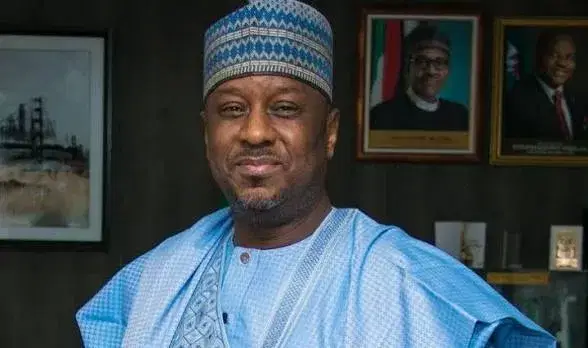
ABUJA — The Federal High Court sitting in Abuja on Monday granted bail to the former Managing Director of the Warri Refining and Petrochemical Company Limited, Jimoh Yisawu, to the tune of ₦500 million.
The ruling by Justice Inyang Ekwo followed the defendant’s “not guilty” plea to an eight-count money laundering charge brought against him by the Economic and Financial Crimes Commission (EFCC).
In his ruling, Justice Ekwo held that the defendant was legally entitled to bail as the offences preferred against him under charge number FHC/ABJ/CR/361/2026 are inherently bailable.
Invoking Section 162 of the Administration of Criminal Justice Act (ACJA), 2015, the court admitted Yisawu to bail in the sum of ₦500 million with one surety in like sum. The court stipulated that the surety must be a responsible Nigerian citizen who owns landed property within the Federal Capital Territory (FCT), Abuja, and must present verifiable proof of ownership.
Furthermore, Yisawu was ordered to surrender his international passport to the court registry and was explicitly barred from travelling outside Nigeria without express judicial permission. The judge ordered that the former refinery boss be remanded in EFCC custody pending the perfection of his bail conditions.
Earlier, the prosecution counsel, Mr. Ekele Iheanacho, SAN, informed the court that the defendant allegedly converted and laundered substantial funds through illicit cash channels.
According to the anti-graft agency, Yisawu indirectly converted an aggregate sum exceeding $789,950, which the commission claims are proceeds of unlawful activity, in breach of Section 18(2)(b) of the Money Laundering (Prevention and Prohibition) Act, 2022.

The EFCC further alleged that the former refinery chief bypassed statutory financial institutions to make cash payments above the legal threshold to one Samaila Bala. Another count on the charge sheet stated that Yisawu made separate cash payments totaling $122,600 through a third party, Rasheed Olaitan Yusuf, completely outside the formal banking system.
Following the reading of the charges, Yisawu’s defence counsel, Mr. Wale Balogun, SAN, successfully argued for his client’s release, noting that the defendant had consistently complied with his previous administrative bail terms and had already surrendered his travel documents during investigations. The prosecution’s counter-affidavit opposing the bail was ultimately overruled by the court.
The arraignment of Jimoh Yisawu marks a critical breakthrough in the EFCC’s sweeping, multi-billion-naira investigation into the management of funds allocated for the rehabilitation and Turnaround Maintenance (TAM) of Nigeria’s state-owned, moribund refineries.
Yisawu, who served as the Managing Director of the Warri Refining and Petrochemical Company—a subsidiary of the Nigerian National Petroleum Company Limited (NNPCL)—was caught in the web of an extensive probe alongside other high-ranking oil officials. The EFCC had initially filed separate money laundering charges against him and Ahmed Adamu Dikko, the immediate past Managing Director of the Port Harcourt Refining Company (PHRC).
The anti-graft agency alleges that the former executives abused their offices by operating concealment accounts, making prohibited cash transactions, and receiving illicit kickbacks from contractors engaged by the NNPCL. Investigators claim that the hundreds of thousands of dollars routed through bureau de change operators and third parties could not be traced to Yisawu’s legitimate earnings as a public officer.
Over the last few years, the Federal Government has committed billions of dollars toward reviving the nation’s local refining capacity to curb fuel importation. The failure of these facilities to come fully online triggered intense legislative scrutiny and deep systemic audits, culminating in the current judicial trials.
The court has adjourned the matter to fix a definitive date for the commencement of the trial.
An insight into asset recoveries and anti-graft prosecutions can be seen in this brief update regarding high-profile property forfeitures in ongoing money laundering cases, showcasing the wider context of current accountability drives in the country.
