

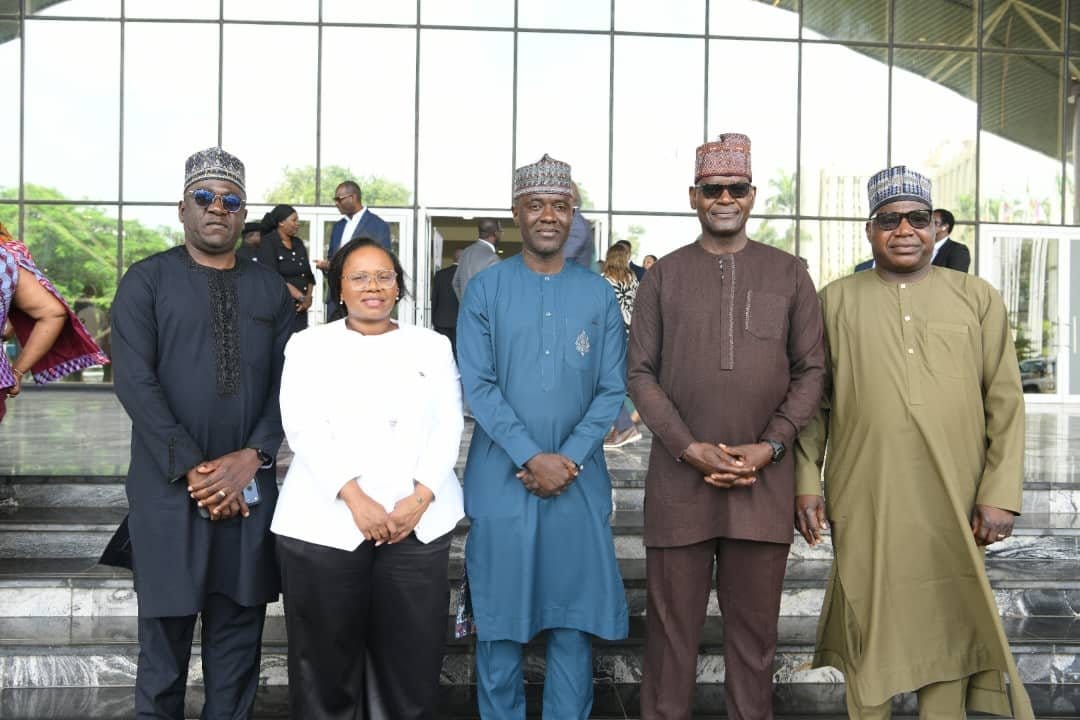
By Emmanuel Thomas, SCM Correspondent
ABUJA, Nigeria — In a decisive move to amplify the continent’s influence in shaping global digital governance, the Nigerian Communications Commission (NCC) has called on African nations to deepen regulatory collaboration and present a unified, technically rigorous position at upcoming international telecommunication forums.
The call was made by the Executive Vice Chairman and Chief Executive Officer of the NCC, Dr. Aminu Maida, during the opening ceremony of the 7th Ordinary Session of the African Telecommunications Union (ATU) Conference Preparatory Committee (CPC) held in Abuja.
Speaking to delegates, sector experts, and regional delegates, Maida emphasised that Africa’s weight in global policy discussions depends not on the size of its delegations, but on the early preparation, technical coherence, and consistency of its positions.
”Preparation is not a procedural step; it is the place where coherence is built,” Maida stated. “Africa must prepare together, work together between meetings, and arrive at global forums with positions that are both coherent and technically compliant.”
Strategic Focus Areas for Continental Alignment
Dr. Maida highlighted several emerging technological domains that require continuous, institutionalised regulatory cooperation across member states. These include cross-border spectrum management, artificial intelligence governance, cybersecurity frameworks, data protection, digital trust, and universal broadband access.
According to the NCC chief, no single administration can effectively address the rapid evolution of technology in isolation. He urged African experts to participate actively in international drafting committees and technical working groups, ensuring global standards are informed by African socioeconomic realities from the outset rather than introduced as an afterthought.
Addressing the delegates, the Permanent Secretary of the Ministry of Communications, Innovation and Digital Economy, represented at the event, noted that rapid digital innovation makes continental alignment mandatory for sustainable economic growth.

Secretary-General of the ATU, Mr. John Omo, commended Nigeria, the NCC, and the Federal Government for hosting the preparatory session. He underlined that the work done by the CPC forms the bedrock of policy proposals that dictate Africa’s collective bargaining power on the international stage.
In a major milestone for the country, Nigeria assumed the chairmanship of the 7th Ordinary Session of the ATU CPC following the election of Mrs. Stella Erabor, Director of Internal Audit at the NCC, as Chairperson.
Why Regional Alignment Matters Now
Historically, developing nations, particularly in Africa, faced challenges at ITU plenipotentiary conferences due to fragmented proposals and limited involvement in early-stage drafting committees. When member states present disjointed submissions, regional interests—such as equitable spectrum allocation for rural satellite connectivity or custom AI governance guardrails—are frequently overshadowed by larger global blocs.
By formalising a unified bloc through the ATU Conference Preparatory Committee, African nations harmonize their legislative approaches to data sovereignty, satellite communications, and cross-border roaming fees. The Abuja CPC session directly sets the stage for Africa to secure vital leadership seats on the ITU Administrative Council while negotiating policies that promote inclusive digital development across the continent.
A unified approach ensures that Africa is not merely a passive consumer of global telecom standards, but an active architect of the policies that shape the future digital economy.
Nigeria leads Africa’s telecom agenda ahead of ITU conference
This video report highlights Nigeria’s leadership role and key discussions from the ATU preparatory meeting in Abuja.
