

By Emmanuel Thomas l Sunday, Oct. 11, 2026
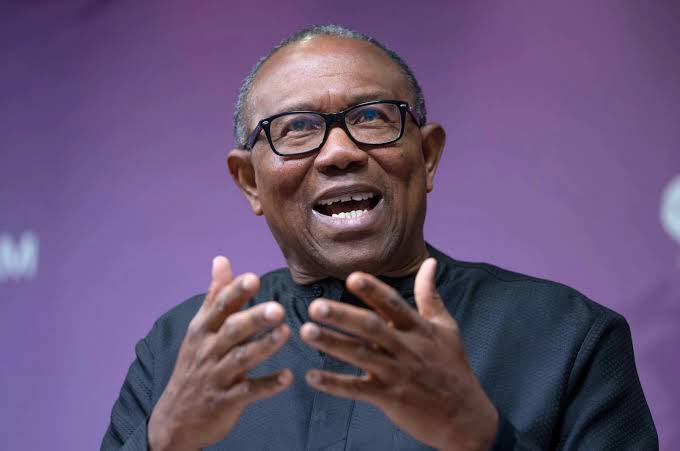
ABUJA — The presidential candidate of the New Democratic Congress (NDC), Mr. Peter Obi, has strongly criticized the Federal Government’s recent announcement of a 30-day discount on Premium Motor Spirit (petrol), describing the measure as a reactive and confused approach to national governance.
In a statement assessing the outcome of the policy, Obi asserted that the temporary relief package introduced by the All Progressives Congress (APC)-led administration of President Bola Tinubu prioritizes short-term political optics over genuine, sound economic policy.
Obi explained that he deliberately delayed commenting on the government’s announcement to observe its real-world impact before making an assessment.
“The announcement by the APC-led Federal Government offering a 30-day discount on the price of petrol to relieve the acute hardship and hunger caused to Nigerians by its unplanned removal of subsidy can only be described as another very reactive and confused approach to governance that is now the culture of the Tinubu Government,” Obi stated.
“I had delayed reacting to the announcement just to give the benefit of the doubt and watch the outcome of the policy. Now, having assessed the outcomes, the policy is a substitution of political optics for sound policy,” he added.
Tracing the roots of the current economic crisis, the former Anambra State governor recalled that President Bola Tinubu removed the fuel subsidy on May 29, 2023, without adequate consultation or an assessment of its adverse impacts on the livelihoods of ordinary citizens.
Obi noted that the subsidy removal was compounded by poorly sequenced economic measures, including the floating of the naira, uncoordinated tax reforms, and the simultaneous operation of three national budgets.
“Collectively, these policies stoked inflation in all sectors, pushing unbearable price hikes across the board which placed severe shocks and other adverse consequences on Nigerians,” he stressed.
He highlighted the widespread economic strain resulting from these decisions, citing skyrocketing prices, business closures, rising multidimensional poverty, mounting unemployment, security challenges, and youth emigration.

Call for Regulatory Impact Assessment
Criticizing the absence of systematic evaluation in policy design, Obi urged the administration to adopt comprehensive, publicly accessible Regulatory Impact Assessments (RIA) to guide structural reforms.
“Most unfortunately, rather than engage in detailed and published regulatory impact assessments of their reactive policies, President Bola Tinubu’s government has again demonstrated its well-known incompetence and insensitivity to governance,” Obi remarked.
He argued that a competent administration would prioritize inclusive stakeholder engagements to build sustainable economic growth models instead of implementing short-term palliatives.
Questioning the effectiveness of the temporary discount, Obi asked: “What really does the President Bola Tinubu-led government want to achieve with a one-month discount of less than 5% on fuel cost?
Will it reduce poverty, unemployment, insecurity, and inequality? Will it increase productivity and exports? Is it a test to ascertain if the subsidy should be restored? Is it another political gambit in the face of threats of electoral loss in the 2027 election? Too many questions, no answer!”
The Fuel Subsidy Context: President Bola Ahmed Tinubu announced the end of Nigeria’s long-standing petrol subsidy during his inauguration address on May 29, 2023. The decision led to an immediate surge in petrol prices—rising from under ₦200 per liter to over ₦850–₦1,000+ nationwide—triggering high inflation across transportation, food, and manufacturing sectors.
30-Day Fuel Relief Intervention: Following sustained public pressure and growing economic hardship, the Federal Government implemented a temporary 30-day discounted petrol scheme aimed at reducing immediate fuel costs for consumers.
Broader Political Landscape: Opposition leaders and public interest groups have criticized the discount as “tokenism” and an attempt to soften public resistance ahead of upcoming political cycles.
