


By SCM Correspondent, South Africa
KUGOMPO, SOUTH AFRICA — The Eastern Cape province remains on edge following a week of violent demonstrations triggered by the alleged coronation of a Nigerian national, Solomon Eziko, as the “Igbo King” in South Africa.
What began as a march by traditional leaders and political activists to protect local sovereignty quickly devolved into street battles, arson, and looting, leaving the diplomatic relationship between South Africa and Nigeria under renewed strain.
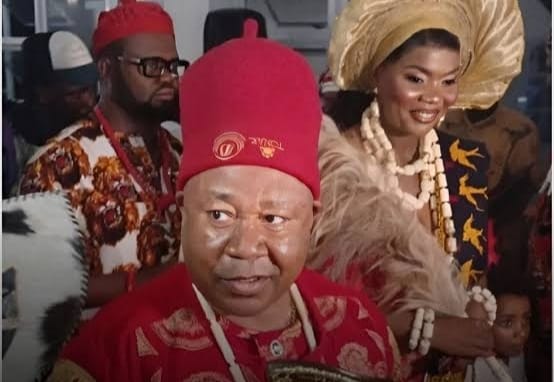
The unrest was ignited on March 30, 2026, when reports and videos circulated online showing a lavish ceremony in KuGompo (formerly East London). The event featured the installation of Solomon Eziko as the Igwe Ndigbo (King of the Igbo) in the Eastern Cape.
While the Igbo community maintains the title is purely symbolic and intended to coordinate cultural affairs among the diaspora, local residents and traditional authorities viewed the move as a direct affront to South African law and the territorial integrity of the AmaXhosa Royal Household.
The protests, led by the political party ActionSA alongside the AmaXhosa Royal Household and civic groups, initially aimed to hand over a memorandum to city officials. However, the situation turned chaotic as demonstrators moved through the North End business district.
Arson and Looting: At least 10 vehicles were set ablaze, and several buildings suspected of belonging to foreign nationals were vandalized or torched.
Casualties: Reports emerged of a stabbing incident involving shop owners and protesters, with at least two people hospitalized.
Heightened Rhetoric: Athol Trollip, ActionSA’s Eastern Cape chair, voiced the frustrations of many, stating, “This province is not up for the taking. Nowhere in our constitution is there a provision for a foreign national to be crowned as a king.”
To understand the depth of the outrage, one must look at South Africa’s rigid legal framework for traditional leadership. Under the Traditional and Khoi-San Leadership Act of 2019, the recognition of any king or queen requires a formal recommendation from the Department of Cooperative Governance and Traditional Affairs (COGTA) and a presidential proclamation in the Government Gazette.
”Kingship is not merely ceremonial here; it is tied to the land and the legislative authority of the state,” noted a spokesperson for the Economic Freedom Fighters (EFF), who joined in condemning the coronation as “irresponsible and provocative.”
Conversely, the Igbo people have a long history of appointing “Eze Ndi Igbo” (Kings of the Igbo) in the diaspora—from Ghana to the United Kingdom—to act as cultural custodians. The Nigerian High Commission in Pretoria was quick to issue a 10-point advisory, urging Nigerians to keep a low profile while clarifying that the event carried no political or territorial weight.
The Nigerian government has moved to distance itself from the controversy. Olajide Ogunmadeji, the Nigerian Deputy to the Acting High Commissioner, met with protesters in Pretoria to offer an apology, stating that the Nigerian government does not support “irresponsibility” that undermines the laws of host countries.
Despite the apology, the incident has reignited debates over “foreign encroachment” and the delicate balance of cultural expression in a country with a history of xenophobic tensions.
As of late April, the violence has subsided, but the Eastern Cape House of Traditional Leaders has called for a permanent ban on foreign traditional titles to prevent future “parallel authorities” from taking root on South African soil.