

By Emmanuel Thomas l Saturday, April 11:26
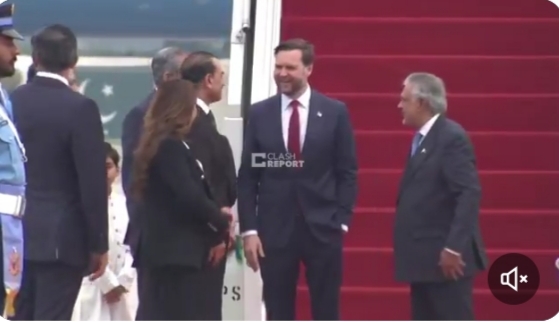
ISLAMABAD — Under a blanket of extraordinary security and the watchful eye of a world on edge, Vice President JD Vance arrived in the Pakistani capital on Saturday, marking the highest-level face-to-face contact between Washington and Tehran in years.
The delegation, which includes Special Envoy Steve Witkoff and Jared Kushner, touched down at Nur Khan Airbase just hours after the Iranian delegation—led by Mohammad Bagher Qalibaf, the Speaker of the Iranian Parliament—arrived in Islamabad.
The “Islamabad Talks,” mediated by Pakistani Prime Minister Shehbaz Sharif, are being described by officials as a “make-or-break” moment to transform a fragile two-week ceasefire into a permanent end to the devastating regional conflict.
The atmosphere in the capital was one of hushed tension. Roads leading to the secure “Red Zone” were sealed by paramilitary forces, and the normally bustling streets were deserted. Despite the somber setting, Vice President Vance struck a note of cautious optimism before landing, though he issued a stern warning that the U.S. would not be “played” by Tehran. President Trump, speaking from Florida, characterized the Iranian side as “militarily defeated” but wished the delegation luck in finding a diplomatic exit.
The Iranian side, however, arrived with a bold posture. Speaker Qalibaf signaled on social media that substantive discussions would be contingent on an immediate Israeli ceasefire in Lebanon and the unfreezing of Iranian assets.
The center of the negotiations is a sweeping 10-point proposal submitted by Tehran. While the White House has previously called the plan a “workable basis” for talks, several points—specifically those concerning the Strait of Hormuz and the withdrawal of U.S. forces—remain major flashpoints that could derail the summit before it truly begins.
Iran’s 10-Point Proposal for Negotiation
According to documents circulated by Iranian state media and Pakistani mediators, the following points constitute Tehran’s blueprint for a permanent peace:
Guarantees of Mutual Non-Aggression: A formal pact ensuring neither side initiates military action, coupled with the international acceptance of Iran’s right to a peaceful uranium enrichment program.

Controlled Passage in the Strait of Hormuz: Establishment of a transit protocol in the Strait of Hormuz under the direct coordination of the Iranian Armed Forces to ensure regional “dominance.”
Comprehensive Regional Ceasefire: An immediate and permanent end to the war on all fronts, specifically including an end to operations against the “Axis of Resistance” (Hezbollah and other allies).
U.S. Military Withdrawal: The complete withdrawal of all U.S. combat forces from bases and deployment points across the Middle East.
Termination of International Resolutions: The nullification of all restrictive resolutions against Iran issued by the UN Security Council and the IAEA Board of Governors.
Secure Transit Protocols: The creation of a new maritime security framework for the Persian Gulf that acknowledges Iranian sovereignty over its territorial waters.
War Reparations: Full payment of financial damages to Iran for economic and structural losses incurred during the conflict, based on independent estimates
Lifting of All Sanctions: The immediate removal of all primary and secondary U.S. sanctions, as well as international economic restrictions.
Release of Frozen Assets: The unconditional return of all Iranian properties and financial assets currently blocked in foreign accounts.
Binding UN Resolution: The ratification of the final agreement through a binding UN Security Council resolution to ensure the deal is protected under international law.
