

By Our Foreign Desk I June 18, 2026
ISLAMABAD — In a stunning diplomatic breakthrough, the United States and the Islamic Republic of Iran have signed a sweeping preliminary framework agreement to immediately halt their direct military conflict, reopen the critical Strait of Hormuz to global shipping, and dismantle the monthslong American naval blockade of Iranian ports.
The agreement, officially titled the “Islamabad Memorandum of Understanding,” was finalized and executed digitally by President Donald J. Trump and Iranian President Masoud Pezeshkian, bypassing the need for a volatile face-to-face summit.
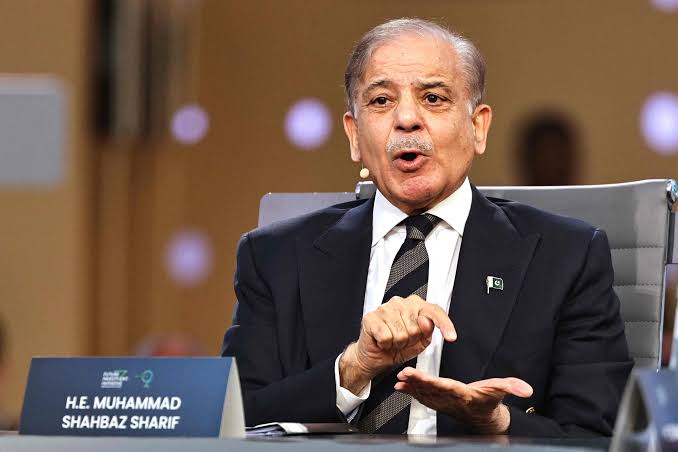
Pakistani Prime Minister Shehbaz Sharif, acting as the primary mediator, formally endorsed and announced the signing early Thursday.
“The signing of this agreement at the highest level of the respective governments demonstrates the commitment of both sides to a diplomatic resolution of the conflict,” Mr. Sharif stated in an announcement on social media.
He confirmed that the terms of the memorandum would enter into force “with immediate effect.”
Under the first-step terms of the framework, Iran has committed to instantly reopening the Strait of Hormuz, the world’s most important maritime energy chokepoint, which has been severely restricted or entirely closed since early March.
Concurrently, the United States will begin dismantling its intensive naval blockade of the Iranian coastline—an economic stranglehold that intelligence estimates suggest has cost Tehran roughly $500 million per day in lost oil revenues.
The electronic signatures freeze what threatened to become a devastating regional conflagration. According to leaked drafts of the 14-point memorandum, the agreement establishes a permanent termination of hostilities on all fronts, including Lebanon, and locks both nations into a 60-day window to negotiate a comprehensive, final peace treaty.
White House officials confirmed that Vice President J.D. Vance, alongside senior diplomatic envoys Steve Witkoff and Jared Kushner, led the quiet, intense negotiating track for the American side. On the Iranian front, the talks were pushed through with the explicit authorization of the Supreme Leader, Ayatollah Seyyed Mojtaba Hosseini Khamenei, and executed by a delegation that included Parliament Speaker Mohammad Bagher Ghalibaf and Foreign Minister Abbas Araghchi.
While the diplomatic heavy lifting was managed under the mediation of Prime Minister Sharif and Pakistan’s military chief, Field Marshal Syed Asim Munir, the multinational effort relied heavily on regional Gulf states.

Mr. Sharif explicitly credited Qatar for its hands-on role in bridging the deep trust chasm between Washington and Tehran, while also thanking Saudi Arabia, Türkiye, and Egypt for anchoring the regional stability framework.
The road to the Islamabad Memorandum began on February 28, 2026, when the United States and Israel launched massive, coordinated airstrikes—dubbed Operation Epic Fury—targeting military infrastructure and nuclear facilities inside Iran.
The shockwaves of that operation amplified when it was confirmed that Iran’s longtime Supreme Leader, Ali Khamenei, had been killed in the strikes.
In swift retaliation, Tehran paralyzed global energy markets by shutting down the Strait of Hormuz. Armed units of the Islamic Revolutionary Guard Corps (IRGC) warned commercial vessels away, and a series of drone and missile strikes on commercial tankers effectively drove maritime insurance rates to prohibitive highs, trapping thousands of sailors and choking roughly 25 percent of the world’s seaborne oil trade.
Seeking to break Iran’s resolve, President Trump ordered United States Central Command (CENTCOM) to implement an unyielding naval blockade on April 13, 2026. Deploying more than 10,000 personnel and a heavily armed flotilla, the U.S. successfully intercepted dozens of vessels, aggressively throttling Iranian trade and creating acute economic distress in Tehran.
An initial round of 21-hour marathon peace talks in Islamabad in mid-April collapsed amid bitter disputes over frozen assets and the scope of a ceasefire, leading to a dark period of escalated cyber warfare and proxy skirmishes.
Despite the breakthrough, Western defense analysts urge caution regarding how swiftly global trade will normalize. While maritime data indicates that a small handful of Iranian tankers have already moved unhindered past U.S. warships, shipping conglomerates remain deeply concerned about the threat of naval mines deployed in the Strait of Hormuz during the height of the crisis.
Furthermore, the 60-day deadline to reach a final agreement contains highly volatile hurdles.
Negotiators must still hammer out the precise mechanisms for a proposed $300 billion international fund for Iran’s economic reconstruction, the phased lifting of permanent primary and secondary U.S. sanctions, and a verified protocol to freeze and monitor the current state of Iran’s nuclear program.
For now, the digital signatures of Mr. Trump and Mr. Pezeshkian have achieved what many in Washington and Tehran thought impossible just days ago: a sudden, structured pause to a war that had brought the Middle East to the precipice of total ruin.
