

By SCM Foreign Desk
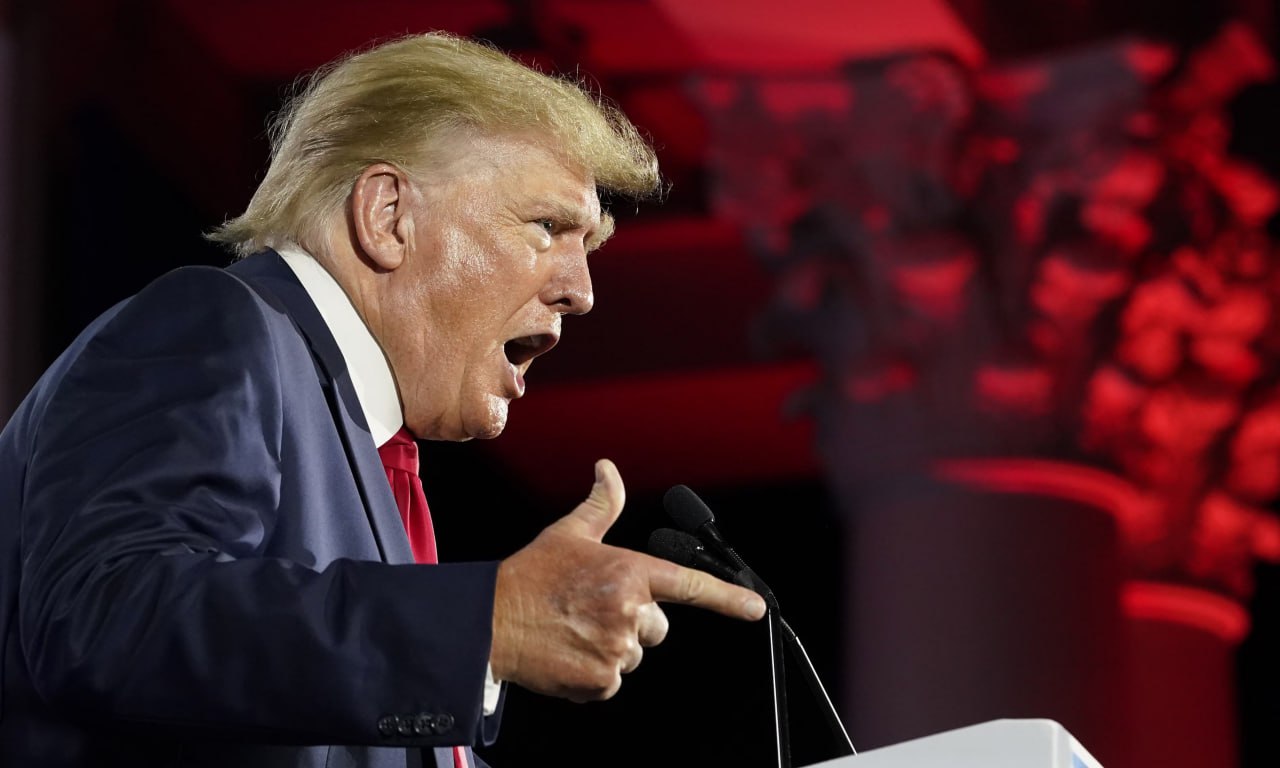
WASHINGTON — In an abrupt and severe escalation of rhetoric, President Donald Trump warned Iran that the United States is prepared to execute an unprecedented military response if Tehran continues to target American and international vessels in the Middle East.
”If Iran continues to attack U.S. ships, I will wipe them off the face of the earth,” Trump declared during a recent interview.
The statement marks the definitive end of a fragile, short-lived diplomatic truce and plunges the region back into the precipice of an all-out conventional war.
The President’s ultimate warning follows days of renewed hostilities in the Strait of Hormuz, a critical maritime chokepoint where roughly twenty percent of the world’s petroleum transits.
According to U.S. Central Command (CENTCOM), the Iranian Revolutionary Guard Corps (IRGC) has repeatedly violated a June memorandum of understanding by deploying fast-attack boats, sea mines, and loitering munitions to assert hegemonic control over the waterway.
Confronted by these evolving threat matrices, international commercial vessels and allied ships have repeatedly been forced to alter their courses or turn back halfway through transit, gridlocking global trade and sending energy markets into a tailspin.
To understand the gravity of Trump’s latest ultimatum, one must look at the cycle of brinkmanship that has defined 2026.
The conflict originally erupted on February 28, 2026, when the U.S. and Israel launched a massive aerial campaign against Iranian military infrastructure.
Iran retaliated by effectively shuttering the Strait of Hormuz, trapping an estimated 2,000 ships and thousands of mariners inside the Persian Gulf.
By mid-April, the Pentagon responded with an aggressive naval blockade of all major Iranian ports, led by the USS Abraham Lincoln carrier strike group.
Under this “dual blockade” architecture—where Washington choked Iran’s economic exports and Tehran choked the world’s energy transit—CENTCOM forces intercepted and turned back more than 140 commercial vessels attempting to violate American lines.

A temporary reprieve arrived on June 17, when an interim memorandum of understanding was signed in Switzerland, intended to grant a 60-day window to negotiate a permanent settlement.
However, the diplomatic track dissolved last week when Iran renewed its strikes against commercial vessels, attempting to extort transit fees and dictate mandatory shipping lanes.
’Project Freedom’ and the Rhetoric of Mass Destruction
In response to the fractured truce, Trump ordered the reinstatement of the port blockade and initiated consecutive nights of intense airstrikes against Iranian coastal defense systems and missile batteries.
Concurrently, the U.S. Navy launched “Project Freedom,” an aggressive naval escort operation designed to force open the Strait of Hormuz for merchant shipping.
Despite the deployment of heavily armed American guided-missile destroyers, the threat environment remains exceedingly volatile. Iran’s extensive use of satellite spoofing, GNSS jamming, and hidden sea mines has turned the passage into a tactical minefield.
While CENTCOM asserts that several U.S.-flagged vessels have successfully forced transit under Project Freedom, the pervasive threat of asymmetric drone swarms has forced numerous non-aligned commercial fleets to turn back halfway rather than risk total destruction.
Trump’s hyper-aggressive language has ignited sharp domestic and international blowback, drawing comparisons to the most volatile chapters of modern geopolitical history. Critics and international legal scholars warn that threatening to “wipe a nation off the face of the earth” crosses the line from strategic deterrence into state-level terrorization of a civilian population.
Nevertheless, the White House maintains that absolute military deterrence is the only language the regime in Tehran respects. With Trump revealing he has left standing instructions to bomb Iranian infrastructure at “unprecedented levels” if U.S. assets or leadership are harmed, the global community now watches the Persian Gulf with profound anxiety, knowing that a single miscalculation by a ship captain could ignite a catastrophic global war.
For an in-depth visual breakdown of the military operations unfolding in the region, you can watch this BBC News Analysis on the Strait of Hormuz Crisis, which details the breakdown of the ceasefire and the tactical stakes of Operation Project Freedom.
