

By Special Correspondent
WASHINGTON — The fragile ceasefire between the United States and Iran appeared on the brink of total collapse on Wednesday, as President Donald Trump threatened to launch immediate, punishing airstrikes against the Islamic Republic, accusing Iranian negotiators of dragging out peace talks while “playing us for suckers.”
Yet, in a characteristic display of split-screen diplomacy, Mr. Trump simultaneously insisted that the two nations remained “really close” to a grand security bargain.
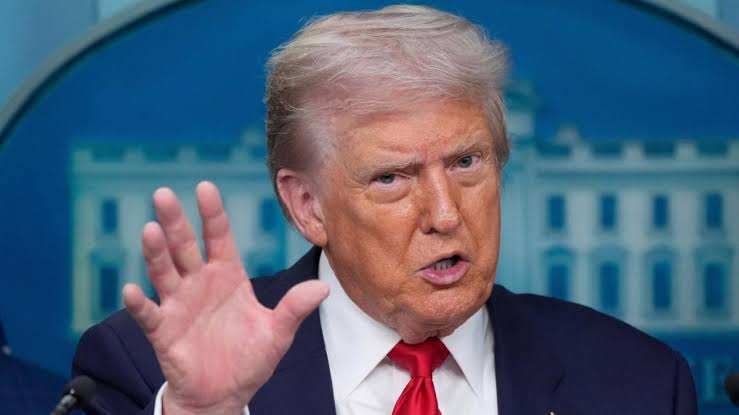
Speaking to reporters in the Oval Office, Mr. Trump stated that the U.S. military was prepared to hit Iran “very hard” later in the day, following a volatile 24-hour window that saw a direct exchange of military fire.
The latest escalation was sparked by the downing of a U.S. Army Apache helicopter over the strategic Strait of Hormuz on Monday evening, which Washington attributes to an Iranian drone.
”We hit them hard yesterday and we’re going to hit them again hard today,” Mr. Trump said. When asked by reporters if his administration was preparing to target Iran’s critical infrastructure, including bridges and power plants, he responded, “I’m not going to say that to you, but I can do that.”
The response from Tehran was swift and unyielding. Iranian President Masoud Pezeshkian took to social media to directly condemn the American threats, framing any potential targeting of civilian assets not as a demonstration of American power, but as a failure of strategy.
”Critical infrastructure is the lifeline of the people,” President Pezeshkian said in a statement published on X.
“Threatening to target them—from transportation networks to the power and water industries—is not a display of strength, but a sign of desperation in the face of a nation’s will. Relying on the knowledge and capability of its experts, national unity, and solidarity, Iran will stand firm against any pressure and threat.”

The verbal sparring marks a dangerous inflection point in a multi-month conflict that has repeatedly pulled global energy markets into turmoil since full-scale regional hostilities broke out in late February.
The threat of expanded strikes comes on the heels of reported U.S. military actions on Wednesday morning. An Iranian wastewater utility company announced that American fire had already targeted and destroyed two critical water reservoirs in the Bemani area of Sirik, a southern coastal region along the Strait of Hormuz, allegedly leaving 20,000 civilians without clean drinking water.
Iran’s Revolutionary Guard reportedly countered by launching retaliatory missile and drone salvos toward U.S. military installations across the Middle East, including bases in Bahrain, Kuwait, and Jordan.
While Western intelligence agencies indicated most of these weapons were intercepted, the cycle of violence has effectively frozen shipping traffic.
Compounding the military tension is an aggressive U.S. campaign of economic sabotage. In his Oval Office remarks, Mr. Trump revealed for the first time that the U.S. has been covertly siphoning off millions of barrels of Iranian oil “in the dead of night,” a move he claimed has kept global oil prices stabilized between $85 and $90 a barrel.
The current crisis is rooted in a fundamental paradox defining the Trump administration’s Middle East policy: leveraging devastating military pressure to force Tehran into signing a highly restrictive, permanent peace treaty.
