


By Emmanuel Thomas
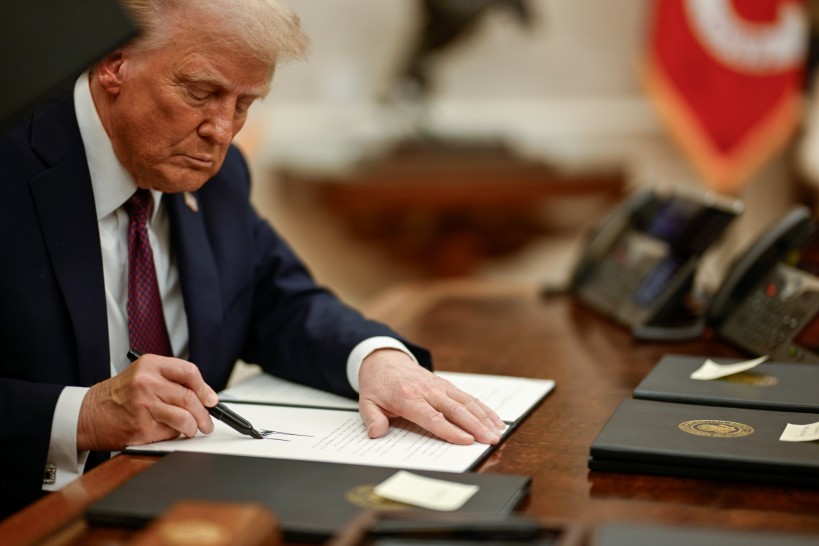
WASHINGTON — President Trump signed legislation on Tuesday extending the African Growth and Opportunity Act (AGOA) for a single year, providing a temporary reprieve for African exporters while signaling his administration’s intent to fundamentally reshape the decades-old trade program.
The extension, which was tucked into a broader $1.2 trillion government spending package, keeps the program active through December 31, 2026.
Critically for businesses that have been in limbo, the law applies retroactively to September 30, 2025, the date the previous 10-year authorization expired.
While the move averts an immediate collapse of duty-free access for 32 eligible sub-Saharan African nations, the short duration of the extension has sent a clear message: the era of long-term, non-reciprocal trade concessions from Washington is over.
“AGOA for the 21st century must demand more from our trading partners,” U.S. Trade Representative Jamieson Greer said in a statement.
“We must ensure the program yields more market access for U.S. businesses, farmers, and ranchers, aligning with President Trump’s ‘America First’ trade policy.”
A Shift from the Status Quo
For 25 years, AGOA has been the cornerstone of U.S. economic engagement with Africa, allowing more than 6,800 products—ranging from South African luxury SUVs to Kenyan textiles and Ethiopian leather—to enter the U.S. market duty-free.
However, the Trump administration has long criticized the deal as “asymmetric,” arguing that it provides African nations with open access to American consumers without requiring similar concessions for U.S. goods.
In January, the House of Representatives had passed a three-year extension, but the White House and Senate Republicans pushed for the shorter window to maintain leverage for a “modernization” of the act.
Mixed Reactions in Africa
Across the Atlantic, the reaction has been a mix of relief and anxiety. In Kenya and South Africa, where thousands of jobs depend on the American market, the one-year extension is being viewed as a “breather” rather than a solution.
South Africa: The nation’s automotive and agricultural sectors remain the largest beneficiaries, but diplomatic tensions with the Trump administration over Pretoria’s foreign policy have left exporters feeling precarious.
Kenya: Textile manufacturers, who began cutting jobs when the act lapsed in September, said the retroactive nature of the bill is helpful but noted that a one-year window is too short to secure the long-horizon investments needed for new factories.
The Road Ahead: 2026
The administration has indicated it will use the coming 11 months to renegotiate the terms of African trade. Analysts expect the White House to push for:
Reciprocity: Demanding lower tariffs for American products entering African markets.
Strategic Minerals: Tightening links between trade benefits and U.S. access to critical minerals like cobalt and lithium, essential for the tech and defense sectors.
Stricter Eligibility: More aggressive enforcement of governance and human rights standards, which the administration has previously used to suspend nations like Ethiopia and Gabon.
”This is not a renewal; it’s a countdown,” said one trade analyst in Johannesburg.
“The U.S. is telling Africa that the price of admission to its markets is about to go up.”