

By SCM International Desk I Wednesday, August 19,2026
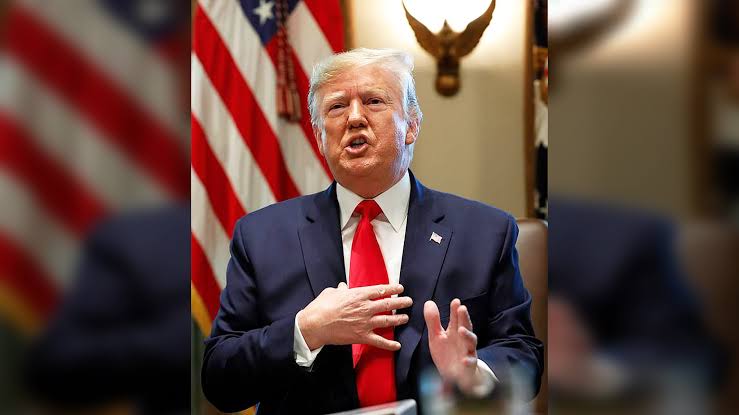
WASHINGTON — President Donald J. Trump said he expects to meet with North Korea’s Supreme Leader, Kim Jong Un, later this year, signaling a potential revival of the personal summitry that defined his first-term foreign policy toward Pyongyang.
Speaking to reporters, Mr. Trump defended his approach to the nuclear-armed state while criticizing previous American leaders for permitting Pyongyang’s weapons program to grow.
”I get along with him very well… and he’s going to be fine,” Mr. Trump said, referring to Mr. Kim. “As long as we have a smart president, he’s going to be fine.”
The statement represents the clearest indication yet that the administration seeks to reopen direct channels with Pyongyang to either constrain or persuade the regime to abandon its expanding nuclear arsenal.
While no official summit details or locations have been announced by the White House, the comments suggest a pivot back to high-stakes direct dialogue between the two leaders.
Mr. Trump’s strategy toward North Korea during his first term marked a sharp departure from decades of established U.S. diplomatic protocol. After an initial period of heightened tensions in 2017—marked by threats of “fire and fury” and personal insults exchanged between Washington and Pyongyang—the two leaders transitioned to direct engagement.

Singapore Summit (2018): The first historic meeting between a sitting U.S. president and a North Korean leader resulted in a broad joint statement committing to peace and the vague goal of denuclearization on the Korean Peninsula.
Hanoi Summit (2019): A second high-level summit collapsed abruptly without an agreement after negotiations stalled over the scope of sanctions relief in exchange for partial dismantling of North Korea’s nuclear facilities.
DMZ Meeting (2019): Mr. Trump subsequently met Mr. Kim at the Demilitarized Zone separating North and South Korea, becoming the first sitting U.S. president to step foot in North Korean territory.
Despite the unprecedented engagement, formal talks broke down shortly thereafter, and North Korea resumed testing intercontinental ballistic missiles and expanding its fissile material production.
Mr. Trump has consistently blamed past Democratic and Republican administrations for failing to address the threat earlier, asserting that earlier inaction allowed Pyongyang to build a functional nuclear deterrent. Geopolitical analysts note that any renewed summitry faces significant hurdles, given North Korea’s bolstered nuclear capabilities, its deepened security ties with Russia, and lingering skepticism from defense experts regarding Pyongyang’s willingness to give up its weapons program.
